

Mercedes Is Bringing Back Buttons As Drivers Reject Touchscreen Takeover
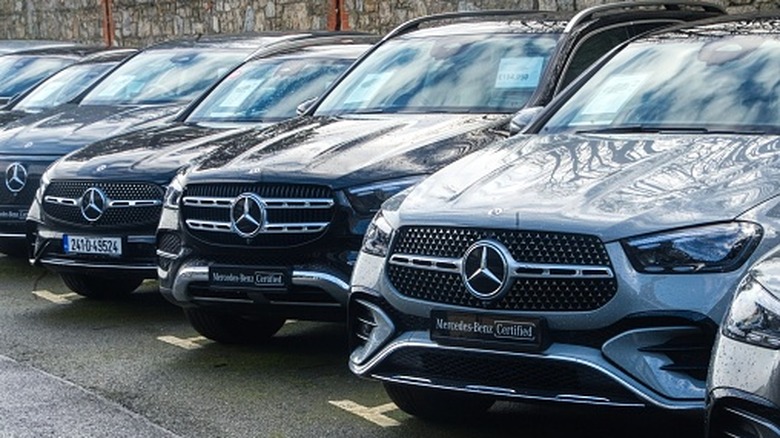
When you think of modern cars, you may envision sleek vehicles that are fully loaded with the latest tech. But Mercedes appears to be rethinking its approach to massive digital infotainment touchscreens and the like, as the automaker is changing its direction on some interior controls. In July 2026, company CEO Ola Källenius told Autocar that the time has come for a new approach to cabin design.
Källenius stated that Mercedes would begin utilizing more physical buttons, while also acknowledging that the trend toward touchscreen-heavy cabins may have overlooked the needs of some drivers. While Mercedes has yet to formally announce this new strategy on any of its official channels, the company's goal is apparently not to eliminate touchscreens altogether. Instead, there will likely be a mix of both digital and practical controls in some Mercedes models in the future.
The pushback from drivers over touchscreens is evident in research from JD Power. In the 2025 U.S. Multimedia Quality and Satisfaction Study, the organization found that digital-display problems increased overall in 2025. The study also found that vehicle owners want technology that is both easy to use and reduces distractions. JD Power concluded that utilizing a combination of touchscreen and physical buttons can improve driver usability. This means that automakers like Mercedes may be finding a better balance between digital displays and traditional controls.
Other automakers are bringing buttons back
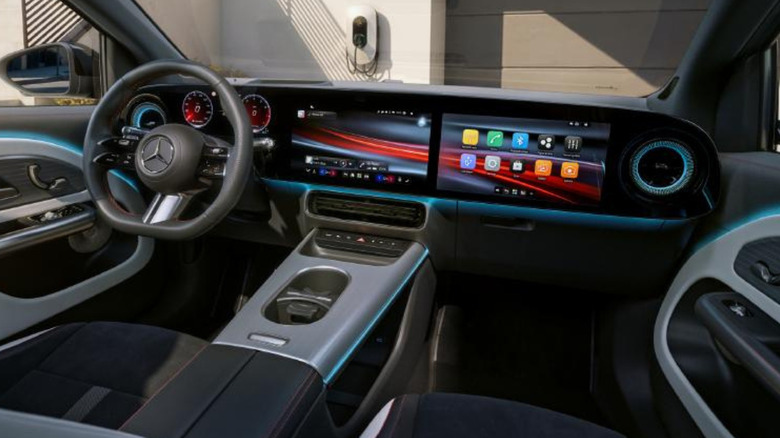
Some of Mercedes' most recent interiors show just how far the company has gone with the digital dashboard trend. A good example of this is the electric GLA SUV, which features an MBUX Superscreen that stretches across the entire dashboard. This three-display configuration is contained behind a single glass surface in a setup that looks more like a high-tech command center than a car dashboard. This advanced setup is similar to other car infotainment systems that missed the mark and represents what Mercedes has described as a minimalist, technology-focused space.
Mercedes is not the only automaker to rethink its approach to interior displays, as other manufacturers are ditching touchscreen dashboards and going back to basics. Volkswagen made a similar move by bringing back steering wheel buttons in models like the Golf GTI, Tiguan, and ID.4. Hyundai has also added physical buttons and knobs in vehicles like the Santa Cruz and Palisade. Even luxury brands like Porsche have continued to balance high-tech touchscreens with physical controls.
The move back to physical buttons for some automakers comes after research showing that touchscreen-heavy systems can create unnecessary distractions for drivers. This includes a study from the AAA Foundation for Traffic Safety that found infotainment systems can increase the amount of time drivers spend looking away from the road. This means that completing even the simplest tasks while driving can be distracting.