

What's The Minimum Ceiling Height For A Car Lift? Here's How To Find It
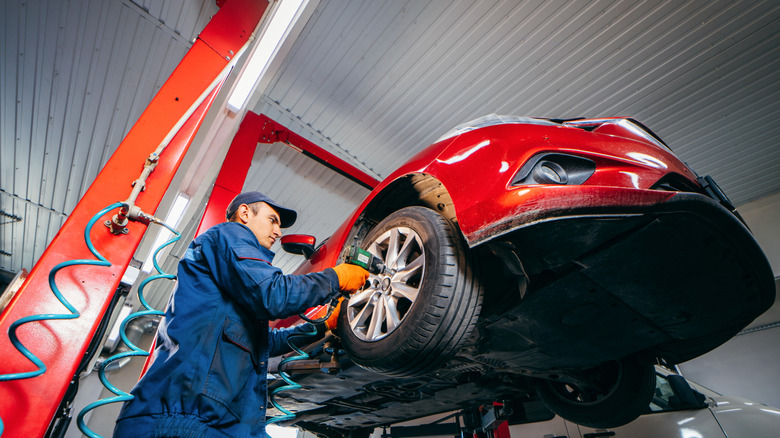
If you're a DIYer and prefer working on your vehicles at home, you need the right tools and equipment for the job. That's why putting a car lift in your home garage could be worth it, depending on your setup. But it's important to know how much ceiling height you'll need before you install one. That's because the amount of overhead space required can vary depending on the car lift you choose.
For example, some low-ceiling lifts are specifically designed to work in garages where space is limited. In contrast, taller two-post car lifts require quite a bit more room above the vehicle. So if you plan on storing a car on the lift and parking one under it, then you can take the combined height of both vehicles and add about 10 inches to the total. This extra space accounts for the lift deck and locking positions. However, it's important to remember that this isn't a universal rule for every car lift.
If you're using a two-post lift to physically stand under a vehicle, you can add the lift's maximum rise to the height of your tallest vehicle. Then add another 6-12 inches for safety clearance. But just as with the 10-inch recommendation for car storage, this is a guideline and may not be universally true for all car lifts. The right move is to check the specifications of the exact car lift model you're considering, so you can get manufacturer-recommended minimum height requirements.
What to check before buying a car lift

If you prefer to install an actual car lift instead of a car lift alternative in your home garage, there are some factors to consider other than ceiling height. You should start by looking at the vehicles you'll be working on to ensure the lift is rated to handle their weight. The lift should also have enough room around it to operate properly, while also giving you enough room to work. The thickness of your garage floor, as well as the foundation, must also be suitable and meet the requirements for the specific lift.
It's a good idea to check local building requirements in your city as well. That's because some areas have regulations in place for automotive lifts in terms of the type of equipment that can be installed. If you also plan to add adapters or other accessories, you should make sure they're compatible with the particular lift you want to use. That way, you're not just assuming those parts will work with your setup.
In terms of which car lift to buy, you can look for one that's certified by the Automotive Lift Institute (ALI), which develops safety standards for automotive lifts. In order to get that certification, a lift is independently evaluated by an accredited testing laboratory for factors such as structural strength, controls, lowering operation, and more. The ALI Gold Certification Label indicates that the specific lift has passed those tests and meets safety requirements.