

5 Things Every New Motorcycle Rider Should Buy
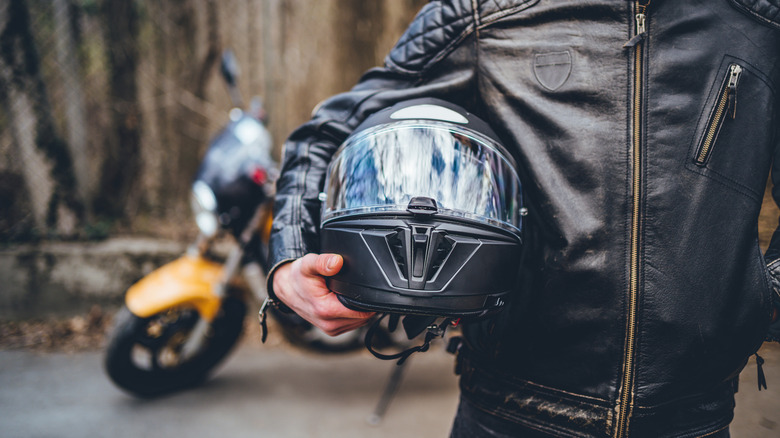
If you just bought your first motorcycle as a beginner rider, know that your purchase journey has just begun. The usual advice is quite, quite generic, and you've probably read it before — whether you were meaning to or not. Buy a helmet with Bluetooth, don't skimp on the jacket, bike insurance is more expensive than you think, the list goes on. While all that is true, the things that actually matter are almost never the things that the internet tells you to worry about. The kind of stuff that saves your weekend, your wallet, and (on occasion) your skin is far duller, more specific, and rarely handed out by people giving advice.
I personally rode for three years before downgrading to the relative cowardice of a cage — that's what some riders call cars — last year. That's where I learned some important lessons about motorcycle ownership, and specifically, about things every new rider should purchase. So this is not another generic list of the obvious.
There is no lecture here telling you to go "buy a helmet" as if that thought hadn't occurred to you. Instead, this is the stuff that should be told to new riders — especially in the U.S. — before you find it out the hard way, usually by the roadside, and usually in the rain. So, with all that said, here are five purchases that every motorcycle rider should make, and though veteran riders have some of these, it'd be very surprising if someone had all five.
A complete protective gear set
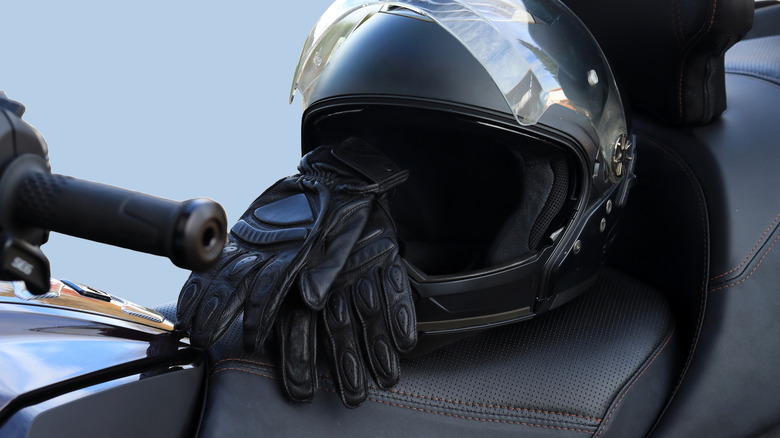
A popular saying in the riding community is "dress for the ride, not the slide" — and this is a sentiment worth holding on to. Simply buying a motorcycle jacket and a helmet isn't enough, and you shouldn't let online influencers make you think so. A proper set, especially for beginner riders (who may be more prone to crashes due to their lack of experience), includes a jacket with back protection, armored trousers, riding boots, a full-face helmet, and riding gloves with knuckle protection. In fact, what you're wearing can affect your insurance claim if you get into an accident.
For third-party claims, where you'll try to get compensation from the other driver's insurance after they caused an accident (i.e., hit you), opposing counsel in some states can claim "contributory negligence" if you're not in proper gear. This means that the other side is admitting fault for the accident, but saying that you are partly to blame, as you didn't do all you could to protect yourself.
Then, if the court concludes that, say, wearing a t-shirt and jeans made your injuries 20% worse, your total payout could be reduced by that amount. Furthermore, when looking at your helmet, get a DOT-compliant one with Standard 218 (FMVSS 218) to have the maximum protection, and airtight claims. Getting a Pinlock-ready helmet will also prevent visor fog during cold or wet rides — this should be researched during purchase since it's hard (but not impossible) to add one down the line.
Tire-pressure gauge and portable inflator
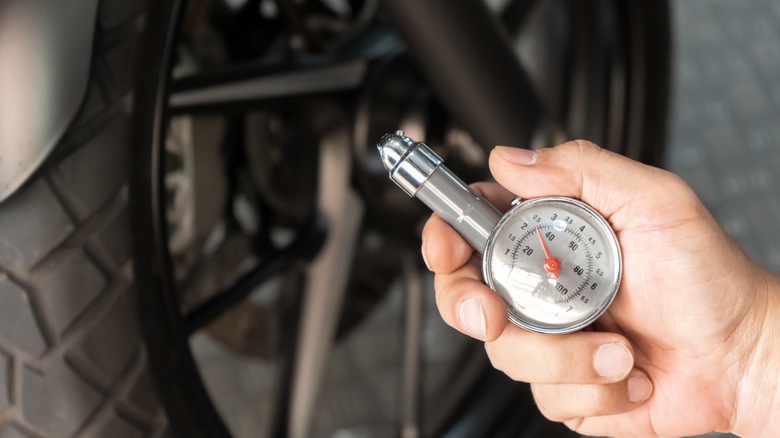
For those who don't know, motorcycles are especially sensitive to tire pressure because they have much smaller contact patches than cars — and there's only two of them, versus four on a car. If you ride your bike with underinflated tires, you'll increase tire wear and experience more sluggish handling. For overinflation on motorbike tires, the effects include harsher ride quality, significantly reduced traction, and potentially uneven tire wear. In other words, having under or overinflated tires on a motorcycle is not ideal at best, and actively dangerous at worst.
Now, some new bikes such as the newer Honda Gold Wing come with a tire pressure monitoring system — or TPMS for short — which works via sensors that monitor tire pressure inside the wheels of the vehicle, but this tech is still not mainstream on motorbikes. Even motorcycles equipped with TPMS still require regular manual pressure checks.
That is why it's important for new riders to have a simple tire pressure gauge in the kit. Along with the tire pressure gauge, having a portable inflator is also a good idea, to prevent being stranded on the side of the road. The next logical addition would also be a tire patching kit — and do learn how to use one; all three of these things will keep you moving on your next ride, instead of having to thumb a ride from a motorist on the freeway.
UM/UIM insurance
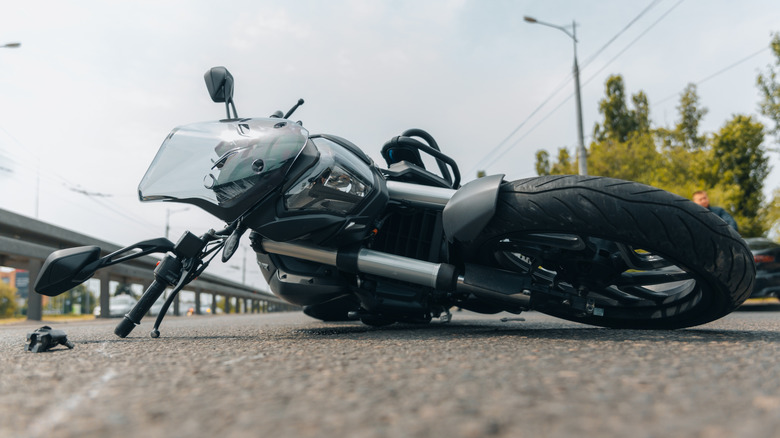
UM insurance is an acronym for "uninsured motorist" — which is exactly what it says on the tin. It is a type of insurance that will cover your costs in the event you need to claim compensation from a motorist who doesn't have insurance. UIM insurance is short for "underinsured motorist," and is a slightly trickier type of coverage. Suppose you have bills (medical, property damage, etc.) after an accident amounting to $60,000 in total, but the at-fault party's insurance policy only covers up to $40,000.
Your UIM insurance will usually help cover the shortfall, which in our example would be $20,000. This saves you from running around the court system trying to get your money back — and saves you from the case of the person who hit you simply not having the money to pay you back. We should mention here that UM and UIM insurance laws vary wildly by state, with some (like Pennsylvania) being a lot more friendly towards it. For example, some states allow motorcycles to be exempt from no-fault PIP (personal injury protection) clauses, which means you might be left holding the bag if you don't have proper bike-specific coverage. It's worth looking into, depending on your state laws. Also, we've found out the hard way that bike accessories (carriers, etc.) and gear are only covered up to a small limit (for me it was $150) in a crash – but that's a small detail.
A basic bike tool kit
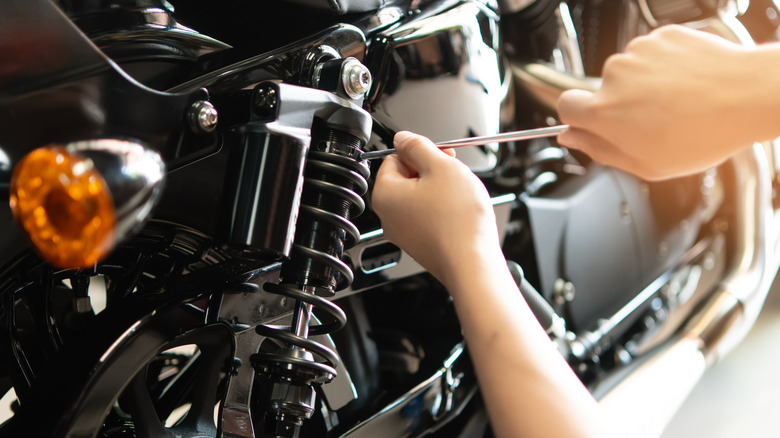
As any good guide on the topic will tell you, having a basic motorbike-specific tool kit is a must-have for any new motorbike owner. Now, a generic one from Amazon will not suffice in this regard — because you need one that you know will work with your specific bike. However, the basics that every bike owner should have include a set of pliers of varying types and sizes, a screwdriver set with different head styles and sizes, wrenches and spanners, along with a set of hex keys, sometimes called Allen keys. In addition to that, having spare fuses specific to your bike is always good, as is duct tape, electrical tape, and of course, zip ties.
Some bike manufacturers, such as KTM and BMW, use Torx fasteners instead of hex ones, so having a set of Torx keys is also needed for riders who own these models. It's also worth mentioning that motorbikes are extremely sensitive to both overtightened and undertightened lugs and nuts, so having a torque wrench should be looked into. Getting ratcheting spanners/wrenches is also a good idea for those tight areas between components and body panels where fully rotating a tool would be hard, or even impossible. Getting a bike stand or motorcycle dolly for your garage might also be something you want to do, as this lets you service your chain and/or remove a wheel for maintenance, which you'd otherwise have to go to a shop for.
A battery tender
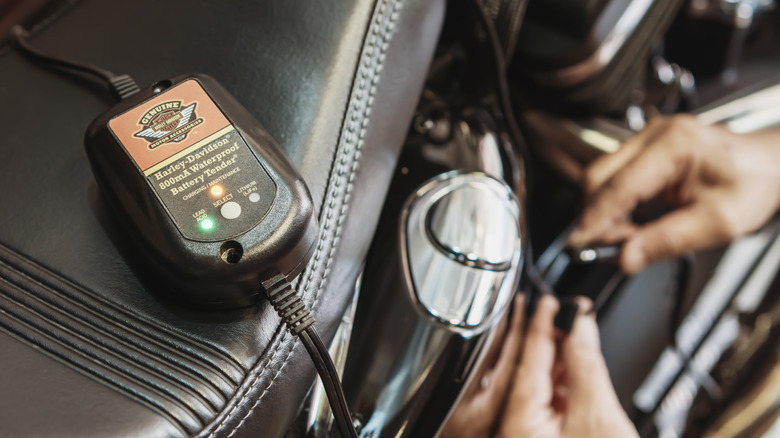
If you leave your bike standing for any length of time without riding it, its battery can discharge. And since motorcycle batteries are much smaller than the ones on cars, they can lose their charge more quickly. Getting what's known as a battery tender — which basically is a charger for your motorbike battery, connected to a wall outlet — keeps your battery charged through periods when the bike is stationary, i.e., not charging itself.
These tenders cost anywhere from $80 to $200, with the more upmarket ones also being able to function as portable jump-start kits. A fun hack that you can DIY yourself is installing an SAE fuse onto your battery, which allows you to connect external accessories to the battery directly. What this means is you won't have to fiddle with body panels on the bike to connect the battery tender, since you can just use the quick disconnect fuse to do so — kind of like MagSafe, but for bikes.
In some cases, you might also be able to use that SAE fuse — where SAE stands for Society of Automotive Engineers, who standardized the connector — to power other small devices for short periods of time, like a portable tire inflator. However, you should pay close attention to the gauge of the wire and the fuse rating if you do so, since it can easily short the circuit. This is a pretty good guide on installing one.