

8 Brands That Are Owned By Lenovo
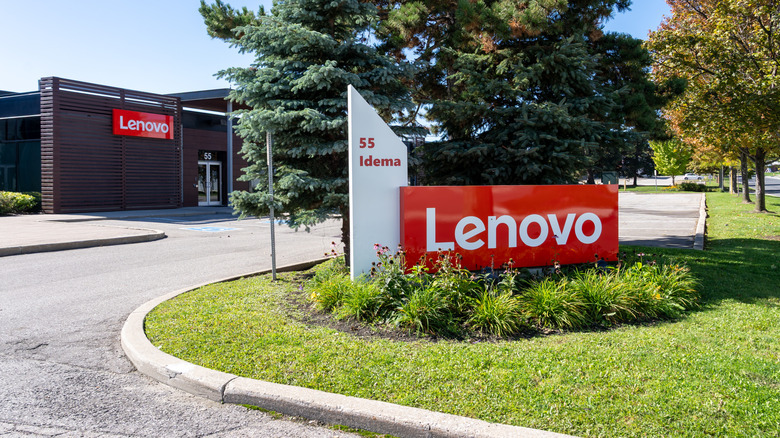
If you've ever done some window shopping for a new laptop, you've likely run into more than a handful of Lenovo units. You'll find them in different sizes and specs across most configurations. Their ubiquity shouldn't come as a surprise: In the first three quarters of 2025, the Chinese laptop manufacturer sold 19.4 million units. That sales volume was the highest in the laptop niche worldwide by quite some distance, with HP, the closest competitor, coming in at 15 million.
Lenovo's dominance in sales isn't surprising at all — it had 197 models on offer in the global market as of October 2025. That number is second only to HP's 250, so it's safe to say that Lenovo is one of the biggest competitors in the laptop manufacturing industry. That kind of inventory brings about the need for a defined structure in the company. At this scale, corporations require streamlined workflows, as well as more hands and skilled minds.
So, like almost every other business of its size, Lenovo notched quite a few mergers and acquisitions as it grew. In some cases, where specialization is paramount, some companies break off pieces of their operations into sub-brands, and Lenovo is no different.
Think
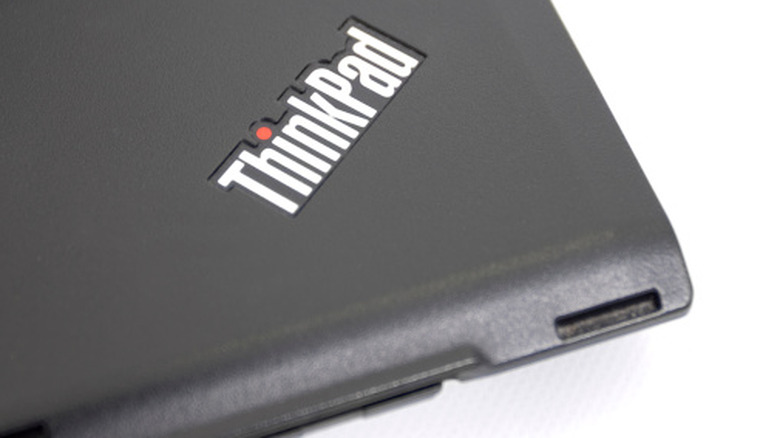
ThinkPads have existed since the early 1990s, back when its inventor, IBM, was one of the biggest companies in the world by market capitalization. The defining characteristic of the ThinkPad — the TrackPoint — featured in the very first prototypes: An odd-looking red not-quite-a-button that let users navigate the machine without a mouse. They featured in quite a few NASA missions, and their boxy design (which is still one of its signatures to this day) was quite popular.
By the 2000s, though, the winds were changing for IBM. Intense competition from Dell and HP opened the door for Lenovo to swoop in and acquire the ThinkPad from IBM for $1.25 billions in 2004. The acquisition didn't just give Lenovo ownership of the ThinkPad brand; It gained access to IBM's R&D resources and licensing to use the IBM name on its PCs for five years. That approach eased the entry shock of what was relatively an unknown quantity into the American market, and the ThinkPad's core identity has remained largely unchanged since it changed hands.
However, the ThinkPad has evolved stylistically in the years since Lenovo acquired it: From tablets to Ultrabooks, Helixes and Folds, the ThinkPads have become more than niche laptops for big businesses. They've become thinner over the years, especially with the X-series and its portable design, and all that evolution has come under the sub-brand known as Think. The sub-brand creates hardware products like the ThinkPad and ThinkCentre, as well as software targeted at solving enterprise-scale problems.
Motorola Mobility
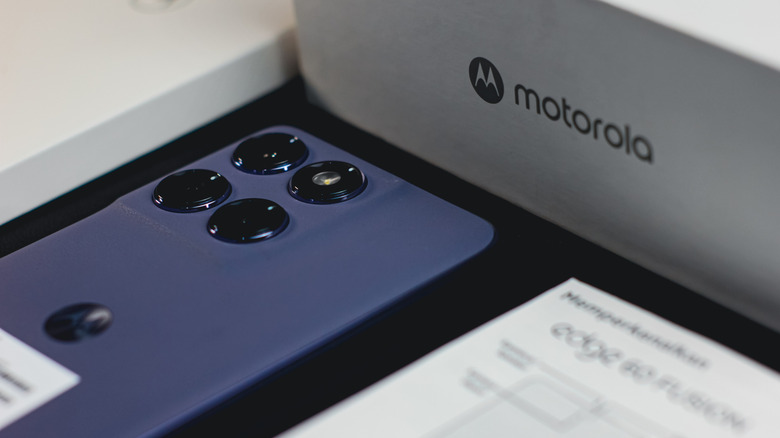
Like IBM, Motorola used to be one of the biggest names in its business. It produced the first cellular mobile phone in 1973, and its innovation prowess took another leap with the advent of the flip phone in the '80s. However, when competition from Apple and Samsung ushered mobile phone tech into the current smartphone zeitgeist, Motorola lagged. Ultimately, in 2011, it split in two: Motorola Solutions, focused on government and enterprise security, and Motorola Mobility, the consumer phone division.
Google got its hands on Motorola Mobility first, purchasing the division for $12.5 billion in 2012 — which was Google's largest acquisition at the time. Unfortunately for the two companies, the smartphone market proved too competitive to penetrate: just two years later, Lenovo would acquire Motorola Mobility as a subsidiary for only $2.9 billion. To this day, Motorola Mobility continues to operate independently under the Lenovo umbrella as a smartphone maker.
Although they're nowhere near as popular as they used to be, Motorola phones are seeing a bit of a resurgence in India these days; its market share more than tripled, going from 2.5% to 8.5%, in the last three years, with the Edge and Razr series accounting for around 60% of revenue.
Medion AG
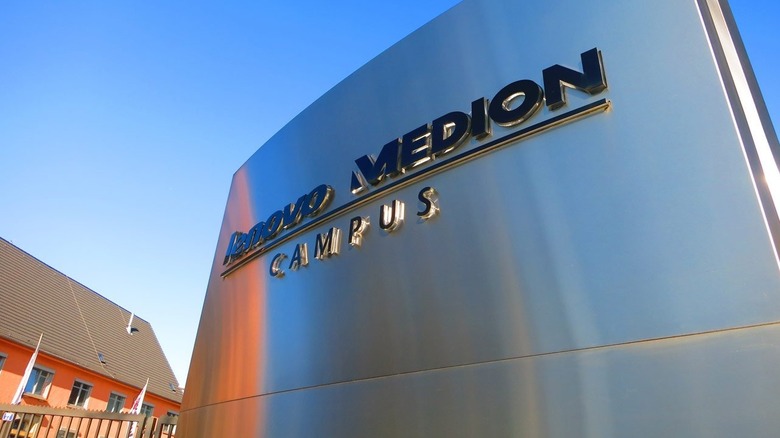
Barely four years after acquiring the ThinkPad line from IBM, Lenovo splashed the cash on Medion AG, a consumer electronics retail chain founded in 1983, for $900 million. Medion AG has its headquarters in Essen, Germany, and employs around 1,000 workers today.
At the time Lenovo acquired Medion AG in 2011, it was Lenovo's most expensive acquisition after the ThinkPad deal. This time around, however, this deal confused investors; Lenovo stock fell about 3% in the immediate aftermath of the transaction.
Regardless of stock price action, Lenovo's reasons for the deal were simple. PC brands were suffering from tight margins, with the likes of Dell and HP turning to computing services to boost earnings. Meanwhile, Lenovo gained access to about 7.5% of the PC market share in Western Europe (and around 14% of the German market) as a direct result of its acquisition of Medion AG. The PC market share wasn't all that Medion had to offer: Its catalog of tablets, smartphones, laptops, smart TVs, and other small appliances provided some diversification for Lenovo's portfolio.
Fujitsu
Sometime in 2017, Lenovo lost its crown as the largest PC manufacturer in the world to its long-term rival, HP. PC shipping numbers had steadily declined since 2015, with consumers preferring mobile tech to laptops. That downturn manifested in compressing margins. Faced with that economic hardship, Lenovo decided to give its brand a fresh outlook to keep up with the times. Fujitsu, an established corporation in the Japanese PC industry, came onto its radar. This interest materialized barely a year after Lenovo completely acquired the joint venture it formed with NEC Holdings in 2011, when NEC Holdings was the top dog in the Japanese PC market.
The company's investment in Fujitsu went differently. Fujitsu has been in business since 1935. Originally formed to manufacture telecommunications equipment, it has been making computers since the 1950s, when it developed Japan's first relay-type computer and consequently became one of Japan's leaders in computer manufacturing.
Lenovo spent around $269 million to buy a controlling stake in Fujitsu's PC unit, Fujitsu Client Computing Limited, in a bid to gain a stronger foothold in the Japanese market. Unlike the market reaction to its purchase of Medion AG years ago, Lenovo stock rallied by over 5% in the wake of the announcement. Fujitsu still exists as an independent corporation, but Lenovo's ownership stake in its largest specialization puts it under the Chinese manufacturer's umbrella.
FCNT
Despite its Motorola Mobility acquisition, Lenovo still found itself lagging in the mobile phone niche. By 2021, global PC shipping numbers had largely recovered from years of compression, nearly reaching its 2011 peak, but the numbers would slide down by over 10% in 2022 and 2023. Diversification became a priority once again. So, when the Japanese smartphone market fell on hard times in 2023, with the likes of Kyocera closing its mobile phone business, Lenovo decided to go shopping.
FCNT was another struggling mobile phone brand, which filed for bankruptcy in 2023 despite recording sales north of 80 billion yen (around $600-640 million). Lenovo swept in to purchase FCNT's assets, including the Arrows and Raku Raku smartphone brands. Interestingly, these brands used to belong to Fujitsu — another Lenovo purchase — before a share transfer via a contractual agreement with Polaris saw Raku Raku and Arrow leave Fujitsu's stables.
In effect, Lenovo's positions in the smartphone niche are now rooted in FCNT and Motorola Mobility. Both companies are making the most headway in Asia, with Japan and India being the respective frontiers.
Legion
One might associate Lenovo laptops with the Think brand — it's the most high-profile of Lenovo's acquisitions, after all. However, that's just one segment of the company's offerings. PC gaming is a niche that is quickly growing in scale, with some expecting the PC player base to exceed one billion by 2028. That's a market that any PC manufacturer would be remiss to let slip by. The niche is even more attractive from a manufacturing standpoint, in light of the demand for memory and semiconductors in the AI boom.
With this background, it's no surprise that Lenovo carved out a dedicated sub-brand to capture a share of this market — Legion. Legion was founded as a Lenovo brand in 2017, sporting a product line of desktop computers, laptops, and tablets specifically designed for users who need extra compute power for gaming and other intensive tasks. The brand's newest gaming laptops are managed by a cooling technology Lenovo calls Coldfront, which features upgraded fans, exhaust systems, and a phase-change thermal compound, to regulate heat even under heavy loads.
Legion products use a centralized control hub dubbed Space to manage games and toggle performance settings. These are a few of the reasons the Lenovo Legion 5 Pro made it onto our list of best gaming laptops last year.
Infinidat
The Legion brand covers one of the needs of a technological ecosystem changing with the AI boom, but Lenovo is starting to explore other links in AI infrastructure. That's ostensibly the rationale behind Lenovo's most recent acquisition of Infinidat earlier in April.
Infinidat, unlike any brand on this list, doesn't focus on traditional computer hardware. Instead, it provides data storage for enterprise-class businesses, which is even more important now, with the rapid advancements in AI, with make more and more companies concerned with the safety of their data.
As for data storage, the problem may not be as dangerous as a lack of cyber resilience, but it's every bit as complex; Segmented data silos and exploding context from agents pose issues of their own. Lenovo acquiring Infinidat is in step with the times, although it's not clear how much this acquisition costed the company.
Yoga
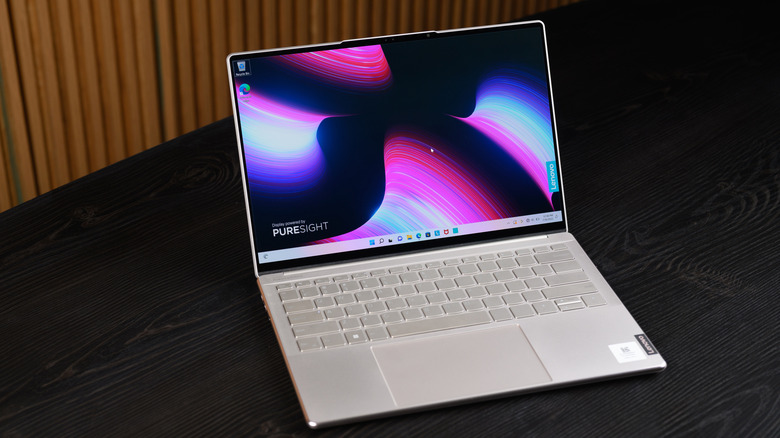
Lenovo's Yoga series entered the market at a time when laptops and tablets were still very distinct product categories. The year was 2012, and the core idea that would form the Yoga was a simple design question: What if laptops were fully foldable? Of course, given the bulky nature of its flagship ThinkPad series at the time, such a design would've been untenable — its weight alone would make the ergonomics (not to talk of the engineering) of carrying a folded version in one hand a headache.
Thus came the Yoga, a lithe device that was 360-degree foldable with a specially designed hinge. The first generation was made only of convertible laptops, but Lenovo expanded its product chain to include a dedicated tablet in 2013. Dubbed the Yoga Tablet, it had a mobile stand that allowed users to hold it comfortably or to place it on a table at a nice tilt.
The Yoga line has since grown to several options, expanding from a two-in-one laptopt and a standalone tablet to include a monitor, a cute mini computer, and a lot of laptops. In a nutshell, the Yoga brand is all about slim, flexible machines in many different forms. We've reviewed a few of these laptops, including the Yoga Slim 9i.