

Still Storing Specialty Tools In A Basic Toolbox? This Is A Better Option
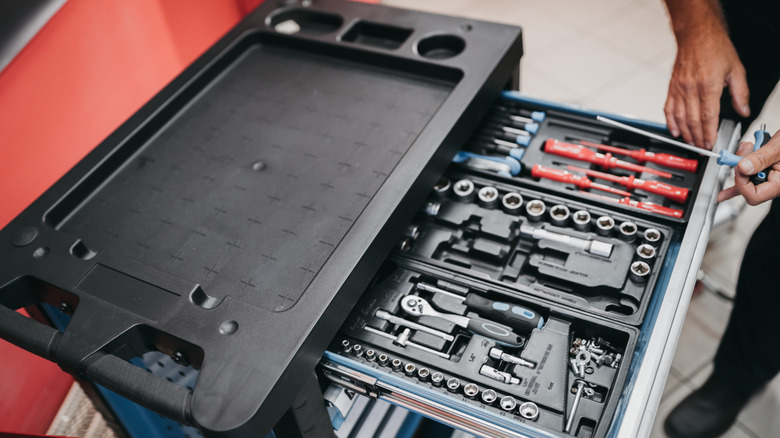
It's easy to assume that a toolbox is a toolbox; it's a box that you put tools in, and doesn't need to be anything more complicated than that. For certain types of simple, occasional-use tools like the odd screwdriver, an old metal box in your garage is probably fine, but if you're storing and using tools in a professional capacity, especially as an electrician or garage mechanic, a basic toolbox may not suffice. If you've got a lot of specialized tools and need to store them carefully, that's a job for either a modular toolbox or a specialty toolbox.
There are numerous factors that go into making the ideal toolbox for different use cases, from the box's material composition to the number and style of drawers and compartments within. If you're using specialty tools, leaving them all in a messy pile at the bottom of a basic toolbox is doing a disservice to both you and the tools themselves, and it could make doing your job more difficult every time you have to fish around in there. This is why, in addition to properly organizing your toolbox, you need the right type of toolbox for the job. Modular toolboxes can help keep your tools organized for clean, easy access, while a specialty toolbox for a specific type of worker includes extra materials for safety purposes.
Modular toolboxes can be freely customized
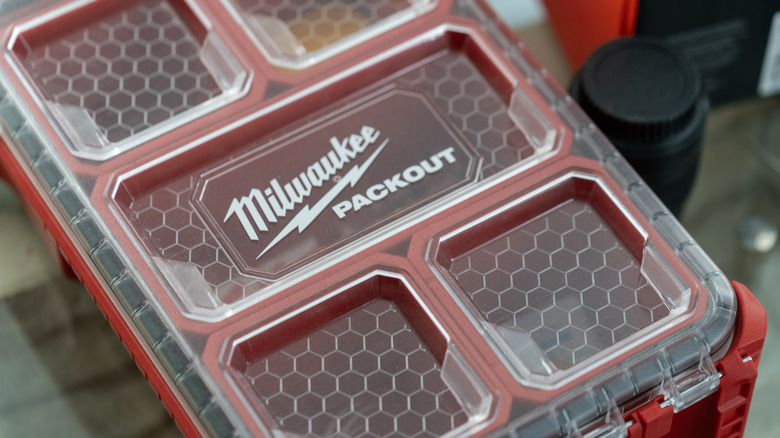
A toolbox is almost like a living thing, in that its contents tend to change and evolve over time as you add new tools to it, and it depends, in part, on whether you're just making the occasional quick fix or working in a professional capacity. Because of this, a basic, tiny toolbox can be swiftly outpaced by a growing tool and accessory collection. The best way to keep up with a living tool collection is to consider a modular toolbox, whose dimensions you can freely alter.
Most major hardware brands like Milwaukee, Ryobi, and Makita offer some of the best portable and modular toolboxes, usually involving boxes and cases of varying sizes that can be interlocked into a single cohesive stack. With a wheeled case serving as the base, you can stack both top-loading bins and front-opening drawers on top and freely wheel them around wherever they're needed. By adding extra containers to the stack, as well as using accessories like removable bins, you can keep your tools organized by purpose, how often you use them, or other similar categories, as well as keep small components like drill bits from getting lost in a rusty pile.
Specialty toolboxes exist for workers like electricians and mechanics
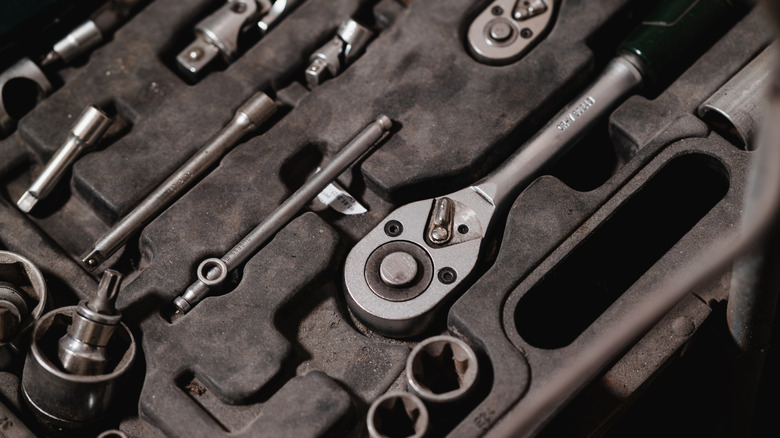
While modular toolboxes are great for general-purpose tool storage and retrieval, not everyone using tools in a professional capacity has precisely the same needs. For example, while there may be some overlap, an electrician would likely have a different array of tools compared to an automotive mechanic. If all of your tools are specified for a certain line of work, it may be more optimal to opt for a specialty toolbox over a modular one.
Specialty toolboxes incorporate different kinds of features and mechanics to make them better suited for certain types of work. A specialty toolbox for an electrician, for example, may have a larger variety of small drawers and fitted compartments in order to organize a large array of tools. The compartments may also have foam liners meant to keep more delicate precision instruments from getting jostled around. A garage mechanic's toolbox, meanwhile, is designed for storing larger, more robust tools like large socket wrenches, and uses deeper, wider drawers and compartments for safe storage. A mechanic may also have a heavy-duty metal toolbox rather than a simple plastic one to better withstand the rigors of a busy automotive garage.