

What Is The 1-Inch Rule For Car Seats?
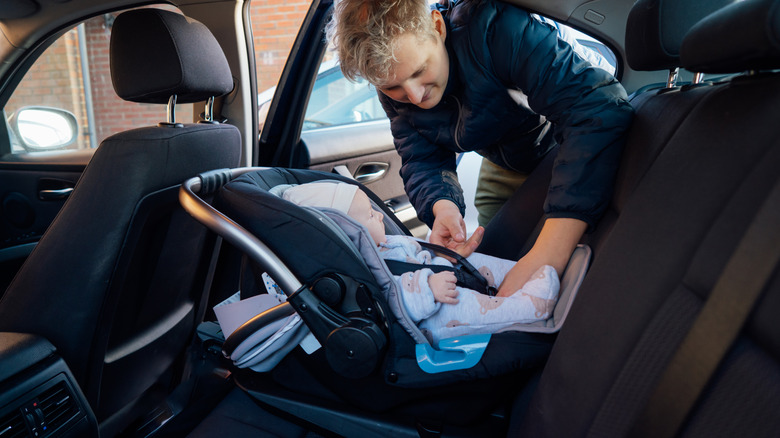
Using a car seat is important enough, but what good is it if it isn't installed the right way? One of the simplest ways to make absolutely certain is by following the 1-inch rule. It applies regardless of whether the car seat is installed with the vehicle's seat belt or the lower anchor system, and it goes for both forward-facing car seats and safer rear-facing car seats, as well.
The rule works like this: After installing the car seat, the seat or its base shouldn't move side-to-side or front-to-back more than 1 inch. You test by putting force on the belt path — if it shifts more than a single inch in any direction, it needs to be tightened or adjusted.
Complying with the 1-inch rule starts with proper installation. First, read both the car seat instruction manual and the vehicle owner's manual. Each combination of seat and vehicle can have different installation requirements, so these manuals will help you wrap your head around your specific setup. After that, position the car seat in the back seat and route the belt or lower anchor straps through. Make sure they're free from twists as well as properly tightened as you get it hooked up. Then, test the installation by pushing and pulling on the seat. If it moves more than an inch up, down, or side to side, it's not secure and has to be fixed.
The 1-inch rule is one small part of a safe car seat install
There are a few other things to keep in mind for proper car seat installation. For starters, rear-facing infant seats should be installed at a 45-degree recline angle to help keep the baby's airway open. Some seats might already come with built-in angle indicators, but don't forget to also manually check, just to be safe. Keep in mind that angle might need to change as the child grows, as well.
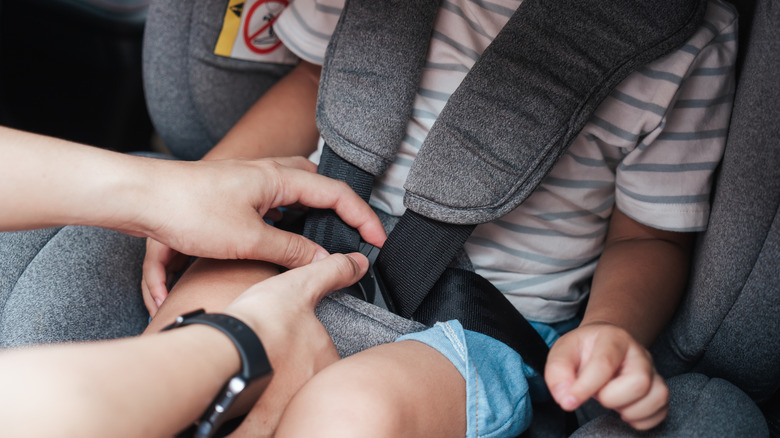
Proper harness fit is just as important. With the seat installed and the child resting flat against the seat, the harness straps should be able to lie flat without twisting. After that, the harness should be tightened until no extra material can be pinched at the shoulder and the chest clip sits at armpit level. This pinch test replaces the old-fashioned two-finger rule for car seats, which is no longer the recommended guidance. Not to be confused with the two-finger symbol bikers use, either.
Another thing to remember: Don't buckle the child in with coats or blankets on. These will get in the way of a safe, snug, secure fit. Instead, children should be buckled in first with coats or blankets placed over the secured harness if they get cold.