

Why European Cars Go Longer Between Oil Changes Than American Ones
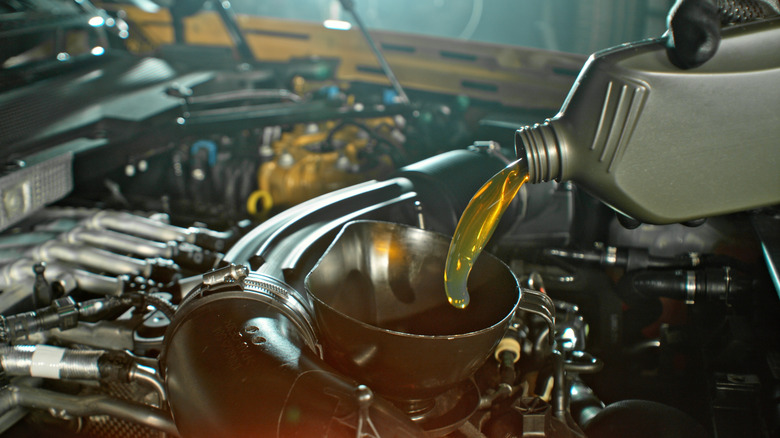
Oil change intervals are getting longer and longer here in the U.S. thanks to advances in both engine technology and engine oil formulations. Even with those advances pushing modern American engines beyond the old-fashioned 3,000-mile oil change guidance, European vehicles still have us beat. Across the Atlantic Ocean, European manufacturers recommend oil changes every 10,000 to 15,000 miles. It's not solely about European oil vs. American oil, either. It's just as much tied to the way European engines and emissions systems are engineered.
For one, European engines typically operate under tighter manufacturing tolerances. That means the clearances between moving components are smaller than those in most American engines. These tighter tolerances give you more efficiency and better performance, but they also create higher operating pressures and temperatures. Conventional or semi-synthetic oils would break down a lot faster under those conditions, which is why high-performance synthetic formulations are essential, not optional, for most European cars. Therefore, longer intervals between oil changes.
Different continents means different roads (and different oil change intervals)

Modern European vehicles also come with stricter emissions regulations. No matter gas or diesel, cars rely on sensitive equipment such as catalytic converters and diesel particulate filters (DPFs) for emissions control. However, these components can be damaged by too much sulfated ash, phosphorus, and sulfur, otherwise known as SAPS. SAPS are less acceptable in European oils compared to the higher concentrations found in American formulas. As a result, European oils get blended with low-SAPS additives to better protect emissions equipment and keep the oil cleaner for longer.
Europe and America also use different oil standards. Europe follows standards set by the European Automobile Manufacturers' Association (ACEA), while the U.S. follows classifications from the American Petroleum Institute (API). ACEA specifications care more about emissions-system compatibility and fuel economy, while API standards focus more on wear protection and deposit control. Different standards mean different formulations, which in turn means different intervals.
There's another important caveat here: driving a European car in America. Even though the manufacturer might say you can go longer than this, automotive specialists will recommend changing the oil much sooner, around 7,500 and 10,000 miles. It's because American cars are not the same as European ones just as our roads are not the same. We have more stop-and-go traffic, more frequent short trips, more extreme temperatures, and heavier loads to carry on average, all of which can accelerate oil degradation. That means changing much sooner than 10,000-15,000 miles.