

What Is An Inline Fan For & How Does One Work?
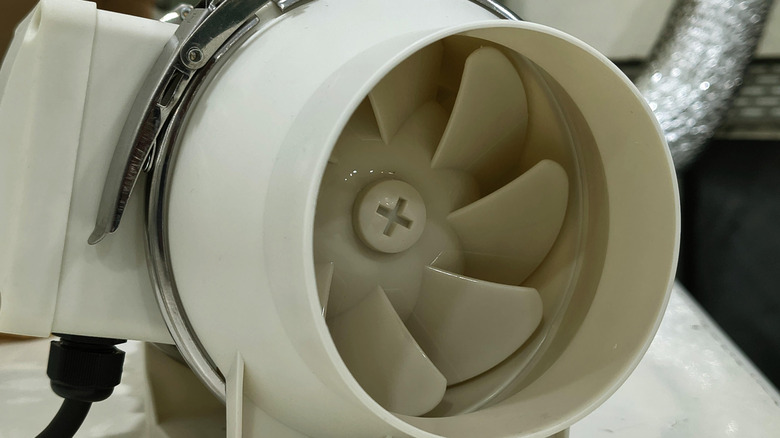
An inline fan differs from an exhaust fan in that the inline variety is a ventilation fan installed inside ductwork rather than mounted in a wall, ceiling, or window. Unlike these fans you should consider if you don't have an AC or a neck fan, it's not designed to keep you cool. Instead, its job is to move air through a run of ducting, helping push stale, hot, humid, or odor-filled air out of a space and pull fresh air in when needed. You'll often see inline fans used in grow rooms, bathrooms, laundry areas, workshops, attics, kitchens, and HVAC setups where standard exhaust fans are too weak or poorly placed.
What makes an inline fan useful is flexibility. Because it sits within the duct line, it can serve remote vents and move air over longer distances than many conventional fans. That makes it a good choice when the source of the air problem is far from an exterior wall or when a room needs better airflow without a bulky visible fixture. In some setups, inline fans are used for intake, exhaust, or even circulation, depending on how the duct system is arranged.
They're also valued for efficiency. A properly sized inline fan can improve ventilation without needing to run at full power all the time, which helps keep noise and energy use down. Many models are designed for steady-duty operation and can be paired with filters, speed controllers, humidity sensors, or thermostats.
How does an inline fan work?
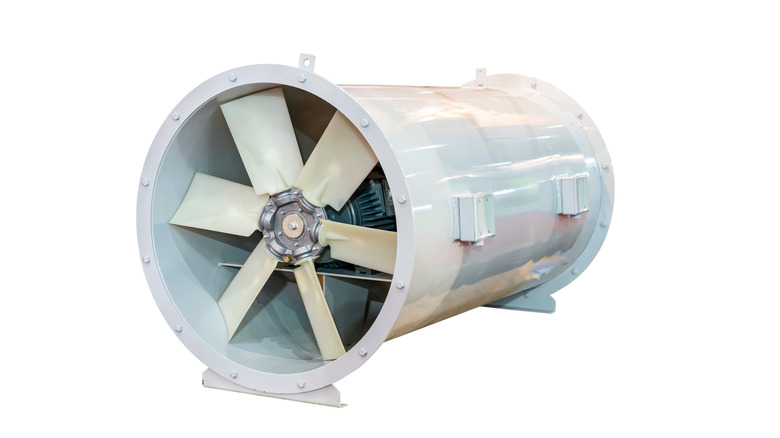
An inline fan works by creating pressure differences inside a duct system. The fan's blades spin inside a housing, drawing air in from one side and forcing it out the other. That movement increases airflow through the attached ducting, letting air travel from one room or space to another, or from indoors to outdoors.
Most inline fans use either an axial or centrifugal design. Axial fans move air along the same path as the spinning blades, which makes them straightforward and efficient for lighter resistance. Centrifugal fans use a different blade arrangement and are better at pushing air through longer ducts, bends, filters, and other obstacles. That's important because ductwork adds resistance, and a fan must overcome that resistance to maintain strong airflow.
In a typical setup, the fan is mounted somewhere in the duct run, often in an attic, crawlspace, or utility area. When powered on, it pulls air from the intake end and pushes it toward the exhaust end. If the system includes a filter, the fan may be pulling air through the filter first, which can improve air quality but also increases resistance. That's why fan sizing matters: too small, and airflow suffers; too large, and noise or wasted energy can become a problem. Inline fans also have an aesthetic advantage in that they can vanish inside ducting, instead of needing to be mounted in a very visible position on the exterior of a wall, ceiling, or building.