

Why USB-B Never Caught On Like USB-A Or USB-C
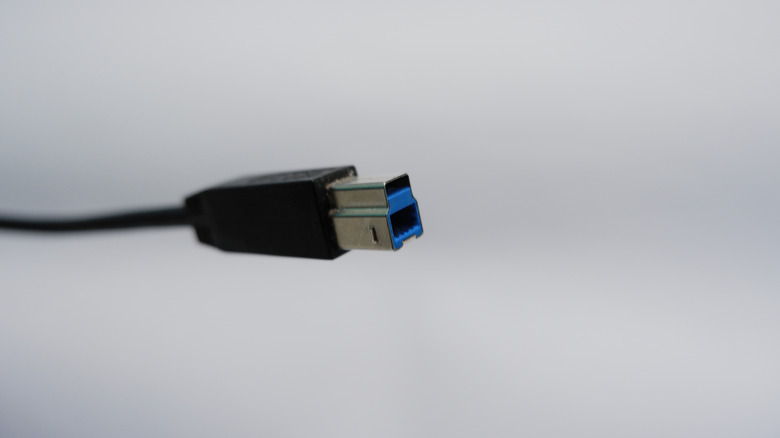
If you have wondered why USB-B never became as popular as the older USB-A or the modern USB-C, you are not alone, and the reasons for it are not as simple or straightforward. In fact, there are good odds you didn't even know USB-B existed before today. USB-B was never meant for everyday devices that an average person used. Instead, USB-B connectors were reserved for niche devices like printers, scanners, audio equipment, storage drives, and more. Let's not forget that USB-B connectors are bulkier than USB-A, which made them unfeasible for devices that prioritized form factor, like laptops and smartphones.
Additionally, the USB-B connector was generally plugged in once and forgotten about, unlike the USB-A connector that was often unplugged and replugged, especially when moving peripherals between different computers. The USB-B end was rarely adjusted. So, USB-B wasn't less useful, but it was more easily forgotten since the connector remained out of sight for much longer periods.
Objectively, the comparison between USB-B and USB-A or USB-C doesn't make much sense, since the former, USB-A, wasn't necessarily a competitor, and the latter, USB-C, arrived almost 18 years later. For the unversed, USB-A and USB-B were released together in January 1996, and the two actually worked together. USB-A was reserved for the host device, whether it's a computer or another system, and USB-B was designed for the peripheral or connected device, say a printer or audio equipment. Having different connectors at both ends of the cable also made sense from a practical standpoint, since it helped eliminate confusion surrounding which end of the cable gets plugged into which device.
USB-B is still widely used
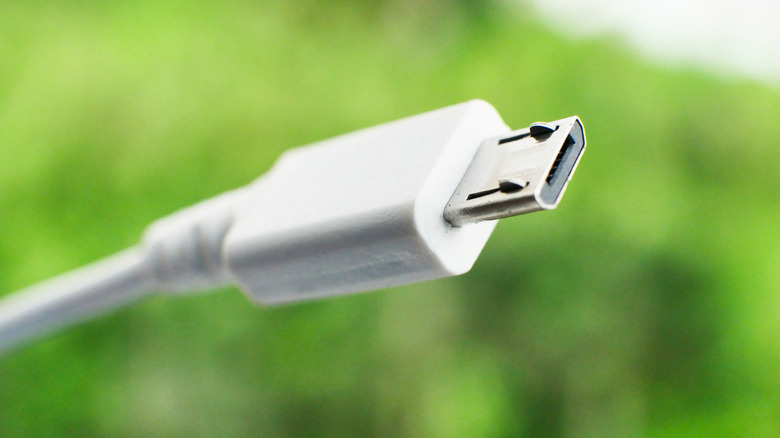
It's unlikely that you will find the conventional USB-B port on a smartphone or laptop. Newer devices are even phasing out USB-A in favor of USB-C since the latter is even thinner, supports higher power delivery, faster data transfer, and has a symmetric design, meaning you can plug it either way. But few people realize that they have been using USB-B extensively for the past decade, albeit a slightly different variation of it.
The micro-USB connectors you have been using in smartphones, speakers, and smartwatches, were essentially a micro variant of USB-B. Introduced in 2007, they were much smaller and more practical, making them ideal for these devices. Before that, we had a mini-USB type B, introduced in 2000, but it never really caught on other than a few early pre-iPhone mobiles. Similarly, there were also mini and micro type-A connectors, but those too saw little adoption. And until manufacturers started gradually phasing out micro-USB type B to incorporate USB-C, the former was widely used by most people. It's just that they were never really recognized as modern versions of the USB-B connector since they looked very different and were largely marketed as just micro-USB, with no type specified.
Even today, you will find USB-B connectors in a number of devices (mainly printers), and they are unlikely to become obsolete soon. That's because switching to USB-C entails design changes and adjustments to the manufacturing process, which increases production costs. Besides, the devices that rely on USB-B are generally bulky office devices, so there's little need to adopt the newer, smaller USB-C connectors. USB-B will probably be phased out one day, but it's unlikely to happen any time soon.