

What Is The 107% Rule In F1?
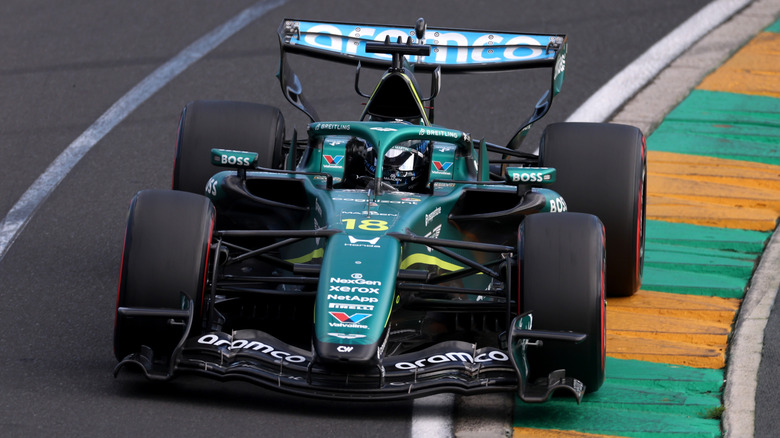
Racing is inherently more interesting when the competition is close, and different racing series try to encourage closer competition in different ways. Some rulesets take a more involved approach, like the current endurance racing Balance of Performance rules that govern series like the World Endurance Championship and, by extension, the 24 Hours of Le Mans. Meanwhile, other rulesets implement regulations that are designed to stop backmarkers from spoiling the competition for everyone else.
Formula 1's 107% rule is an example of the second type of approach, since it only affects teams that were always going to be right at the back of the grid anyways. It states that any driver whose fastest qualifying lap in Q1 exceeds 107% of the time of the fastest driver will be excluded from the race, unless an exemption is made by the stewards.
The rule was created to combat a rise in uncompetitive F1 cars in the '90s, with several of them causing problems on the track on race day. Previously, small, underprepared teams could turn up to a race, qualify at the very back of the field with a car that was far behind all of the rest of its competition, and get in the way of the race leaders during a grand prix. After the 107% rule came into force in 1996, these slow cars simply wouldn't be allowed into the final race unless they successfully convinced the stewards that exceptional circumstances were the reason that they couldn't set a fast enough time in qualifying.
The 107% rule was a necessary addition
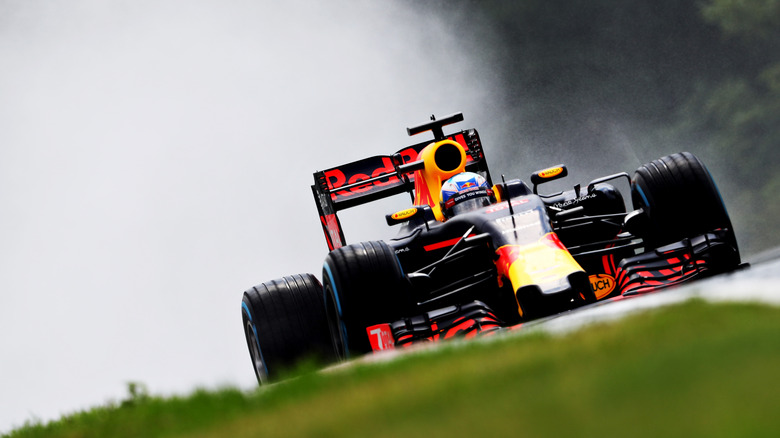
A 1995 analysis published by Motorsport showed exactly why the 107% rule was needed. It showed that, at the French Grand Prix between 1989 and 1995, at least one car would have been excluded from the race every year if the rule had been in place. In 1991, eight out of the 34 entered cars would have been excluded. Having eight cars going around the track that needed to be lapped multiple times by the leaders during a race was a safety risk, yet it added nothing for fans who wanted to see close racing.
The rule was effective at keeping uncompetitive teams out of the races, and by the end of the 2002 season, it was deemed to be no longer necessary. In 2003, it was ditched altogether when single-lap qualifying was introduced. However, with an influx of new teams and the return of qualifying sessions, it was reinstated again for 2011. It remains in place today.
It remains one of F1's lesser-known rules, in part because it's usually only ever relevant during unusual circumstances. Nonetheless, there have been some more recent instances where cars have simply been too slow to qualify. For example, at the 2012 Australian Grand Prix, both HRT cars failed to set a fast enough time in qualifying and were subsequently barred from the race.
In most other instances, like the 2016 Hungarian Grand Prix where qualifying was badly affected by red flags and bad weather, stewards decided that drivers who couldn't set a fast enough time would be allowed to compete anyway based on the times they set in free practice.
Aston Martin nearly fell foul of the 107% rule in 2026
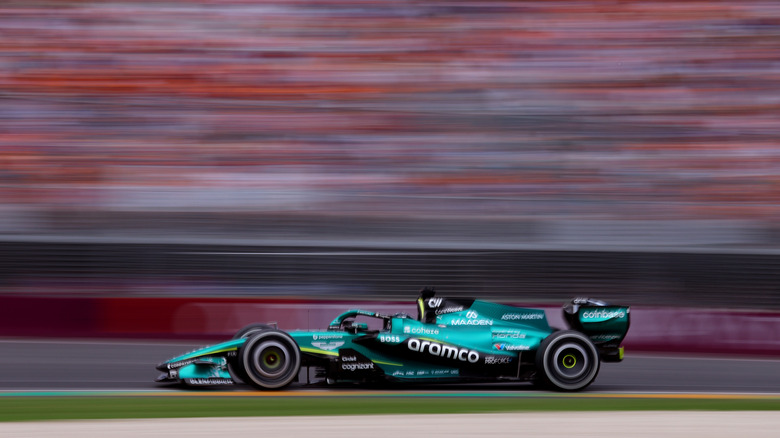
Despite the arrival of legendary F1 designer Adrian Newey and significant investment into the team's personnel and facilities, Aston Martin's 2026 AMR26 F1 car program got off to a dismal start. Newey, fresh from overseeing the most expensive hypercar of 2025, had created an ambitious design that was notably different to every other car on the grid. Aston Martin was also the only team on the grid to start 2026 with a Honda engine, and both the engine and the car itself proved to have serious problems.
Early testing saw Aston Martin's drivers limited to between 15-25 laps at a time, since the car was vibrating so much that drivers said they risked nerve damage if they drove for any longer. At the Australian Grand Prix, Lance Stroll found the car so difficult to drive that he was unable to set a time within 107% of the pole-sitting car during any session. After some lobbying by the team, Stroll was allowed to take part in the race despite breaking the rule, eventually finishing a full 15 laps behind race winner George Russell.
After introducing its B-spec car at the Hungarian Grand Prix in July, Aston Martin's deficit to the rest of the competition was notably reduced. At the time of writing in August 2026, it remains to be seen if Aston can continue with the rapid pace of improvement that it needs to become competitive at the front of the field, but at the very least, the team can hope that it won't have to worry about the 107% rule again from now on.