

What Does The Energy Star Label Mean On A Refrigerator?
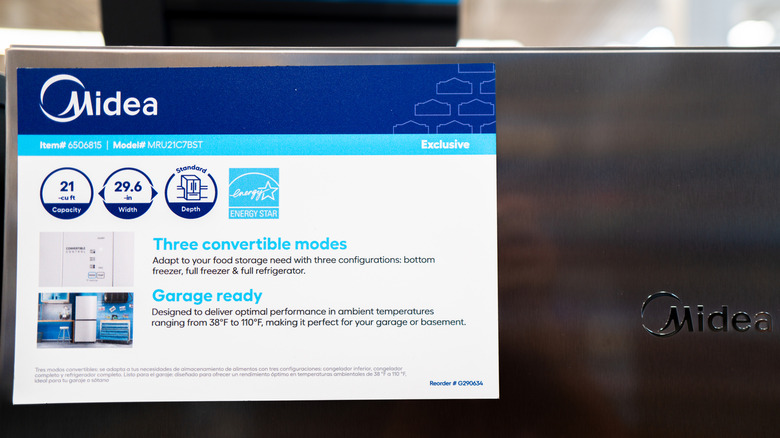
Does that Energy Star label actually mean something, or is it just a marketing ploy? It's a reasonable question to ask when shopping for a refrigerator. At its most basic level, the label indicates that the appliance exceeds the U.S.' minimum energy efficiency standards. When comparing products from any of the major refrigerator brands in a showroom, that little blue label is your way of identifying fridges that use less electricity — at least compared to those without it. It's not ad speak, either, as it's a certification awarded by the U.S. Environmental Protection Agency.
More specifically, it means that the fridge in question is 9% more energy-efficient than its non-Energy Star Rivals. The Energy Star label can be awarded to more than just refrigerators, of course, but considering how much electricity a fridge uses, seeking an Energy Star fridge makes sense, as even 9% adds up over time. It's also worth noting that those gains come from engineering improvements rather than reduced performance. Certified refrigerators might use high-efficiency compressors, enhanced insulation, or improved temperature management to minimize energy use.
What kind of savings to expect from an Energy Star refrigerator
Based on the typical 12-year lifespan expected of a refrigerator, Energy Star claims that replacing your older unit with a new Energy Star-certified model could save you around $150 in operating costs. Some estimates place those lifetime savings even higher, with Cnet's research suggesting you may save as much as $340 over a decade with a side-by-side fridge. Either way, you'll save money if you opt for an Energy Star-certified fridge.
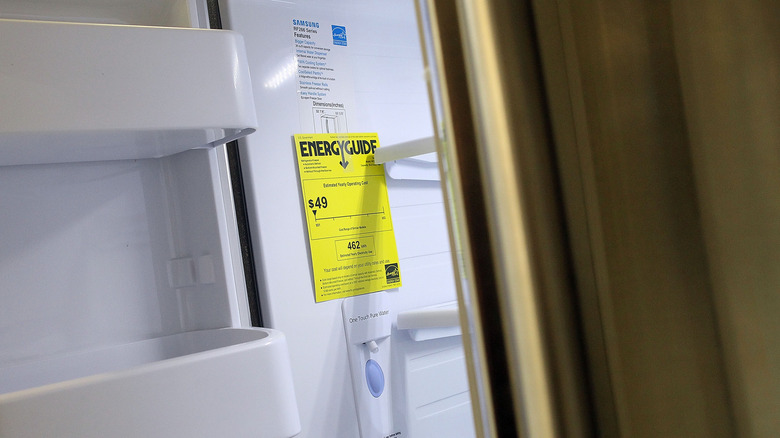
Do bear in mind, however, that the blue Energy Star label is not the same as the yellow Energy Guide label on household appliances. Energy Guide labels are required by the Federal Trade Commission and estimate your annual energy consumption and yearly operating costs. Confusingly, they might also have an Energy Star label on them. In other words, the yellow Energy Guide label informs you of projected energy use and operating expenses, while the blue Energy Star label indicates whether the appliance surpasses the EPA's efficiency benchmarks.