

Can A Cracked Mower Deck Be Welded?
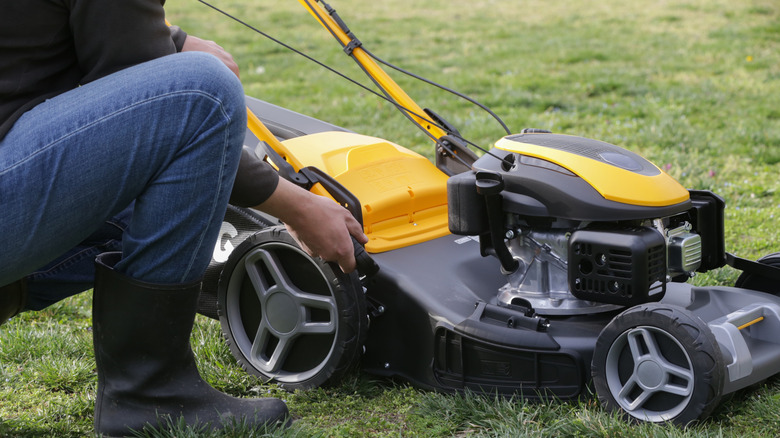
Mower decks live a hard life. Every time you mow, the deck and chute are battered by rocks, dirt, sand, and anything else hiding in your lawn. On top of that, even dry grass carries enough moisture that the underside of the deck gets wet every time you mow. It's hardly surprising that rust and cracks can spring up.
Over time, vibration from the engine and impacts from hidden obstacles slowly expand small weak spots into visible cracks. Meanwhile, manufacturers do their best to protect against corrosion with paint, powder coating, or galvanization, but exposure is inevitable. The spinning blades effectively turn the inside of the deck into a sandblaster. Stones and debris chip away at protective coatings until bare metal is exposed. Once moisture reaches that metal, rust begins its slow but relentless work.
Fortunately, with the exception of plastic mower decks, many cracked mower decks are often repairable by welding. Most mower decks are made from mild steel, which is a relatively straightforward material for MIG welding. Alternatively, some premium or commercial mowers use aluminum decks, and while it's certainly possible, aluminum welding is significantly more demanding. This is usually a job for an experienced TIG welder, notably one of the most difficult welding techniques to learn, demanding precise two-hand coordination, strict temperature control, and consistent arc-distance management.
To avoid the costly task of replacement, welding is an increasingly popular solution to fix a damaged mower deck. But there's a big difference between booger welding a crack shut and repairing it well enough to safely contain a set of two-pound blades spinning at 3,600 RPM. That's something worth considering before breaking out your garage MIG welder.
What welding can, and can't, fix
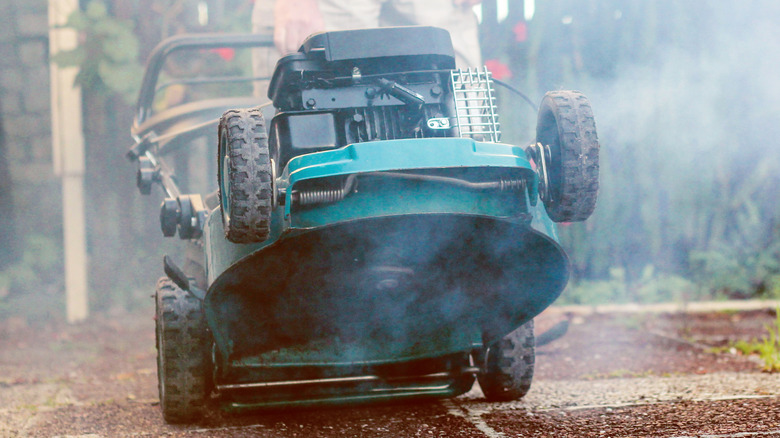
A weld won't return a mower deck to its as-new condition. But it can return some structural integrity by joining cracked metal back together, preventing further movement and damage. This is particularly valuable around mounting brackets, wheel supports, or spindle housings where vibration imparts persistent stress.
If welding is your preferred solution, preparation makes the difference between a repair that lasts years, and one that fails during the next mow. Every trace of paint, grease, dirt, and corrosion should be removed before striking an arc. Because mower decks are relatively thin mild steel, continuous welds can easily burn through or distort the panel. Instead, short overlapping stitch welds that gradually build strength while limiting heat input are generally better suited. If you're repairing a crack, drilling a small hole at each end first, a technique known as stop-drilling, can prevent further tearing.
However, welding is useless in the presence of rust. Rust isn't metal; it's corrosion that has consumed the base material. You can't weld rust. To address this, cutting away rusted sections and welding in a patch or plate will provide a longer-lasting repair.
Regardless, the decision comes down to the structural integrity of the machine. Anyone who's seen a mower throw a blade understands why correct mower use and maintenance is so important. The deck isn't just somewhere for John Deere or Stihl to put their sticker; its purpose is to contain blades and debris spinning and deflecting at enormous speed. Therefore, makeshift or jury-rigged repairs should be well considered before relying on them as your last line of defense in those violent few seconds that follow the snap of a blade retaining nut.
To weld or not to weld
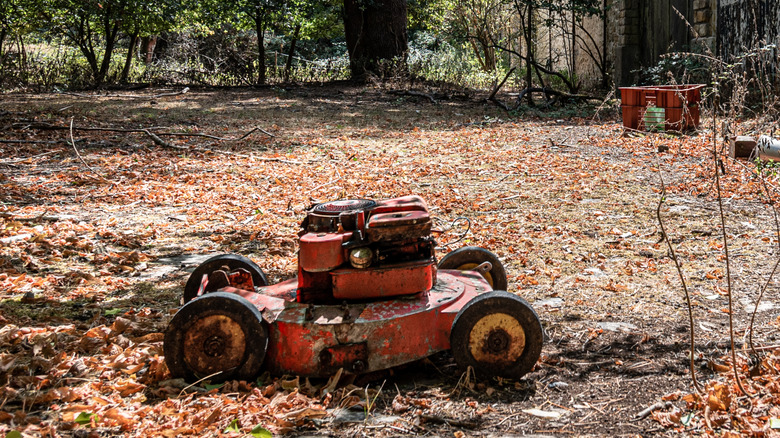
Whether welding is worthwhile ultimately comes down to the condition of both the deck and the nature of the damage itself. A clean crack in otherwise solid steel is usually an excellent candidate for a weld repair. Even larger damaged areas can often be saved with fabricated patches, plug welds, or reinforcing plates if there's enough healthy metal remaining to support them. These repairs can significantly extend the life of an expensive deck, at a fraction of the replacement cost.
However, further consideration is necessary when rust has spread across large sections of the deck, or into any of the key structural brackets or mounts. Corrosion often extends much further than any visible marks, leaving steel paper-thin and ready to crack elsewhere. Welding one area may simply move the stress to another weak section, resulting in an endless cycle of repairs. In these cases, replacing the entire deck is often the safer and more economical option over the long term.
There's also the question of cost and skill. Mild steel decks are well within the capabilities of many competent welders using MIG equipment, but paying for professional aluminum repairs can sometimes approach the price of a replacement deck.
So, a cracked mower deck can be welded, provided the surrounding metal is still structurally sound. But before firing up the welder, consider whether you're repairing a crack in an otherwise healthy deck or trying to save one that's already been claimed by severe damage or extensive corrosion. How that question is answered will usually tell you whether welding is a smart investment or whether it's time for a replacement.