

Why Buick Survived GM's Cuts (But Pontiac Didn't)
Many large businesses in the U.S. regularly face financial challenges, and sometimes, those challenges lead to massive cuts. This has been the case for GM, which has discontinued its share of car brands over the years, including Pontiac. This move came after GM filed for Chapter 11 bankruptcy protection in 2009, which led to a massive restructuring plan. But not all GM brands shared Pontiac's fate.
Four GM brands survived the cull: Buick, Chevrolet, Cadillac, and GMC. Buick, for its part, was one of GM's most profitable brands at the time, and this quartet became GM's focus moving forward. In its February 2009 Restructuring Plan filed with the SEC, GM explained that this move would allow it to concentrate product development resources on its core brands, while also improving profitability. GM's initial plan was not necessarily to eliminate struggling brands outside of its core, but to reduce the number of brands competing for limited resources at the time.
In fact, GM intended to maintain Pontiac as a niche offering within its lineup. However, Pontiac was later removed from the company's plans in late 2009 as part of its Brand Rationalization efforts. GM stated that it had "no planned investment for Pontiac," and the brand was eventually phased out by the end of 2010.
What went wrong with Pontiac?
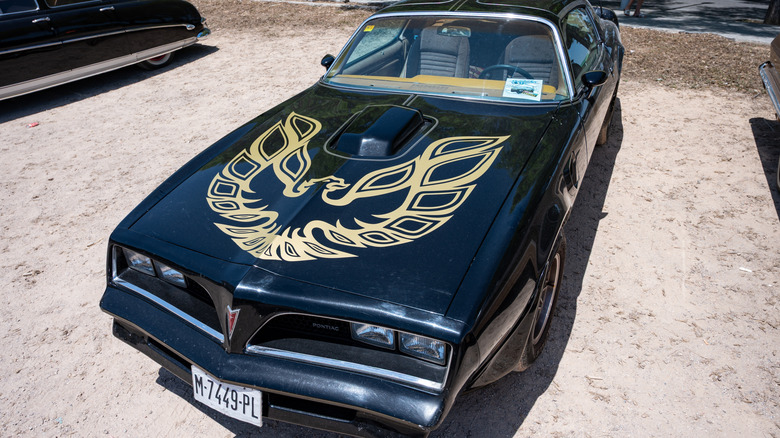
Beyond GM's 2009 restructuring plans, there are other reasons why Pontiac flopped, beginning with a lack of profitability. In a 2009 letter to the editor of Automotive News, GM's then-Vice President of U.S. Sales Susan Docherty said that Pontiac had not turned a profit in several years. Though the company did try to bring the brand back to life in the years leading up to the end, those efforts ultimately did not pan out.
GM's use of badge engineering also didn't help Pontiac. Badge engineering is a strategy that involves sharing vehicles across multiple brands and differentiating them with the brand. For example, the Pontiac G5 was essentially a twin of the Chevrolet Cobalt, with both cars sharing the same platform, as well as many components. This strategy meant that there was likely little reason to choose Pontiac vehicles over their equivalents.
Toward the end, Pontieac was was a far cry from the performance-focused brand that it had historically been. During the late 1950s and 1960s, the Pontiac GTO and Firebird Trans Am helped establish the brand's image for a generation of car buyers. However, Pontiac struggled to maintain that identity as its lineup shifted toward more conventional vehicles. Without the performance cars that once defined it, Pontiac was never quite the same.