

Germany's New Drone Could Change The Face Of Naval Warfare
There's no denying the impact drones have had on the world's military operations in the 21st century, as the future of warfare is drone warfare. Military drones come in all shapes and sizes, including one that looks like a killer whale. Most people are aware of the drones that fly, but there are plenty that navigate the world's oceans, and many of them are particularly deadly. Ukraine successfully employed various naval drones against its aggressor in the Russo-Ukrainian War, and those innovations have had an impact.
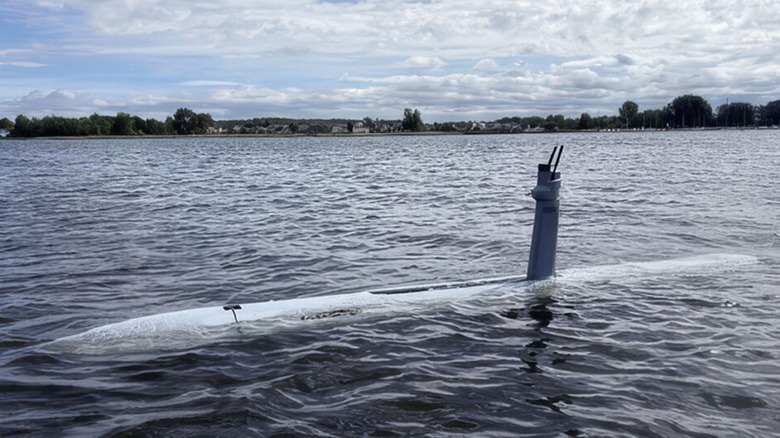
Developers around the world are working hard at coming up with all kinds of naval drones. There are those that cruise atop the surface and others that spend their entire existence beneath the waves. One of the more impressive drones that's surfaced recently is the Ranger, developed by Gabler and Flanq. The defense contractor issued a press release on July 14, 2026, revealing that the Ranger successfully completed the surface part of its Sea Acceptance Test.
This is a big step in the Ranger's development, as it demonstrates its efficacy and capabilities while operating on the surface. More testing is required before the Ranger can move forward, but the system that Gabler and Flanq has developed could change the face of naval warfare by completely altering submarine operations through the use of this new Torpedo-Tube-Launched Uncrewed Surface Vessel (TTL USV). Should the Ranger move forward and find its way onto the world's submarines, it could have an immense impact on future military submarine operations.
Germany's new Torpedo-Tube-Launched Uncrewed Surface Vessel
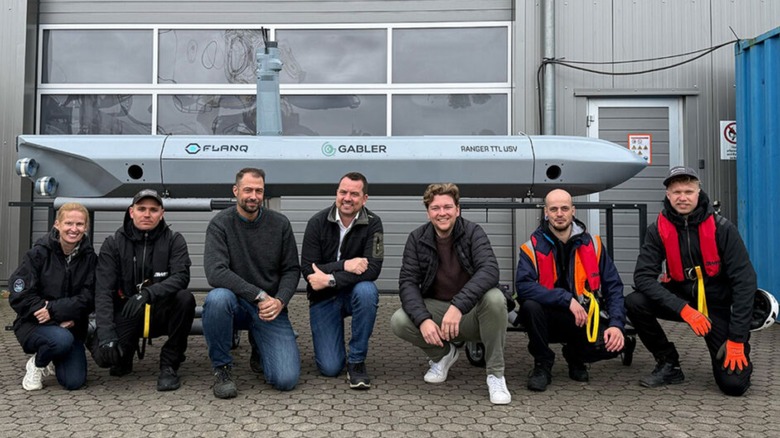
Ranger is a small but impressive vehicle that's launched from a standard 21-inch torpedo tube. That's the worldwide standard for torpedo tubes used throughout the United States' submarine fleet, as it's able to launch the world's deadliest torpedo, the Mk. 48. Now, those same torpedo tubes will be able to launch Ranger, but it's unlike other naval drones in how it operates. The onboard system autonomously surfaces the vehicle after launch, where it uses its sensor package for a variety of operations.
These include covert intelligence, surveillance, and reconnaissance (ISR) missions, and because of Ranger's small size and low profile, it's difficult to detect. Ranger measures 14.76 feet in length and has a folding keel and sensor mast. It also features an electric drivetrain and a payload bay that can be reconfigured prior to launch. Ranger is able to provide intelligence via its ISR package, and it functions somewhat like an advanced periscope, allowing the sub to remain submerged while still able to "see" via a launched Ranger drone.
Another version, dubbed Strike, is a one-way attack variant, which will be made available once the system finishes its trials and is moved into production. Ranger has the potential to alter submarine operations by providing a reliable platform for extending a sub's operational flexibility while remaining safe and undetected by enemy vessels. It's unclear what the system will cost once finished, but given the scope of its capabilities, numerous militaries are likely to line up to add Ranger and Strike to their inventories.