

Why Do Car Brands Keep Reviving Old Nameplates?
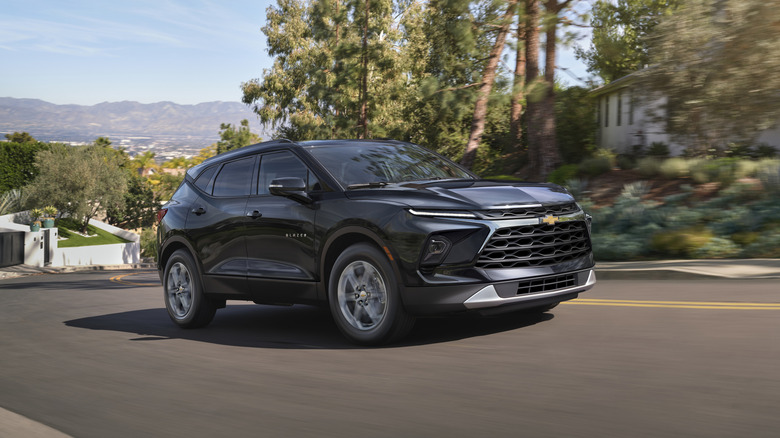
Some vehicle models have had incredible staying power, becoming among the longest-running nameplates in automotive history. While others have suffered the fate of being discontinued. Furthermore, some have had their name reused on new models that don't share much with the original.
Take the Chevy Blazer (K5), which ran from the late 1960's through the early 1990's, and set the original standard for full-size SUVs. In 2019, the Chevy Blazer was back, only it was now a mid-size crossover, labeled as "flashy" by some review outlets, certainly not in the same spirit as the classic. In one instance, the nameplate wasn't of a discontinued model, but was added to the name of a new vehicle all the same when Ford introduced an electric crossover as a Mustang Mach-E – nothing like the original pony car. But why?
Automakers are constantly looking for ways to keep costs down. Research and development of new models alone can run into the realm of billions of dollars. So, automakers conduct marketing studies and incorporate various strategies to catch the eye of potential buyers. Using business concepts like brand recognition, automakers hope the lure of a familiar name might conjure positive emotions that compel you to choose their car over a competitor.
Familiar nameplates can help elevate the profile of new car models
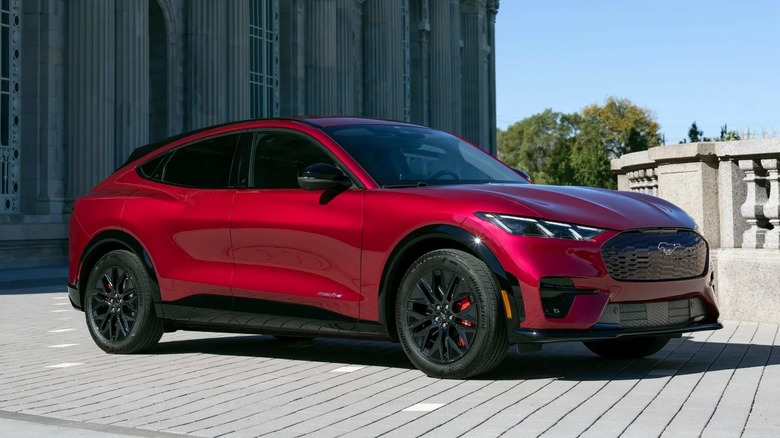
The concept of brand recognition is simply a way to describe how potential customers perceive a particular brand over another. How recognizable is the brand name (in this case, the vehicle nameplate), and how much loyalty does it garner among buyers? Finding a way to leverage that name recognition can help draw attention to new models and ultimately sell more cars.
For example, when Ford was developing the Mach-E, it learned that the market would be crowded by the time the vehicle was set to launch. According to Jason Castriota, brand director for EVs at Ford, per RoadandTrack.com, "The idea of how to we stand out in the crowd, how do we cut through all the noise and the clutter of yet another all-electric vehicle, became really the essential question that we had to solve." The answer was to borrow a well-known nameplate and incorporate a few nods to the original into the exterior design. While this move may have been divisive among enthusiasts, it certainly got people talking about the new model.
The effect of nostalgia when reviving old vehicle nameplates
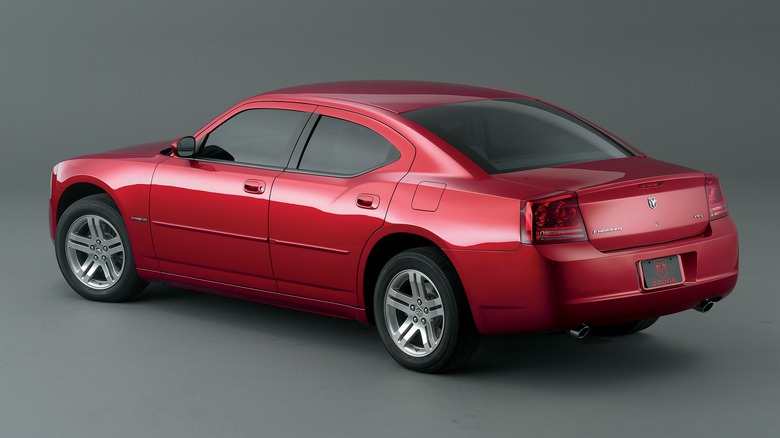
Nostalgia can be powerful when marketing a vehicle. Just look at one of several examples of modern cars that look like retro classics. While purists may scoff at automakers' attempts at creating nostalgia, especially if the car doesn't resemble the original at all, it may not matter. Automakers are trying to tap into a wider audience, which still recognizes the name and has some recollection of it from the past.
Take the Dodge Charger, for instance, which returned in 2006 as a powerful four-door (not two-door) sedan, much to the disappointment of some classic car aficionados. According to Craig Love, the VP of the Rear-wheel-drive Product Team at Chrysler, as reported on Stellantis North America Media, explained, "It's a car that evokes power and performance under the hood, yet provides everyday functionality and convenience." Chrysler was likely attempting to widen the appeal of the Charger beyond muscle car fans, which increased its potential consumer base. After all, the top 10 best-selling vehicles in 2006 according to Cars.com didn't include any sports cars but plenty of sedans.
However, borrowing a familiar nameplate isn't always effective. Stellantis (which owns Dodge) recently used a familiar name for its EV, the Charger Daytona. However, it hasn't garnered the same success, as Dodge reportedly sold only around 7,000 of its muscle-car EVs in 2025. Worse still, depreciation for these models is off the charts, with one Dodge Charger EV losing $50K in value over the span of just one year.