

How Many People Actually Buy Physical Game Discs These Days?
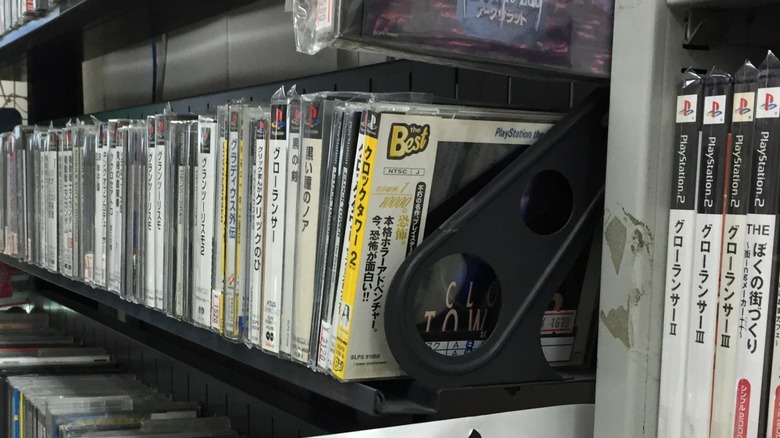
On July 1, 2026, Sony announced that physical disc production would end in January 2028, closing a chapter in the company's long-running video game division. Since the first PlayStation hit store shelves in 1994, games have come on discs, but that has slowly changed over the past two decades. As digital storage has become less expensive, more games are released digitally, allowing players to simply download whatever they like and play it on their consoles.
Sony's announcement caused instant backlash from the gaming community, which balked at the prospect of physical game media becoming a thing of the past. This is due to several factors, the least of which being collectability. The real concern stems from ownership, as "buying" a digital game doesn't actually transfer ownership to the person who purchases it but instead provides a license for its use, leaving it in the company's hands should rights change and those downloads need to be revoked. That has happened over the years with movies and games, so many gamers are worried.
Still, when digital media is as commonplace as it is in 2026 when Sony made its announcement, that begs the question, "How many people actually buy physical game discs these days?" It's a fair one; most games that come on discs can be just as easily purchased digitally, leaving it up to the consumer to make that decision. A YouGov survey in June 2026 found that a larger portion of gamers, around 51%, prefer physical discs, but sales data doesn't reflect that. It turns out that the percentage of gamers who buy physical discs is shrinking year after year, so Sony's decision wasn't made in a vacuum, as it reflects consumer spending.
What the physical disc purchase numbers show
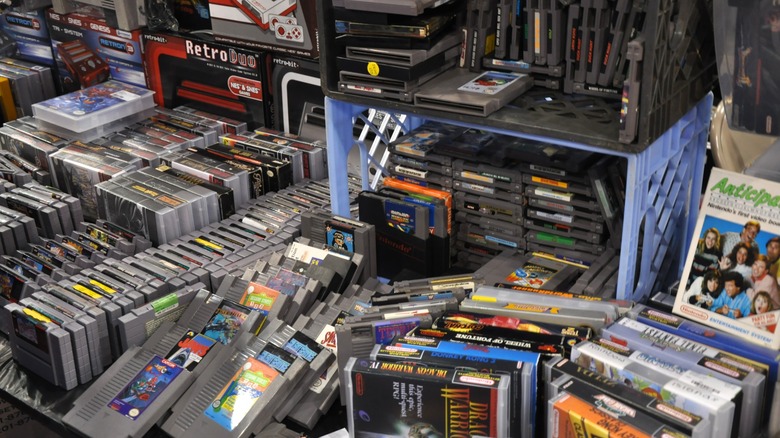
While it's unclear precisely how many gamers prefer physical games over digital ones, spending indicates that the former is shrinking. In 2025, new physical game sales fell by 11% when compared to the previous year according to games industry analyst Matt Piscatella (via GameSpot). In terms of money spent in the United States on games, new physical game sales reached $1.5 billion in 2025. The total amount spent by consumers was $52.4 billion, so with only $1.5 billion being physical copies, that puts the percentage of total sales at only 2.86%.
For Sony, which is among the biggest video game sellers in the market today, 2.86% of total sales is incredibly small. The cost of manufacture and distribution of physical games likely pushed Sony to make its decision given the fraction of gamers who still purchase physical media. Add to that the cost of hardware needed within consoles to read those discs, and that's another reason why Sony wants to stop making them. Costs of all computer components are rising, which is why consoles keep getting bumps in price.
Eliminating disc readers would help reduce the overall price tag of the forthcoming PlayStation 6. Console manufacturers like Sony already produce digital-only devices, and they're much cheaper than their disc-reading counterparts. Sony is only the first major company to take this step, but it's unlikely to be the last. On the same day of the Sony announcement, Microsoft revealed its disc-to-digital program, suggesting that it too is looking to abandon physical media for its next-generation Xbox.