

What Is The Ethernet Port On A Wi-Fi Extender Used For?
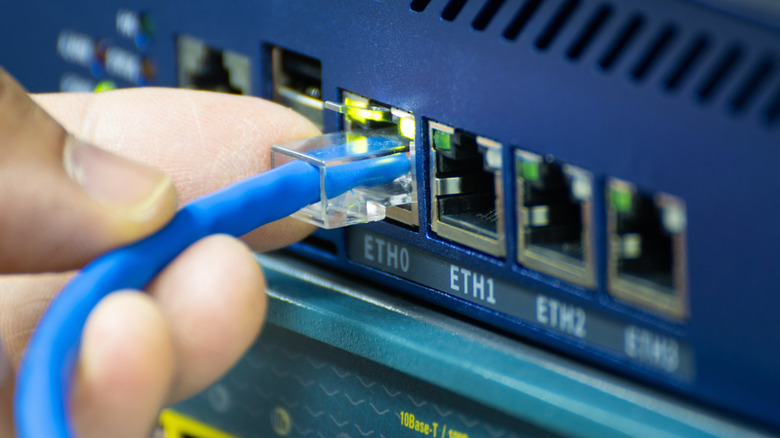
Some households may not benefit from the use of a Wi-Fi extender, while others could struggle to maintain a solid internet connection without it. But in some cases, using a Wi-Fi extender between a router and a weak-signal area may not be enough to deliver a noticeable difference. That's where the Ethernet port comes into play, as it can be used to directly connect with the router.
By establishing a wired connection between the Wi-Fi extender and your router, it's possible to reduce some performance issues that can affect wireless connections. This includes electrical interference from other devices, as well as signal loss that can occur as Wi-Fi travels throughout your home. In this setup, the extender works more like an access point because it uses the Ethernet cable to connect back to the router instead of relying on a wireless signal. The extender's Ethernet port can also be used to plug in other devices like computers, gaming consoles, or smart TVs that don't have built-in Wi-Fi capability. However, those devices can still be affected by the extender's connection to the router.
Ethernet ports can do several different things and when an Ethernet connection is used between the extender and your router, it can help improve the reliability of your home network. That's because a wired connection is less affected by common issues like physical obstacles, signal interference, and even congestion from other networks nearby. This can help reduce internet lag and provide a more consistent connection overall.
Other ways to improve your home Wi-Fi connection
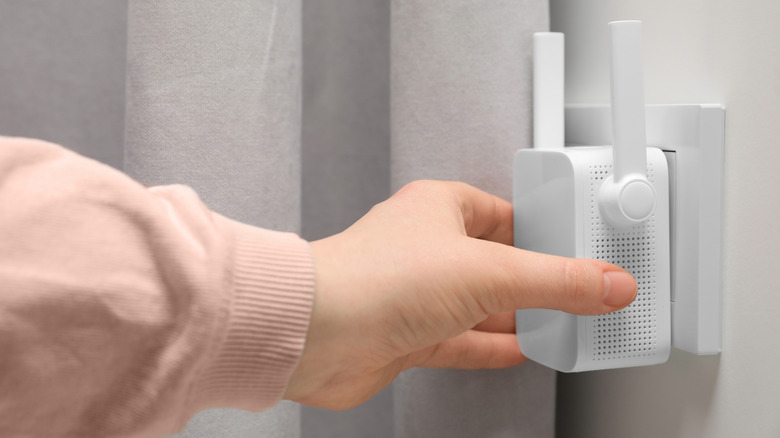
Connecting a Wi-Fi extender to an Ethernet port may help solve for some common signal issues, but what happens when the extender is used on its own? Depending on where you have it, the device may not deliver as you'd like. That's because a Wi-Fi extender without the use of a wired Ethernet connection relies on your router's existing wireless signal. So the further from the router it is, the more likely the extender may struggle to perform.
If you haven't had any luck using a Wi-Fi extender, or it's not feasible for you to connect it to Ethernet, you could try a mesh extender instead. This device has a similar plug-in setup, while also offering some of the benefits of a mesh network. A mesh extender can rebroadcast your existing Wi-Fi signal using the same network name, unlike a traditional extender, which may require you to switch between separate networks.
But a mesh extender on its own may not give you a considerably better experience than a full Wi-Fi mesh system. A Wi-Fi mesh system uses multiple nodes that work together to create a single network in your home. These nodes help keep your devices connected to the strongest available signal by communicating with each other as you move from one room to another. Though it can be a more expensive option, a mesh system may be a better choice in larger homes as well.