

What Does 'Height To Top Of Case' Mean On A Refrigerator?
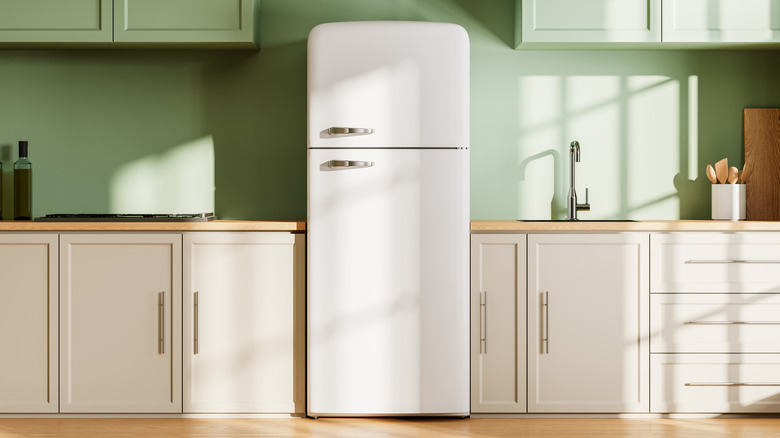
When you go to buy a refrigerator, you're going to see a spec listed called "height to top of case." Like depth and width, this is something you're going to need to know if you want the fridge to fit in your kitchen. Don't be put off by the unfamiliarity of the metric, though: finding the height to top of case is a lot easier than it sounds. This isn't like measuring in cubic feet or anything.
Height to top of case simply means the height of the refrigerator's main cabinet, measured from the floor to the top of the appliance's body, excluding any additional height from the door hinges on top. Those hinges can add an inch or more above your fridge, and that can make things a little confusing when you're trying to get things just right. After all, is the fridge going to hit the overhead cabinets or not? And does that extra height factor into the storage space inside at all? By using "height to top of case," you can know exactly what's being measured and what's being left out.
Other measurements that matter for your fridge
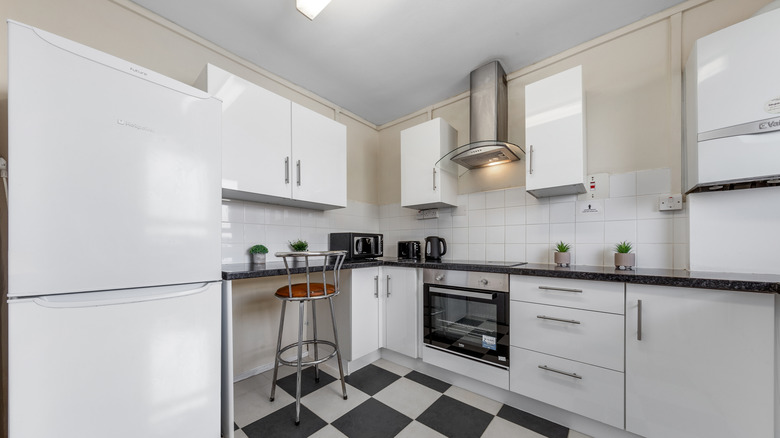
It's confusing because of how drastically sizes can vary depending on the style, model, even the brand name of the fridge. Standard models can be anywhere in the range of 60-70 inches tall, but top-freezer, bottom-freezer, side-by-side, and French door refrigerators all have drastically different height ranges. Looking only at the height, you might end up missing how much extra space the hinges are going to need.
Another way to think about it: Height to top of case is like measuring how tall you are without shoes on. Height to top of case gives you a baseline measurement of the fridge itself, at which point you can take the hinges into consideration to make sure it'll fit beneath the overhead cabinets.
Don't forget: Refrigerators generally need at least a couple inches of space behind the unit, an inch above it, and an eighth of an inch on each side to let air circulate and keep it from overheating. Door hinges also need enough room to move and might need the fridge to sit slightly farther from the wall if the overhead cabinets are going to get in the way. Forgetting that is one of the most common appliances installation mistakes.