

Fixing These 3 Complaints Would Make The Next Chevy Tahoe Even Better
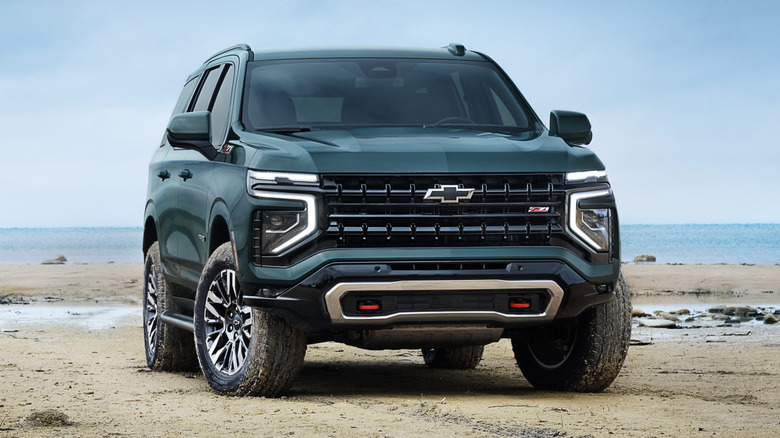
There have been multiple occasions where I've been behind the wheel of a Chevrolet Tahoe (or its longer sibling, the Suburban) and thought about how useful it is for families who love to travel. The Tahoe's space, towing capability, and its ability to keep up with modern tech over the years have given it staying power and proper status in its class. While America has a deep and abiding love for the pickup truck that the Tahoe is based on, the Chevy Silverado, the Tahoe offers a friendlier version of the platform for those who don't need a bed for hauling cargo. It has a third row, too, which the Silverado certainly doesn't offer. But the Tahoe isn't perfect.
The Tahoe makes some compromises to offer the utility and spaciousness it does. Its engines, while big and powerful, are less efficient than what you'd find in something like the Ford Expedition or the Toyota Sequoia. There are some trims with positively stiff rides, too. New iterations of the Tahoe will also lose Android Auto and Apple CarPlay. There are definitely some common problems with Tahoes that have been around a while, but there are also fixes that can improve the Tahoe as it currently comes from the factory, improving the driving experience and making a rig that will appeal to an even wider audience.
Improve the fuel economy
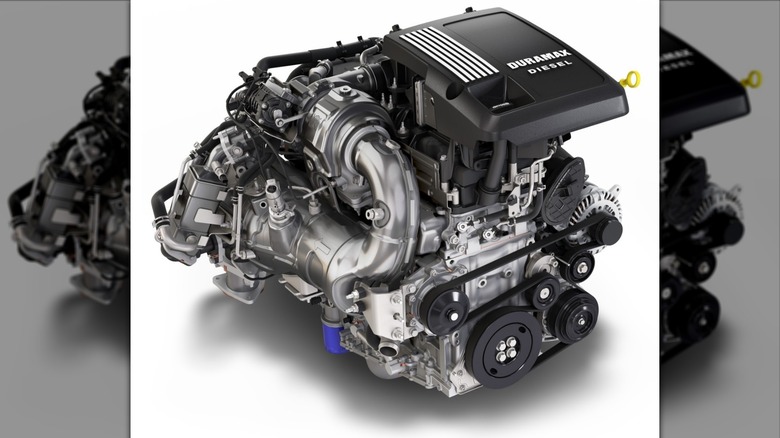
I've spent a lot of time driving V8 Tahoes, and they were pretty inefficient. The diesel powertrain that's optional for the Tahoe gets really respectable gas mileage – 24 or 22 mpg combined, depending on whether you get two- or four-wheel drive — but the rest of the lineup isn't as impressive. Rated at either 16 or 17 mpg combined by the EPA, the Tahoe's 5.3- and 6.2-liter V8s will cost you quite a bit of cash at the pump.
The Tahoe's chief competitor is the Ford Expedition, and it has an EPA-estimated 18 or 19 mpg combined, thanks to its more efficient turbocharged 3.5-liter V6. That's not a massive leap, but when your fuel economy is already low, every tiny increase matters. If Chevy were to introduce a turbocharged V6, or even a turbocharged four-cylinder, the Tahoe could become much more competitive. It's worth noting that Chevrolet sells a four-cylinder version of the Tahoe in countries like China, with a turbocharged 2.7-liter Turbomax engine under the hood.
A hybrid version of the Tahoe may also be a possibility. A standard hybrid with no electric range would be the most likely powertrain, adding a bit of fuel economy and hopefully a bit of slow-speed efficiency, but a plug-in hybrid would be a real leap forward for the SUV. A Tahoe with 20 or so miles of EV range and combined fuel economy that cracked 25 mpg would be pretty appealing.
A comfort upgrade (it's the big wheels)
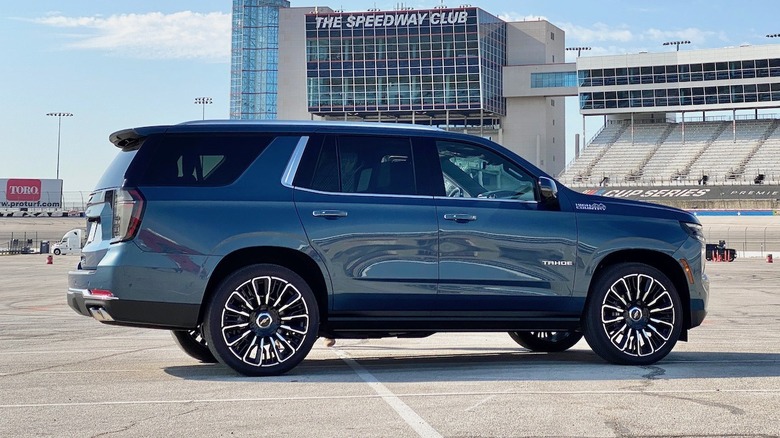
The Tahoe's interior is relatively quiet, even at highway speeds, and the seats (especially in the first and second row) are particularly comfortable. I could drive or ride as a passenger in the Tahoe for several hundred miles without issue. But when you hit rough roads, that changes a bit, as the large wheels fitted to most of the Tahoe's trim levels don't absorb small impacts well.
The available Magnetic Ride Control suspension is one of the Tahoe's best features, but big wheels like the 20-inch ones on the Premier trim, or the 22-inch wheels on the RST, make for a rougher ride. There are even massive 24-inch wheels available if you're interested, but I'd stay far away from those. Got lots of small asphalt cracks or potholes in your city? That's where big wheels like these perform the worst. I've driven Tahoes with these large wheels, and like some of you probably have, I've sat in the back of them as a rider in high-end ride-share vehicles. The bigger wheels always seem to translate to sharp impacts whether I'm sitting in the first or second row.
The base LS comes with 18-inch wheels as standard, so my preference would be for Chevy to ditch the extra-large wheels and allow users to choose the 18-inchers on higher trims — or make something in the middle, like a 19-inch wheel, more widely available. Tires for larger wheels are typically more expensive, too, so a change in wheel choice could also save owners a bit of money when it comes time to replace tires.
Keep Apple CarPlay and Android Auto
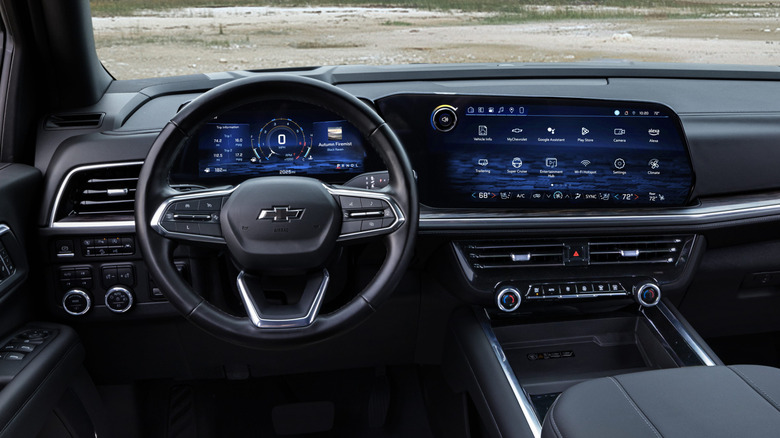
The Tahoe currently offers a massive 17.7-inch center display with Google compatibility built-in, as well as an 11-inch driver display. It's a seriously impressive interface. The displays are crisp, clear, and easy to read. They're also low enough on the dashboard that they're out of your line of sight while driving. And, for the meantime, it's all compatible with Apple CarPlay and Android Auto. That's the way it should be.
Unfortunately, General Motors is ditching Apple CarPlay and Android Auto across all its brands, including Chevrolet. It's a mistake, if you ask me, and a decision that users of the smartphone systems aren't happy about. GM will gradually phase both out ahead of a full transition to its in-house infotainment system in 2028.
Standards like Android Auto and CarPlay are user-friendly because they're what we're used to interacting with daily. They've got the maps we're familiar with, the voice commands we've learned over the years, and all our music or podcast apps right where we expect them. When you start disconnecting people from these familiar systems, it becomes a distraction. Sure, owners will get used to Chevy's in-house system over time, but why not stick with something that consumers are familiar with, thereby making new Chevy owners' lives that much easier? Chevy should really reverse course on this decision.