

How Does Apple Make Its 'E' Series iPhones So Affordable?
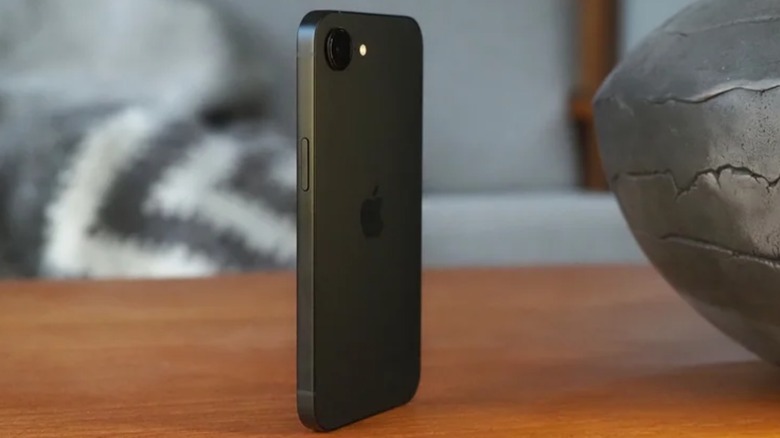
In 2016, Apple introduced a significantly more accessible entry into the Apple ecosystem: the $399 iPhone SE. In SlashGear's review at the time, we called the iPhone SE a classic remix. It was an important pivot for Apple that addressed a section of the market that not only valued more compact phones, but also lower prices, as the flagship iPhones of the time like the 6S Plus were just south of $800. Apple was able to maintain the low (relatively) price tag by incorporating components from older iPhones, which had decreased in cost over time, coupled with a smaller size and a cheaper display.
The iPhone SE was well received, and Apple rolled out the 2nd-generation iPhone SE in 2020, again priced at $399. The second-generation iPhone SE maintained an important sub-$400 price point that connected Apple to the mid-range smart phone market. Apple would carry the iPhone SE into 2022 with its 3rd-generation iPhone SE (or SE 3), but it also came with a $429 price tag –- a $30 increase over the previous models. In 2025, Apple discontinued the iPhone SE 3, and moved onto the iPhone 16 E as its successor.
Apple's E-series iPhones attempt to distill the core iPhone experience into a $599 model by making certain design tradeoffs with the display, battery, camera, and processor. Apple's design choices with its SE branded iPhones have informed the E-series, which is how Apple has kept the devices affordable, albeit they do come with a higher price tag then the SE series.
The E is for economical
The iPhone 16E's arrival marked the end of Apple's iPhone 14 lineup, as well as phones bearing the SE branding. According to Apple's marketing, the "e" is for economical. How economical the device actually was became a topic of debate, but SlashGear found it to be just the right size for your hand and wallet. Similar to the SE models, the iPhone 16E was meant to be an entry level model, though at a price of $599, it was roughly $170 more than the SE 3.
In order to hit that price point, Apple made many of the same concessions with the iPhone 16E that it made with the older SE iPhones. While the iPhone 16E retained the aluminum body the rest of the iPhone 16 family had, it was slightly smaller and its display had a lower resolution and peak brightness. It used the older camera notch, rather than the new Dynamic Island feature. It also used a cut-down A18 SoC (four GPU cores versus five cores), skipped the Camera Control button, had a single rear camera lens, and didn't include MagSafe or Qi2 charging.
Sticker shock aside, the iPhone 16E was still $200 less than the $799 starting price of the iPhone 16, and substantially less than the Pro/Pro Max models. While the iPhone SE models tended to have more of their own identity and existed alongside different iPhone generations, the iPhone 16E was — as the name implied — a variant of the iPhone 16. Apple would carry this branding ethos forward with the iPhone 17E.
The iPhone 17E is Apple's latest entry-level iPhone
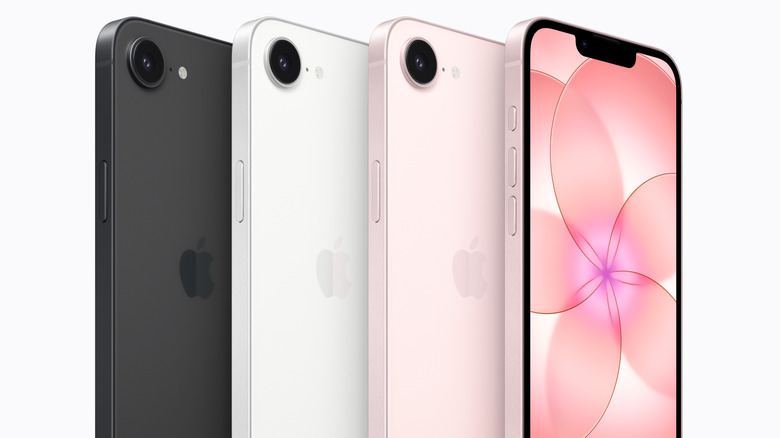
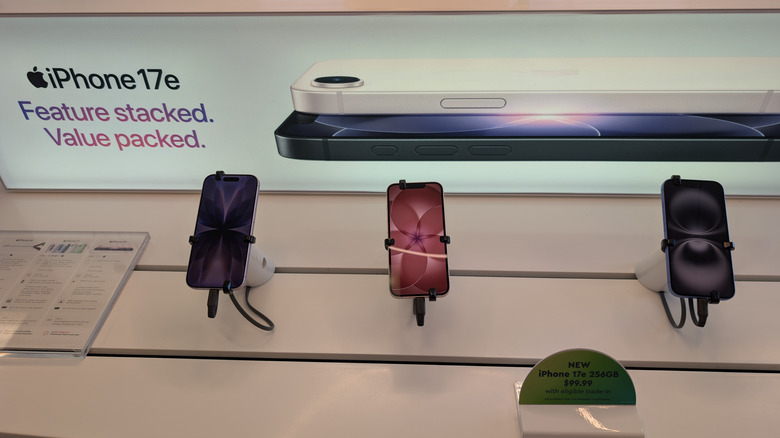
With the arrival of the iPhone 17E, Apple increased the baseline specs while maintaining the $599 price tag. Similar to the iPhone 16E, the 17E is $200 less than the base iPhone 17. This time, Apple addressed some of the criticism that the 16E drew, adding MagSafe and 15W wireless charging via Qi2. However, many of the previous tradeoffs are still present.
The iPhone 17E still uses Apple's notched display and omits Dynamic Island, which has been a surprise hit since its debut with the iPhone 14 Pro. Apple's latest A19 SoC is also present, albeit in a binned down form, losing one GPU core (five, instead of six). Perhaps the biggest omission is the lack of Apple's new N1 network chip, which means no Wi-Fi 7, limiting the phone to Wi-Fi 6 speeds. The iPhone 17E also skimps a bit elsewhere in connectivity, using Bluetooth 5.3 over Bluetooth 6, and does not feature Apple's U2 chip for its latest Ultra Wide Band tech.
The 17E uses a Super Retina XDR OLED display, but it does not support a variable refresh rate of 120Hz like the other 17 models, instead locked at 60Hz. The display also has a lower peak brightness, similar to that of the 16E, and continues to sport a single rear camera lens and a smaller battery. With the arrival of the iPhone 17E, Apple was quick to discontinue the 16E. For a short time, it seemed like it would sell refurbished 16E models, but that doesn't appear to be the case anymore.