

US Pilots Were Flying Over The Soviet Union – Then Hit A Free-Fall At 83,000 Feet
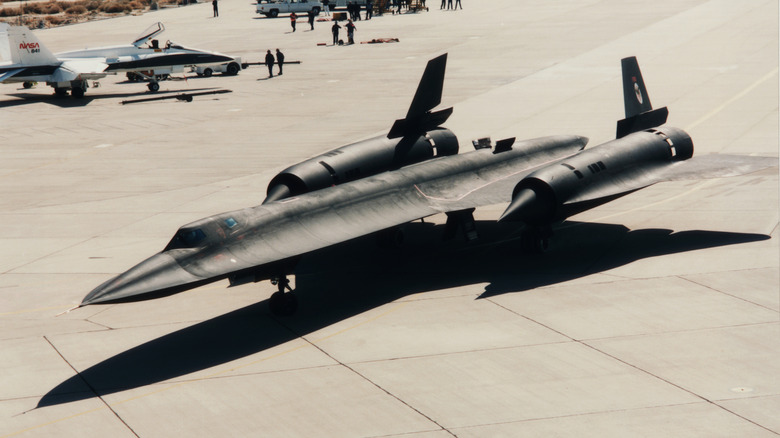
The SR-71 Blackbird surveillance plane broke the record for the fastest jet ever flown with a top speed of 2,193 miles per hour in 1976, a record it still holds to this day. The Blackbird wasn't a one-off piece of equipment for bragging rights over the Soviet Union, either. It had a service life of over two decades, according to the U.S. Air Force.
It wasn't armed, but it had the advantage of an extremely high service ceiling of around 85,000 feet, and the aforementioned record-breaking speed. The basic theory to keep the Blackbird safe while flying over the U.S.S.R. was to fly higher and faster than any potential interceptor planes.
So what happens if you are an SR-71 pilot and something goes wrong when you are over twice the altitude of a commercial flight? Never an organization to lack a contingency plan; the Cold War-era U.S. Air Force actually had to deal with this scenario a number of different times. It boiled down to pilot preparation and having friendly countries to limp back to if the mission started going south.
Friends in Scandinavia
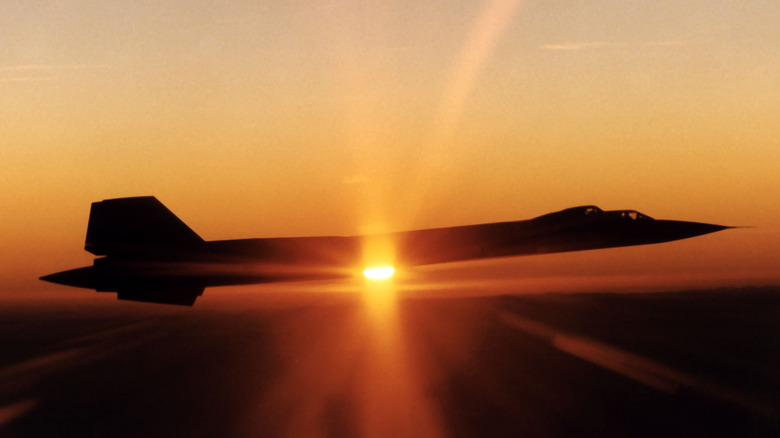
The Baltic Sea borders countries in Northern and Eastern Europe like Finland, Latvia, and Poland, but much more to the interest of SR-71 pilots and the United States, it bumps up right against Russia. Flying up and down the Baltic Sea was a common mission for the Blackbird, known as the "Baltic Express."
The U.S. Air Force notes that in 1987, a Blackbird flying this route experienced engine trouble and couldn't remain airborne safely. Fortunately, four pilots from Sweden lent a hand, providing an escort with their Saab Viggen fighter jets for the Blackbird, allowing it to land safely outside of the range of potential enemy aircraft. Those Swedish pilots were awarded U.S. Air Force medals in 2018.
Also in 1987, a Blackbird experienced problems with one of its Pratt and Whitney J58 engines near Norway and was forced to land in Stavanger, Norway. It too landed without any incident. More specific details of the SR-71's "adventures" are likely to remain classified for some time. But from what we know, it was a testament to how well the SR-71 was engineered that encountering potentially disastrous issues at over 80,000 feet over enemy territory wasn't a death sentence or the start of an international incident.