

Ford Vs. Toyota Depreciation: 5 Popular Models Compared
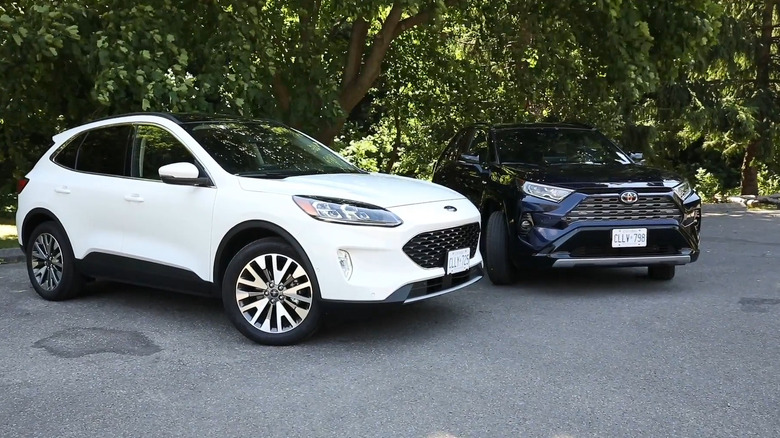
Vehicles from Toyota and Ford account for a huge number of sales here in the U.S., which makes the two companies among the most popular in the country. In fact, the title of the best-selling vehicle in the whole world has been yo-yoing between the Toyota RAV4 and Ford F-150 for a number of years now. Each brand has its strengths and weaknesses, but one aspect that isn't discussed nearly as much is the depreciation rate of these vehicles.
Because these two brands are so popular, standard economics would dictate that prices for used vehicles would be pushed down, owing to a large supply on the market — whether new or used. An overarching theme here is that the Ford vehicle on this list will sell more than the Toyota version (which may be another reason why the Toyotas depreciate less) there's simply fewer to go around.
For example, when Toyota sells only 26,186 Sequoia SUVs for 2025, but Ford sells a whopping 85,921 Expeditions in the same year, it's obvious that the Sequoia will be more expensive – this is a repeating trend. And in the one outlier where Ford beats Toyota on depreciation, Toyota sold roughly 270,000 units to the Ford Ranger's 70,000 or so, further reinforcing our point. We also have to factor in the well-documented reliability that the Japanese brand brings with it. Here are the five most popular models from these two brands, compared on depreciation.
Ford F-150 (47%) vs Toyota Tundra (26%)
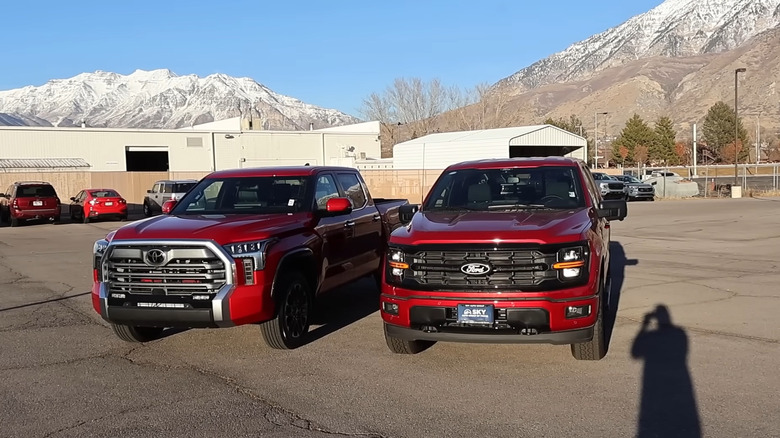
Let's start with America's favorite truck, which is the Ford F-150. For 2020, this model came with a 3.3-liter, six-cylinder engine in the base model, making 290 horsepower and 265 lb-ft of torque. When new, a 2020 model costs a cool $30,635 as base MSRP, to which a freight fee of about $1,695 would have been tacked on. Today, a used 2020 model would sell for about $16,000 on the used market, marking a depreciation rate of about 47% in five years.
That isn't too shabby in terms of depreciation; we'd say it's about average, since a vehicle loses about 10% of its value in each of the first five years. However, Toyota blows the blue oval company out of the water when it comes to depreciation, since its Tundra (a direct competitor to the F-150) depreciates only about 26% over the same time period.
A 2020 Toyota Tundra came with a 5.7-liter, V8 motor making 381 horsepower along with 401 lb-ft of torque. When new, it carried the hefty base MSRP of $40,190 ($1,595 destination), but sells for about $29,700 in July 2026. Of course, this can indeed be explained away with the sales figures; Ford sold 787,422 F-series trucks in 2020, whereas only 109,203 Tundras were sold on the Toyota side of things that year. Note that Ford doesn't break down the F-series sales by type, so not all of those sales would have been F-150s.
Ford Escape (58%) vs Toyota RAV4 (29%)
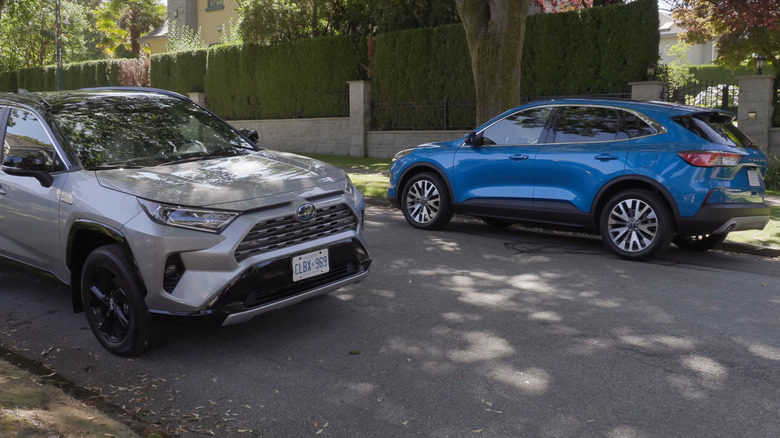
The RAV4, a vehicle that recently became the bestselling car in the world, had just come out of a major facelift in 2019. The redesigned base model came fitted with a two-liter, four-banger engine called either the M20A-FKS (non-hybrid) or the A25A-FKS (hybrid), replacing the 2AR-FE from earlier. The new powerplant made 203 horsepower and 184 lb-ft of torque in the non-hybrid version, which was quite a respectable figure. Driver aids like adaptive cruise control, blind spot monitoring, and lane departure aids came standard, all of which came bundled in a package that had a base MSRP of $25,850 and a freight charge of $1,120.
Today, used 2020 RAV4 models sell for about $18,400 on the used market, marking a stellar depreciation rate of 29%. The Ford competitor to the crossover RAV4 would clearly be the Escape, which, for its part in 2020, came with a 1.5-liter, tri-cylinder powerplant making 181 horsepower and 190 lb-ft of torque – slightly less than the Toyota. The Escape had a suite of driver aids as standard, but adaptive cruise control was an option (unlike on the 'Yota), and the MSRP was higher too -– $24,885 as base sticker, with a destination of $1,195. In July 2026, used 2020-2021 Ford Escapes are swapping hands for about $10,500, a total depreciation rate of about 58%. Funnily enough, in 2020, Ford sold 139,387 escapes, and Toyota sold 430,387 RAV4s.
Ford Expedition (59%) vs Toyota Sequoia (26%)
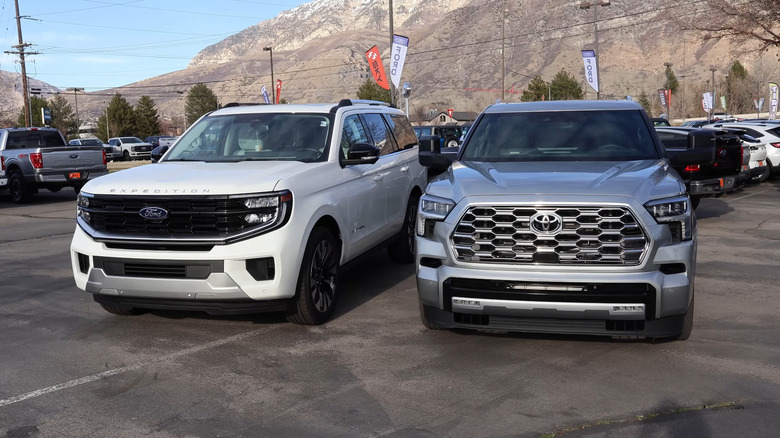
Both the Ford Expedition and the Toyota Sequoia are the respective full-size, seven (or eight) seater SUVs from the two companies in question. However, the Toyotas tend to hold their value much better than the Fords, likely due to their higher sales volume. In 2020, Ford managed to push 85,921 Expeditions into the hands of buyers, while Toyota only sold 7,364 Sequoias in the same year.
We'd especially like to point out that this means there was only one Sequoia sold in 2020 for every 10 Expeditions. In terms of MSRPs, the two vehicles were not that far apart, with the 2020 Ford Explorer carrying a base sticker price of $49,290 including destination, and the 2020 Sequoia (non-base Limited trim) coming in with a base MSRP of $58,090 including the freight charge. Today, Ford Explorers from between 2020 and 2021 have average asking prices amounting to $19,900, which gives the vehicle a depreciation rate of about 59%.
The Sequoia, for its part, is currently asking an average of $47,200 as of July 2026, which is indicative of a depreciation rate of 19% — significantly better than the Ford. Being family-hauler SUVs, both were loaded out the gate, especially in terms of power. The base Expedition got a 3.5-liter, six-cylinder motor making 375 horsepower and 470 lb-ft of torque, while every Sequoia came with the tried-and-true 5.7-liter V8 making 381 horsepower along with 401 lb-ft of torque.
Ford Explorer (58%) vs 4Runner (24%).
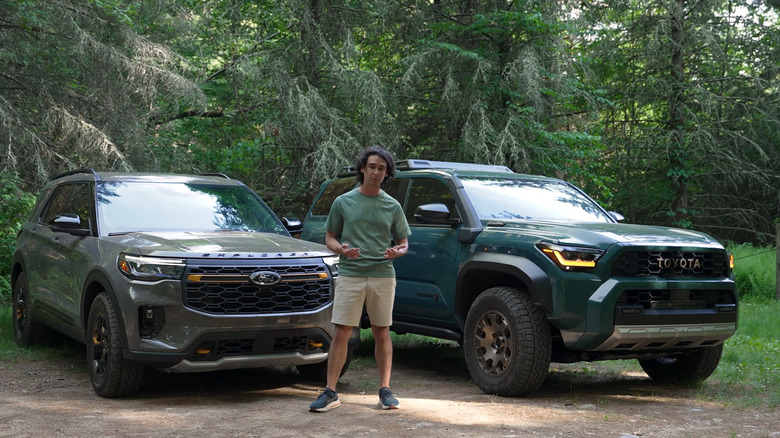
Next up, we have the mid-tier, midsize offerings from both brands, by way of the Ford Explorer and Toyota 4Runner, a legend in the off-roading community. The 4Runner that year came with a four-liter, six-cylinder motor making 270 horsepower, along with a nice, juicy helping amounting to 278 lb-ft of torque, and cost $37,140 as MSRP, destination included. Currently, however, even high-mileage examples are selling for about $28,300 on the secondary market, which means the 4Runner has a total depreciation rate of just 24%.
The Ford, on its end, came in at $37,80 including all fees at minimum, which bought you a 2.3-liter, quad-cylinder engine in the base model, making 300 horsepower, and 310 lb-ft of torque, which came about at 3,500 rpms. Ford owners would probably be dismayed to know that as of July 2026, the average asking price for a 2020 Ford Explorer hovers around the $15,700 point, marking a depreciation rate of about 58%.
Note that there were double the Explorers sold (when compared to 4Runners) in 2020, so the depreciation on the Explorer is about double that of the 4Runner. In 2020, Ford moved a total of 222,706 Explorers to the market, while Toyota was roughly half that number, coming in at 129,052 4Runners sold in 2020. That generation of Explorer didn't exactly have the best reliability, coming with 31 NHTSA recalls for the 2020 model, while the Toyota was prized for its durability.
Ford Ranger (30%) vs Toyota Tacoma (35%)
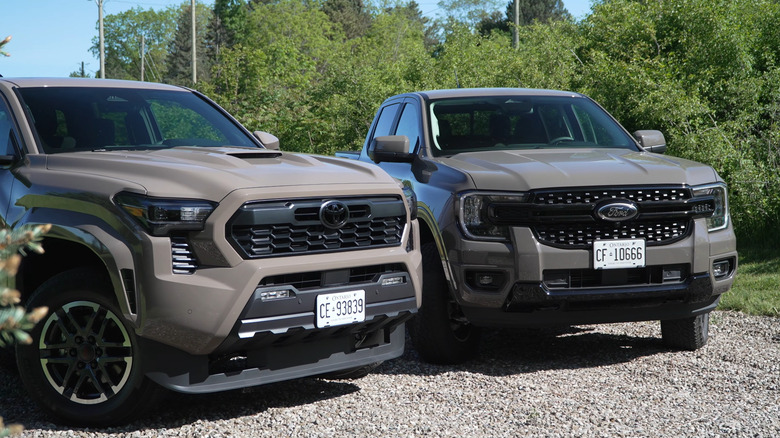
Lastly, we have the outlier — the one Ford that manages to even come close to Toyota, at least on the depreciation front. Both vehicles are quite similar, being midsize pickup trucks that are competitively priced and moderately powerful. The Ranger came with only a 2.3-liter, four-cylinder motor on all trims, making the princely sum of 270 horsepower, and a passable 310 lb-ft of torque.
The Tacoma, one of Toyota's most popular models, came with a 2.7-liter, quad-banger motor that happily burbled while producing 159 horsepower and 180 lb-ft of torque, meaning it was worse off when compared to the Ford, but both were quite close. However, in sales figures, Ford undersold Toyota by a factor of about 3.5, where 238,806 Tacomas hit the market in 2020, Ford only moved 70,960 Ranger pickups that same year.
However, both the Ranger and the Tacoma are considered fairly reliable vehicles; meaning that Toyota had lost one of its leading edges against FoMoCo in this battle. Perhaps that is the reason why the average asking price for a 2020 Ford Ranger currently hovers around $18,400, which marks a 30% depreciation rate against its $26,250 MSRP (inclusive of destination). The Toyota, however, isn't too far off, as it had a 2021 MSRP of $27,325 (including destination), but currently sells for about $21,000, meaning its depreciation rate is 23%.