

How US States Crack Down On Speeding During The 100 Deadly Days Of Summer

Fatal road accidents are tragically common on U.S. roadways. According to the National Vital Statistics System's Mortality Data for 2024, 41,241 people were killed on U.S. roads that year alone. There's one particular time of year that's especially notorious for such traffic accidents among teenage drivers: The period between Memorial Day in late May and Labor Day in early September, the so-called 100 Deadliest Days of Summer.
According to the AAA, between the years of 2012 and 2021, traffic fatalities during this period reached "nearly half of the total number of those killed in teen-driver crashes for the entire rest of the year." Armed with these sobering statistics, though, authorities can anticipate when such accidents tend to spike in frequency, and tailor campaigns and anti-speeding measures to try to help mitigate them. One major effort to do just that during this period is Operation Southern Slowdown, which returned for its ninth year and ran from July 13-18, 2026. It saw a group of five southern states (Alabama, Florida, Georgia, South Carolina, and Tennessee) embark on efforts to, as the Florida Department of Transportation put it, "reduc[e] speed-related crashes through a combination of increased enforcement and public education." Speed limits vary a lot between U.S. states, but all must be obeyed.
The additional patrols during this campaign in 2025, Atlanta News First reported, resulted in "more than 13,000 speeding contacts in just one week" across Georgia. It was also just one part of a range of nationwide efforts to curb speeding during this deadly time of the year. Here are some more measures that different states are employing, as well as a closer look at why these 100 summer days are statistically so deadly in the first place.
Other means of curbing speeding during the 100 deadly days of summer
A national campaign from the Federal Motor Carrier Safety Administration aims to increase public understanding of the dangers and encourage safer driving practices throughout the 100-day period. It's called the 100 Days of Roadway Safety and focuses on providing digital resources, primarily blog posts, that underscore essential safe driving principles. Among them are reminders to be wary of unpredictable movements by children in school zones and that larger vehicles like trucks need to be given essential space at all times.
New York State's Department of Health developed a Teen Driving Safety Toolkit to educate young drivers and their parents and guardians during this turbulent time of year. It highlights some particular risk factors, some resources that can be used by both the former and the latter for safety's sake (such as the Parent/Teen Contract), and other ways these vital messages can be spread (morning high school announcements about driving safety being another).
Increased patrols, as we've seen, can have a big impact too. Tragically, though, it's also vital to address the increased need for emergency responses during this time. In a Facebook post, Tennessee's Fall Creek Falls State Park acknowledged that these 100 days can call for life-saving blood transfusions, sharing how they work and explaining the $25 eGift card incentives for doing so. Washington State, meanwhile, sees around one-third of its fatal traffic accidents during the three-month stretch beginning in June, which it calls the 90 Dangerous Days. In response, the Washington State Patrol shares the most common causes of accidents (speeding being key among them), some vital driving tips, including "always buckle up, adhere to posted speed limits, drive sober, and stay distraction-free."
Why these 100 days of summer are so dangerous
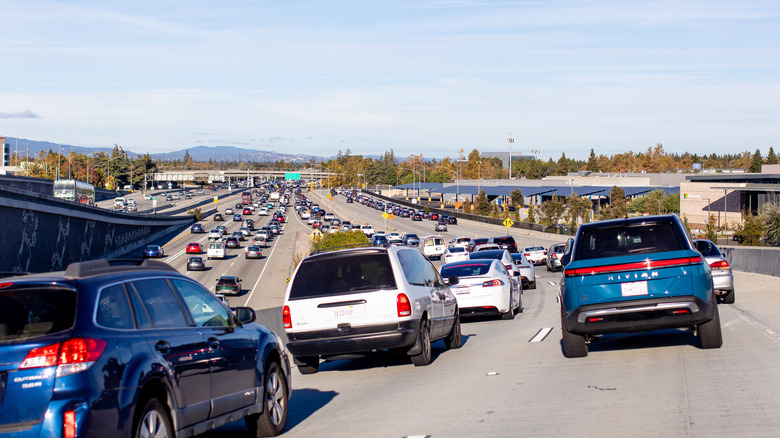
Road safety is paramount for drivers to bear in mind every journey they make. Nonetheless, as the National Road Safety Foundation points out, the summer is marked by an uptick in fatalities among teenage drivers. There are more vehicles on the road generally, for one thing, and during this period, younger drivers will typically have more free time to hit the road. Combine that with their lack of experience with safe driving habits and possibly with their vehicle itself, and it makes sense that this is a particularly dangerous time for them. After all, there are some common mistakes that even experienced drivers make on the road, and the risks are heightened with newer motorists.
During this time of year, there's often more road maintenance and repair work taking place. All of these factors add up to busier roads that are more difficult and frustrating to navigate, which is also a very dangerous mix for those maintaining the roads and larger, less maneuverable vehicles like buses in particular.
A specific focus on safety measures during the 100 days of summer doesn't mean that states across the country don't prioritize these matters during the rest of the year, of course. Also in July 2026, Caltrans announced an enormous investment of approximately $2.5 billion, intended to "Strengthen transportation infrastructure and improve mobility across the state." Including steps such as establishing more crossings and a sidewalk-widening program, it's a strong signal that broader matters of road safety are vital across America year-round. Even so, the more attention that can be brought to the 100 days of summer, the safer motorists, pedestrians, and passengers may be.