

China Just Approved A Hydrogen Engine That Could Challenge Diesel Trucks
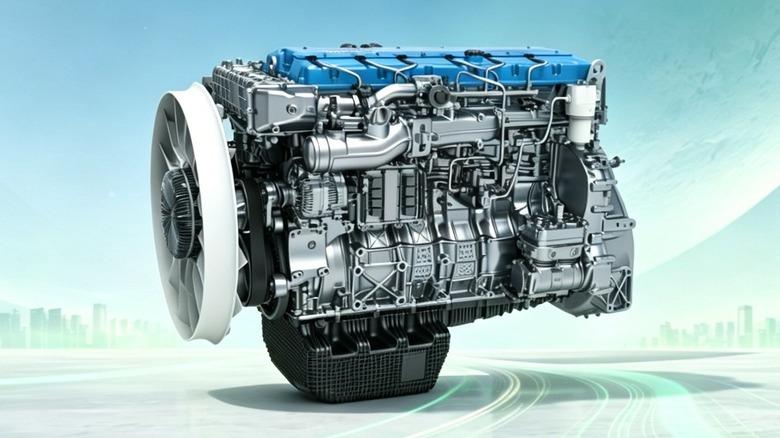
Chinese engine manufacturer Weichai Power recently announced its development of a hydrogen direct‑injection engine for heavy-duty vehicles. Named the WP15, on July 3, 2026, this engine passed the China VI vehicle emission certification tests, the country's toughest heavy-duty emissions standard. This emissions certification required a wide variety of operating conditions, including full-load at high speeds, idling at low speeds, and starting from cold, confirming that the engine could run stably and reliably while delivering the lowest possible emissions. It is important to understand that this is not a hydrogen fuel cell, but rather an internal combustion piston engine that runs on hydrogen, with conventional spark ignition that differs from the way a diesel engine works. To refresh yourself, we suggest you check out our piece on how do hydrogen-powered auto engines work?
The Weichai Power WP15 has a displacement of 14.6 liters, with a power output of up to 600 horsepower. Even more important, it shares 90% of its components with non-hydrogen engines, meaning that most of its parts are not unique to this specific powerplant. The company sees uses for this hydrogen engine in applications like port equipment, steel mill vehicles, mining dump trucks, large hydrogen power generators, and long-haul trucks, rivaling diesel power with none of the emissions.
Instead of the traditional method of using port injection, the WP15 injects the hydrogen in gaseous form directly into the cylinders. This is a way to eliminate the problems of backfiring and pre-ignition that occur when port injection is combined with gaseous hydrogen in an internal combustion engine.
What are the benefits of using hydrogen in an internal combustion engine?
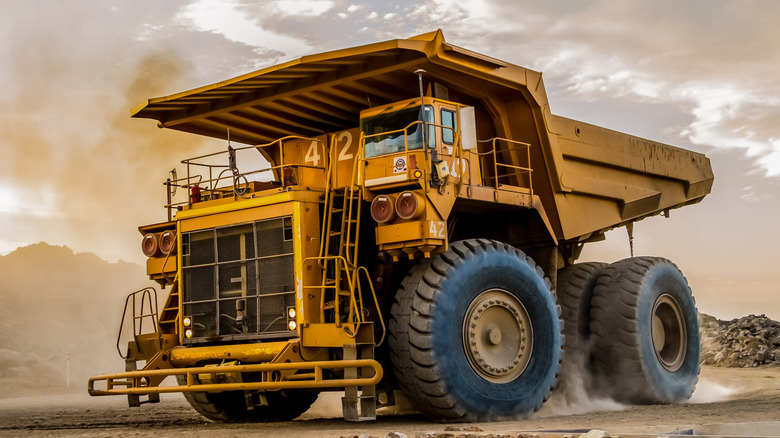
Even though hydrogen-powered cars aren't very popular today, there are pros & cons of hydrogen powered vehicles. There's definitely a case to be made for using hydrogen in commercial vehicles like the mining truck shown above. The use of a hydrogen-powered internal combustion engine similar to the Weichai Power WP15 offers numerous advantages when compared to a hydrogen fuel cell.
The primary benefit of a hydrogen-powered internal combustion engine is its familiarity to potential users of this technology. Most commercial users are already using IC engines that are powered by diesel fuel. Another benefit is the sharing of components between hydrogen IC engines and those using other fuels, which Weichai has stated hits a level of 90% commonality with non-hydrogen engines. This can lead to significant cost savings from the sharing of parts.
Environmental benefits are an additional advantage of using hydrogen. Compared to diesel fuel, hydrogen itself has no carbon emissions. But how the hydrogen is produced is a stickier question. While the process of electrolysis, using electricity generated by carbon-free processes like solar, wind, and hydropower, can produce what is known as "green hydrogen," most of the hydrogen currently produced is the result of the steam methane reforming process, which produces "gray hydrogen" and large amounts of CO2. Green hydrogen is also more expensive — the U.S. Department of Energy hopes to reduce its cost to a very low $1.00 per kilogram by 2032. Upcoming European emission regulations requiring commercial vehicles to make a 30% cut in CO2 by 2030 could also drive hydrogen usage there.