

Inline Fan Vs Exhaust Fan: What's The Difference?
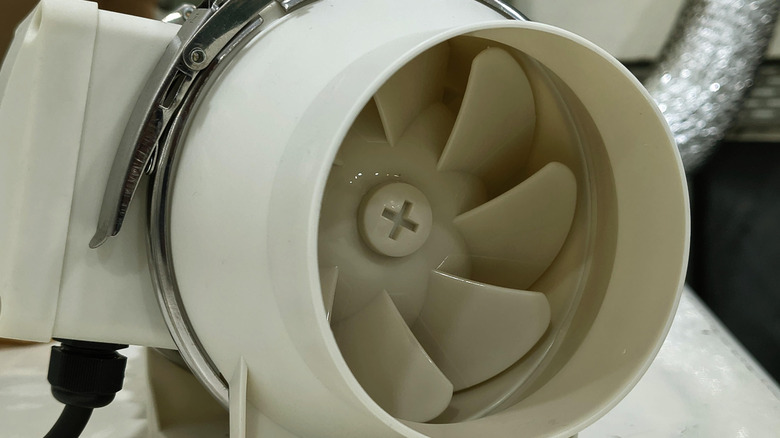
Tackling a DIY ventilation project can be intimidating for some homeowners, especially if you're making decisions on what type of equipment to install. This includes using an exhaust fan as a way to improve the air quality in your garage. But if you're considering an inline fan instead, it's important to know that while both types serve the same basic purpose, they operate in different ways and are designed for different types of ventilation systems.
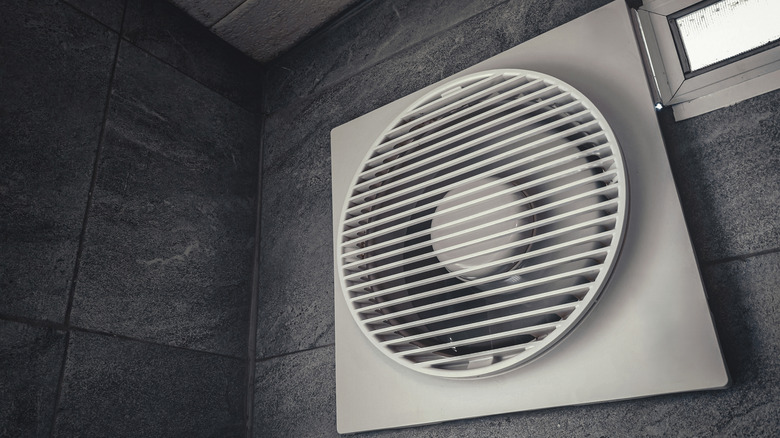
An inline fan is typically positioned in a section of ductwork. This allows the fan to move air across larger distances in areas that may include air filters, vents, and duct elbows, or bends in the system. Because of their design, inline fans are the more ideal choice for applications that require consistent airflow over an extended space. In contrast, an exhaust fan is usually installed directly in a wall or ceiling and pulls air from the room to the outside through a short and straightforward path. Exhaust fans are commonly used to ventilate tighter spaces.
So if you're working in a smaller area like a kitchen or bathroom, an exhaust fan can be the best option. This is also true if you need to improve the ventilation in a space without a duct system in place. But when it comes to larger spaces like a grow room with smart garden systems, and especially in areas that utilize air ducts or filters, an inline fan is better suited for the job.
The drawbacks and tradeoffs of inline and exhaust fans
An inline fan, while a quieter and more flexible option than an exhaust fan, does have its drawbacks. The setup process can be more complex, as it needs to first be integrated into a duct system. An inline fan setup can also cost more upfront, and repairs or routine cleaning may be harder to do, depending on how and where it's installed. Additionally, poor installation can cause the fan to become noisy or create excess vibration.
Exhaust fans, though often a more affordable option for many spaces, have their own limitations as well. Installation may require more electrical work, and improper placement could impact how effectively an exhaust fan removes heat, moisture, or odors. Dust and humidity can build up over time without regular maintenance, and lower-quality designs can be noisier due to vibration. Colder regions can also affect these systems, as escaping air can lead to higher heating costs.
The appearance of an exhaust fan, though not necessarily a drawback, can be a problem for your next remodeling project. Traditional exhaust fans are typically visible where they are installed, whether it's on a wall or in a ceiling. So if the cosmetic appeal of a space is important, this is something to consider. But since inline fans are within the duct system, only the vents themselves are visible in the space. If an inline fan is the right solution for the space itself, it could be a more preferable option.