

Amsterdam's Smart Streetlights Are Doing Much More Than Cutting Costs
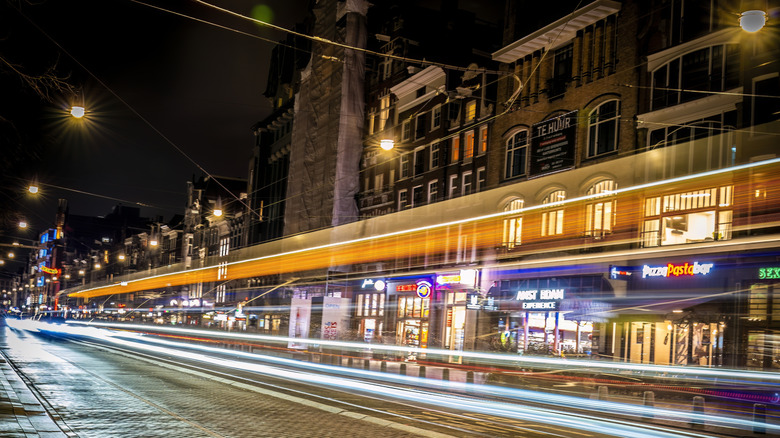
Amsterdam has a reputation that precedes it, drawing in millions of tourists annually to view its charming narrow lanes and various districts, including the red-light ones. Red-lit cities don't always have a seedy connotation, though, as evidenced by Odense, Denmark. But these days, Amsterdam is more concerned with optimization than with special lighting that benefits wildlife. After all, it's known as a European tech hub of sorts, and its smart streetlights initiative reveals just how "smart" the city aspires to be, beyond simply trimming electricity bills. Currently, in the city's Hoekenrodeplein square, there's a pilot project that transformed 144 LED streetlights into a connected digital patchwork, each with its own IP address and sensors. The automated lights can communicate with a centralized control system, hence the "smart" prefix.
According to the LUCI Association and Amsterdam Smart City, this network of lights dynamically adjusts its brightness based on weather — thereby saving the city money — and accommodates public events and traffic flow. Its integrated functionality can transform ordinary lampposts into modern, multifaceted tools that profoundly enhance public spaces. Companies such as KPN collaborated on the initiative as part of a broader smart-lighting agreement among the cities of Amsterdam, Rotterdam, and Eindhoven. Researchers from Eindhoven University of Technology also studied how adaptive lighting can affect the public's perception of safety and ambiance. The project highlights how modern streetlights are evolving into data-gathering infrastructure that can support communications networks, environmental monitoring, and future smart-city applications.
Seeing the city in a new light
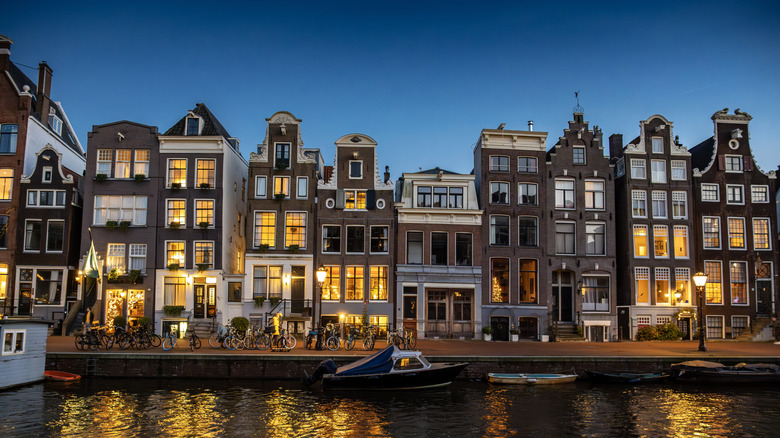
The definition of a smart city can mean many things, but ideally, the material improvements brought about by these initiatives are directly felt by its inhabitants. What makes Amsterdam's public smart-lighting initiative interesting is that the technology quietly blurs the line between public utilities and digital infrastructure. But the intent and execution aren't about hiding anything, unlike the concealed surveillance cameras used in some American cities, which serve only one purpose. These smart streetlights are not simply brighter or more efficient than older lights like the once-omnipresent sodium-vapor bulbs. Instead, they function as responsive networked devices capable of culling data from onboard sensors to self-regulate and automate accordingly.
As per KPN's Smart City documentation, this type of smart system can automatically adjust light intensity and color based on crowd density, responding in real time to a constantly changing environment and requiring low power thanks to the Dutch LoRa network. However, members of the public may not find all the benefits outlined so easy to swallow. Amsterdam's focus on tech in this pilot reflects a potentially controversial side of modern infrastructure; if lighting networks eventually incorporate cameras and real-time monitoring systems, questions about privacy, government surveillance, and data collection may arise. Still, projects like The Edge, a highly efficient smart building in Amsterdam — designed by PLP Architects, with distinction from Deloitte — as well as the city's approach to infrastructure writ large, bode well for a new era of optimized urban and public spaces that hopefully work for everyone.