

Why Cables, Not Satellites, Keep The Internet Alive
In 1957, when Sputnik broadcast the first man-made signal to come from outer space, it opened up a whole world of possibilities. Sputnik was the real-world manifestation of ideas that were first touted by Russian scientist Konstantin Tsiolkovsky in the early 1900s, Slovenian Herman Potočnik in 1928, and perhaps more famously by Arthur C. Clarke in 1945. These visionaries foresaw a world where geostationary satellites could provide worldwide radio coverage.
Today, with so many satellites catering to our data needs, it might seem like the future predicted by Tsiolkovsky, Clarke, and Potočnik has come to pass in a dramatic fashion; a point that the sheer number of satellites in space would seem to confirm.
At the time of writing, there are over 17,000 satellites in orbit, and a large number of these are providing data and internet services. In fact, over half of the satellites currently in orbit are Starlink satellites, with about 10,800 satellites in space in July 2026.
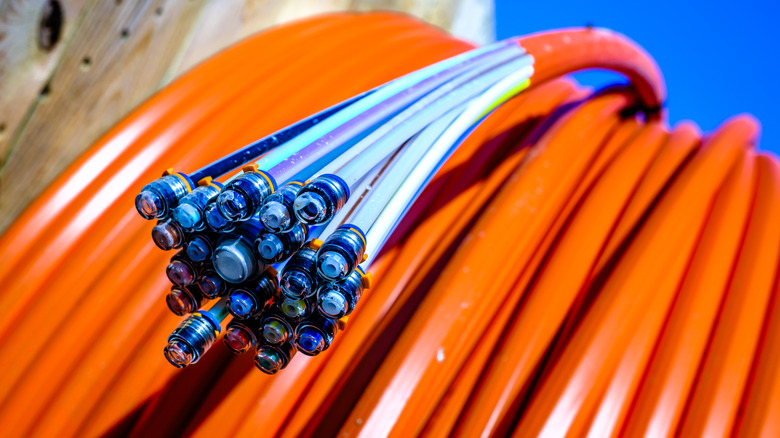
However, despite this proliferation, it may come as a surprise to find out that about 98% of global internet traffic still relies on fiber-optic cabling and never makes the journey outside the planet's atmosphere. This might seem strange, after all, wireless internet is something that we're all familiar with at home. But there is a good chance that the wireless leap your YouTube Video made from the router to your phone is the first time that the data has left the comfort of a cable.
Why subsea cables are still the backbone of the internet
Very roughly, we can compare the global internet network to a home internet setup. In both setups, the more reliable data is generally offered by cables, with wireless offering a convenient but less reliable connection, which is why you should avoid common home WiFi mistakes.
Subsea cables move data far more efficiently because of their enormous bandwidth capabilities and extremely low latency, neither of which satellites can yet match. For instance, the latest cables can hit an astonishing 400 terabits per second (Tbps) through a single cable. For comparison, the entire Starlink network is expected to achieve 800 Tbps by 2027.
This helps to explain why an estimated 98% of international internet traffic still makes the journey subsea instead of taking the leap into orbit. But it still isn't the complete picture — reliability is also a factor. Satellites face weather interference, network congestion, and although it's the fastest satellite internet provider, there are other common problems with Starlink internet.
For the next point, we need to flip the global to household internet comparison. Whereas setting up home Wi-Fi might take a bit of router configuration, setting up a global wireless internet setup involves hurling hardware into space at a cost of about $300,000 per satellite. However, it's worth noting that these prices are for Starlink satellites launched by SpaceX, so prices will be higher for competitors.
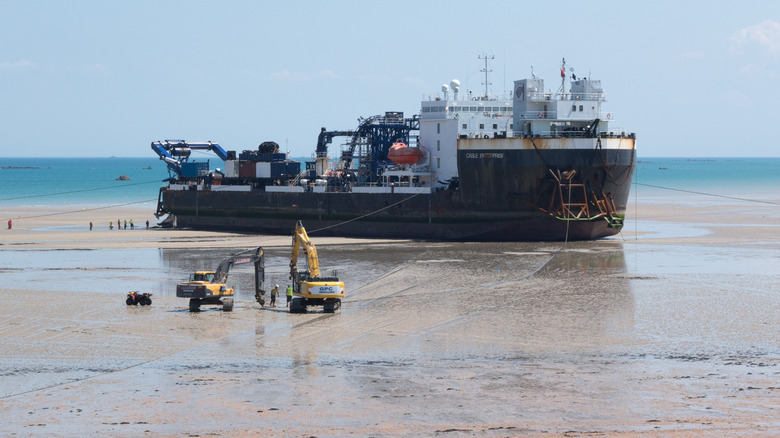
By contrast, while we can't say laying subsea cables is cheap — estimates range from $250 million to $400 million or more — it certainly doesn't match the overheads associated with satellite launches.
Subsea cables -- a tale of technology and endurance
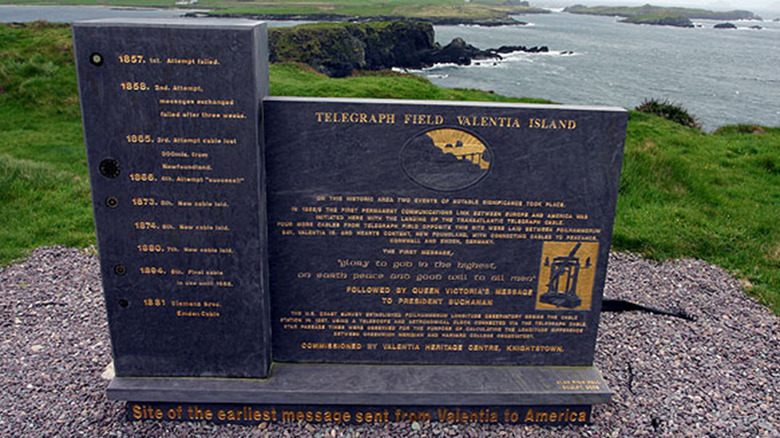
Another point to consider here is the maturity of the technology. Decades before humanity had mastered powered flight of any sort, we were already beginning to string the planet with subsea cables. The first telegraph-carrying cable made the short hop from England to France via the English Channel and was laid in 1851. Just a few short years later, the first subsea cable bridged the Atlantic Ocean.
This groundbreaking transatlantic cable was completed in 1858 and ran from Ireland to Newfoundland in Canada, with the cable about 2,000 miles long. In a historic moment, the first transatlantic telegraph exchange took place between President James Buchanan and Queen Victoria on August 16, 1858. In terms of bandwidth, it's interesting to note that Queen Victoria's 98-word message took about 16 hours to send — maybe something worth remembering the next time your game lags slightly. However, the cable suffered from "Version One syndrome" and only worked for a few short weeks before the telegraph link between America and the UK went silent again. But not for long, and the first successful cable began operating in 1866.
Fiber-optic cable — the cable keeping the internet alive — first crossed the Atlantic in 1988, and today it is the backbone of our highly interconnected world. From a single cable that only lasted a few weeks, there are now about 920,000 miles of fiber-optic cable connecting the planet — enough to stretch to the moon and back nearly twice.
With Earth's orbit already flooded by satellites, and the potential for disaster growing, the internet may not be ready to leave terra firma just yet.