

Why RV Fridges Catch Fire So Often, Explained

Traveling in an RV or camper can be a great way to spend a summer vacation, as you have all the comforts of home while on the road. However, RV trips can become dangerous if certain parts, like a malfunctioning refrigerator, create risks. Historically, several recalls have demonstrated that RV refrigerators can be one such item that poses a fire risk due to cooling unit failures.
Some fridges use absorption systems that rely on heat instead of a compressor to circulate refrigerant. That refrigerant is evaporated and absorbed into a solution, then separated again through heating, so the cycle can repeat. This allows the system to cool without moving mechanical parts. The sealed cooling unit operates under pressure, so the tubing and other components must remain in good condition throughout the heating cycle. If the cooling unit is damaged and ammonia escapes, it can create a fire hazard when exposed to an ignition source.
In 2001, the U.S. Consumer Product Safety Commission documented a recall case involving Norcold combo gas and electric refrigerators. Worn tubing inside the sealed cooling units could crack and leak flammable gas, creating a fire hazard. Dometic issued recalls on select two-door absorption refrigerators between 1997 and 2006 due to cooling system safety concerns that created a potential fire risk. Similar cooling unit failures were later found in Norcold models from 2010 to 2011, where overheating conditions and system defects could result in a fire. These represent just some of the recalls issued by manufacturers over time.
Finding the best fridge for your RV
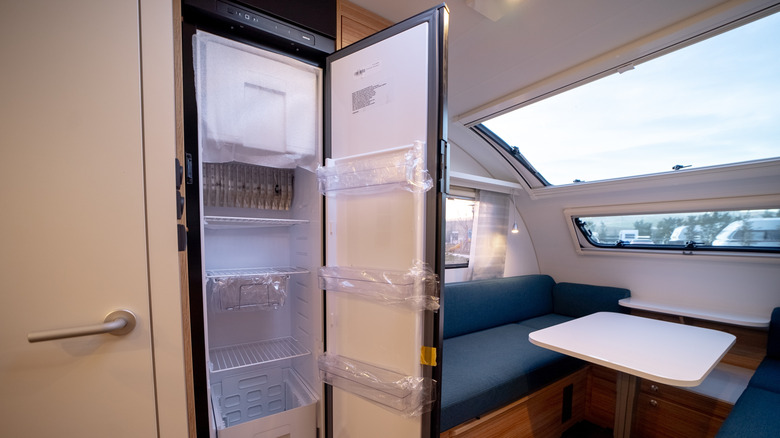
Absorption systems are common in RVs because they're not as loud as traditional refrigerators. They also don't use as much electricity, and some models can run on propane. Their use in RVs dates back to at least 1956, when Domestic started using absorption refrigerators for that purpose. Absorption systems were considered a high-tech cooling solution at the time and remained the preferred choice for RV refrigeration for decades afterward.
However, there are other fridge options for owners wanting the best gadgets for RV living. This includes 12V electric compressor refrigerators that are designed to be more efficient and can operate on battery power, making them more dependable in off-grid situations. These units rely on compressors, which can result in slightly louder operation compared to absorption systems. However, 12V units do generally offer stronger cooling performance and efficiency overall.
Some people are even using 120V residential refrigerators in their RVs. These units may require an inverter when used off-grid, as they run on standard household power and need a certain amount of electricity to operate. While they can offer strong cooling performance and typically hold more items, they may not be ideal. That's because converting power through an inverter can mean a loss in efficiency in the RV's electrical system. Additionally, household fridges are larger, and may require modifications inside the RV before they can be correctly installed.