

Airbus Is Making An Engine That Could Bring Aircraft Emissions Down To Zero
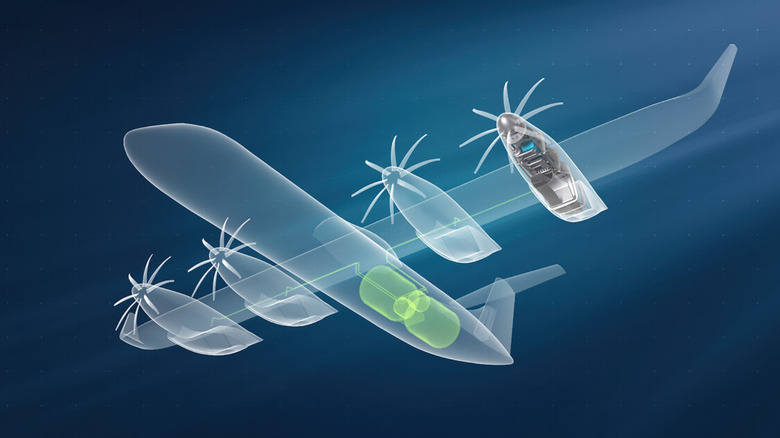
It's easy to be skeptical about finding flights with below average carbon dioxide (C02) emissions. That's because the aviation industry is responsible for about 2.5% of global C02 emissions. However, there may be some positive changes on the horizon as Airbus is working on a new fuel cell engine that could eventually eliminate in-flight C02 and nitrogen oxide emissions.
This new engine would be powered by hydrogen fuel cells and would potentially replace traditional jet engines that run on fossil fuels. Airbus is working with MTU Aero Engines on the project, in which the design, testing, and certification would be handled in a joint partnership. Work is expected to begin in 2027, with the goal of helping advance hydrogen-powered flight and move the aviation industry closer to cleaner operations. The new project comes just one year after the Airbus Summit, where the company outlined an updated roadmap for its ZEROe program. Airbus has already completed several rounds of testing on important components, and plans to conduct ground testing when the program gets underway in 2027.
The ZEROe program launched in 2020 and is Airbus' long-term effort to develop its first hydrogen-powered commercial aircraft. After initially exploring various hydrogen propulsion concepts, the company selected fuel cells for its main approach following prototype testing. As the program continues to move forward, Airbus engineers are working to overcome a variety of challenges, including hydrogen storage and system distribution.
The challenges of using hydrogen fuel in aviation
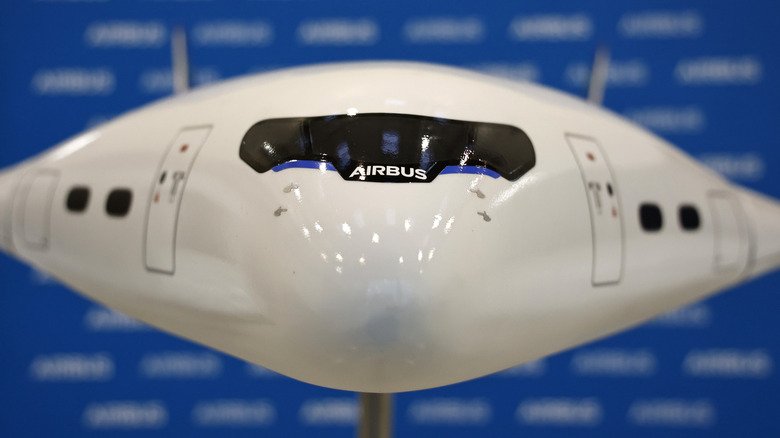
Airbus' work with hydrogen fuel cells shows just how much of a focus hydrogen has become in the aviation industry. That's because companies like this diesel engine manufacturer are looking for viable alternatives to fossil fuels, and hydrogen has emerged as one of the most promising options. Additionally, battery-powered solutions are challenging due to current battery technology that's considered to be too heavy for commercial aircraft. But just because hydrogen has potential, that doesn't mean that it's ready to be widely used in aircraft today.
A 2025 study titled "Hydrogen as an aviation fuel: Safety concerns and mitigation strategies" examined the risks associated with using hydrogen in aircraft. Researchers identified concerns involving flammability, leakage, material compatibility, and storage. The study found that hydrogen's unique properties would require additional safety measures, as new systems and even the handling procedures would need to be developed.
One of the biggest challenges is storing enough hydrogen for operations, while also maintaining both safety and efficiency. The problem is that hydrogen has a lower energy density volume than traditional jet fuel, which means it requires more holding capacity. This could involve the use of cryogenic tanks that can keep liquid hydrogen at extremely cold temperatures. There's also a concern with hydrogen leaks, as well as pressure buildup and the possibility of unexpected ignition. All of these factors must be solved before hydrogen technology can be widely adopted.