

What Country Gets Nearly 70% Of Its Electricity From Nuclear Power?
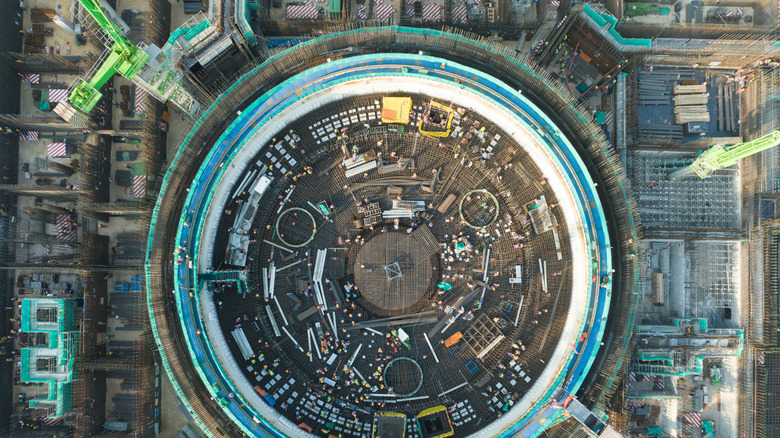
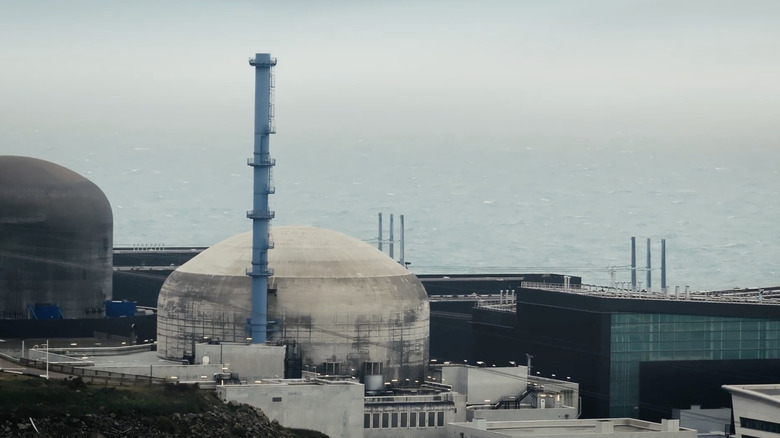
At a global level, nuclear power only supplies about 10% of the electricity today, according to PBS NewsHour. That means any country that gets 70% of its electricity from nuclear power is a clear outlier. That outlier is France, which according to the World Nuclear Association gets close to three quarters of its electricity straight from nuclear reactors. This is generated by a whopping 57 reactors across the country, spread across 18 plants. An example is the Flamanville 3, the country's most powerful reactor that went live at the end of 2024. It puts out around 1,650 megawatts, roughly enough electricity to cover a city the size of Paris.
The reason why France went this route traces back to 1974. Back then, the first oil shock, which resulted in a sudden jump in crude prices, rattled the West pretty badly. France had barely any oil or coal of its own and importing any fuel felt like a bad bet. To compensate, it chose to build reactors, fast, and it never really turned back. The pace was staggering, so quick that it's still the fastest nuclear buildout any country has pulled off to date. At the start of the 1980s, France had 15 active reactors, which was decent for the time. But by the end of it they had 55.
Clearly, the Chernobyl disaster from 1986 didn't scare them off the plan. Instead, government after government kept backing the policy. In 2022, President Emmanuel Macron approved six new EPR2 reactors – a simpler and cheaper successor to the older French designs. He also floated building another eight after that. Today, France is the largest net electricity exporter in Europe.
Who's second and where does the US stand?
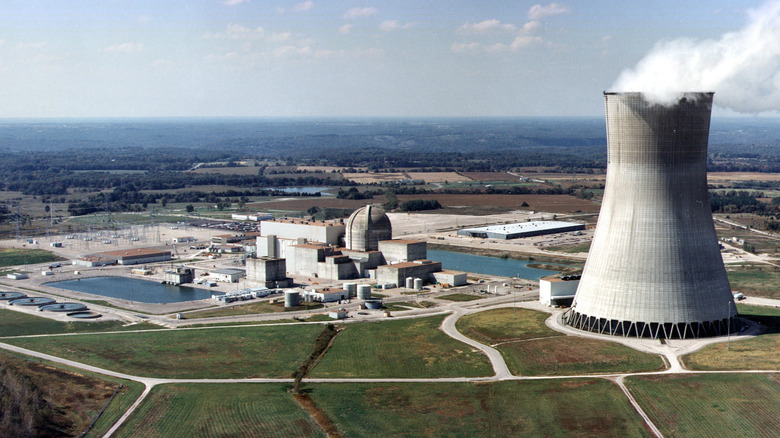
Coming in at second place is Slovakia. According to the International Energy Agency (IEA), it's able to meet more than 60% of its electricity needs on a good year. Two plants handle the supply, Bohunice and Mochovce, with both running Soviet-designed VVER reactors that later picked up Western safety upgrades.
As for the USA, the country is a huge producer of nuclear power, but it's also a huge producer of other forms. The country actually runs the largest reactor fleet on the planet, somewhere north of 90 reactors, which adds up to close to 97 gigawatts of capacity. For comparison, France's fleet — the second biggest in the world – tops out at around 63 gigawatts. In fact, the U.S.'s nuclear production is 30% of that of the world's. The catch is that since the US is such a huge consumer of electricity, all that production only covers about 19% of the country's needs. The rest is covered by gas, coal, wind, and solar.
However, Washington does want that share to go up. In fact, the stated federal goal is to quadruple nuclear capacity by 2050. And officials keep pitching nuclear as the solution for all the new data centers popping up everywhere in the country to feed the AI boom, straining electrical grids. Coming after the USA is China. PBS NewsHour counts around 60 reactors there right now, but with 40 more under construction, it has the potential to surpass the USA when they go live.
Why nuclear power is so advantageous
The biggest thing nuclear reactors have going for them is the sheer reliability. The Department of Energy says a reactor runs at full tilt about 92% of the time over a year — a capacity factor that nothing else comes close to. Natural gas, the next major source in line, manages closer to 60%. Gas and coal land lower, with wind and solar dropping further still. The problem with these sources is that they either shut down often for maintenance or are subject to the mercy of the weather — sometimes both.
Add to this the fact that a nuclear power plant barely uses up any land, at least compared to the other sources. A typical 1,000-megawatt reactor sits on a little over a square mile of ground, according to the Department of Energy. Figuring out how many wind turbines it takes to replace that reactor puts you at around 360 times the land. Solar panels do a bit better, though replacing the reactor with solar panels still calls for about 75 times more. Uranium crams a whole lot of energy into very little material. The only downsides are that reactors cost a fortune and take years to construct. Just look at France's own Flamanville 3 project, which not only ran billions past its budget, but finished a full decade behind schedule as well. Construction actually started way back in 2007, but it didn't hit full power until the end of 2025. Handling spent fuel — the used uranium left over once a reactor is done with it — is also a major headache.