

Do You Need To Ground A Portable Generator? It's Complicated

In the world of generators, there are a number of myths and misconceptions about different types of generators and their use. There's also no shortage of mistakes everyone makes when using a generator, and if there's one topic on generators that is consistently unclear, it's grounding. This is a point that not only some consumers get wrong, but even some tradespersons and other professionals. There's a large number of homeowners, DIY enthusiasts, or professionals who assume a portable generator needs an external ground via a ground rod — but in most cases, though not all — that isn't true.
Grounding is a complicated subject, and it is easy to get confused and swept away in the tide of technical information. Grounding and bonding are two terms you'll come across; they are different, but the two are often conflated and lumped in with other grounding requirements that may or may not actually pertain to portable generators. The question of whether you need to ground a portable generator is complicated, but in most cases, the answer is no.
I can already sense a cacophony of fingers and mice swiping to click out of this article, but stay with me. Establishing the grounding requirements for a portable generator is first and foremost determined by the use case, followed by what type of generator you're using (standard portable or an inverter, for example), and whether the generator has a bonded neutral or a floating neutral. Beyond generator specifics, there are a few topics you can and should reference: manufacturer guidelines, OSHA and NEC requirements, and local codes. The authority having jurisdiction (AHJ) dictates local codes, and it's possible they may require something specific depending on the use case, such as when using portable generators on fairgrounds or food trucks.
Most use cases don't need a ground rod, but manufacturer guidance varies while NEC and OSHA are clear
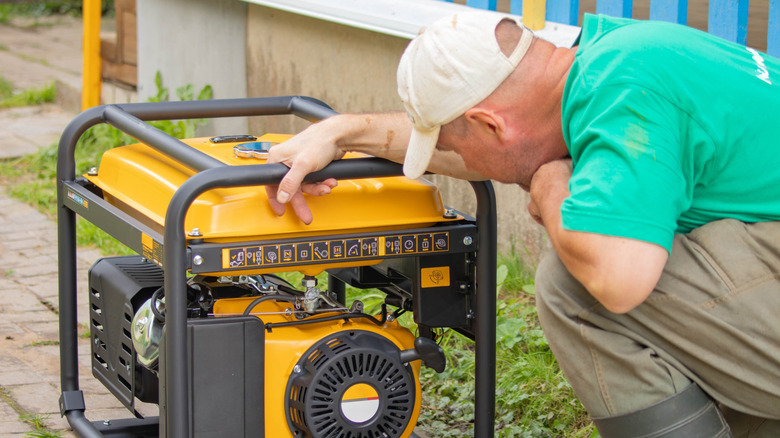
If you're using cord-and-plug loads connected directly to the generator, you generally don't need to ground the generator externally. The core guidance from some manufacturers supports this, but safety language varies by manufacturer. Generac's support documentation states that the company does not recommend or require an earth grounding rod for most of its generators, and that for cord-and-plug-connected equipment, a ground rod isn't necessary. As another example, owner's manuals for DeWalt portable generators, which are mostly made under license by Generac, note that the frame is bonded to the neutral (which is common for open-frame gensets), which allows the frame to serve as the ground.
This is in accordance with NEC 250.34, which allows the generator to be used in a portable manner without attaching it to an electrode ground (like a ground rod) under certain conditions. Those conditions include cord-and-plug loads being fed from the generator, and that all of the non-current-carrying metal parts of the frame and the equipment ground terminals are connected (this is not the same as neutral-to-frame bond). The OSHA standard 1926.404(f)(3)(i) reads virtually identically. Any portable generator should have all of its metal parts bonded to the equipment-ground pins of the output receptacles.
Identifying how the neutral is configured in your generator is important. It is also never a bad idea to consult a professional for guidance, in the same way you would when sizing a generator. Generators come with the neutral connection configured in one of two ways: bonded or floating. Historically, a bonded neutral is common for open-frame units, but is not universal. Floating neutrals are more common in inverter-type units, especially those that are geared towards RVs or home backup applications. The generator type does not decide the neutral configuration, so always check.
Bonded neutral versus floating neutral, and why it matters
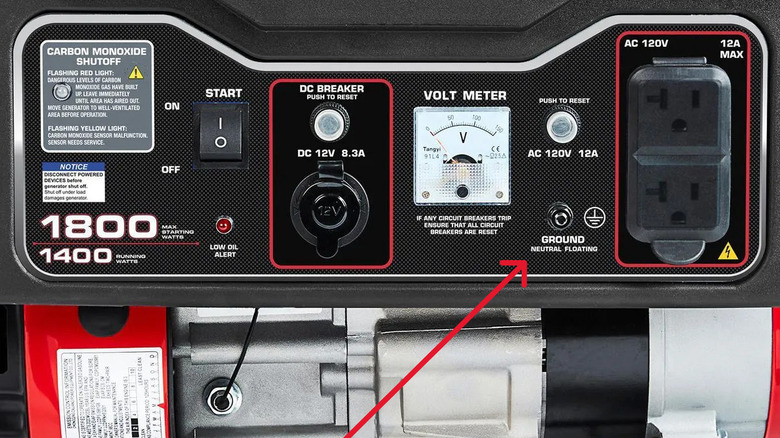
The primary distinction between bonded and floating neutrals can be boiled down to whether or not they are intended to be connected to a building. A generator with a neutral-to-frame bond allows the frame to serve as a ground, but special considerations must be taken to connect these generators to a building – you will need the appropriate transfer switch that switches the neutral, plus the line conductors. This is because the NEC permits only one neutral-to-ground bond in an electrical system; for buildings, that bond already exists at the utility transformer and at the building's service entrance.
Having multiple neutral-to-ground bonding points creates parallel neutral paths, which can lead to a number of hazards beyond the scope of this article. A unit with a floating neutral means there is no neutral-to-frame bond, and is ideal for connecting to a building with a transfer switch that doesn't switch the neutral. The frame remains grounded through a connection to the grounding pins of the outlet receptacles. In the case of both types, a ground rod is not universally required. Again, both NEC 250.34(A) and OSHA 1926.404(f)(3)(i) allow the frame to serve as the ground, assuming the bonding conditions are met.
In the case of a generator supplying a building via a transfer switch, the generator will be connected to the building's electrical system, including its electrode ground, which eliminates the need for a second rod at the generator. In the same way that you don't want parallel neutral paths, you also don't want a ground loop, which can be created when you have two or more reference ground points, possibly creating a difference in potential between them. Beyond grounding, also be sure you know how far a generator should be from your house when in use.