

Why Navies Around The World Keep Submarine Propeller Designs So Secretive
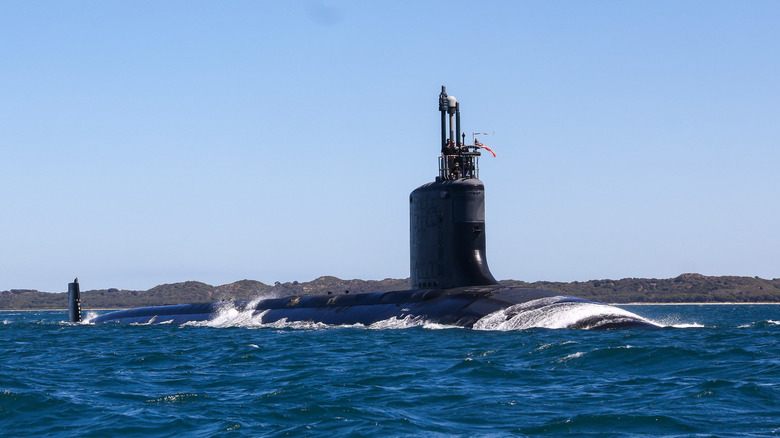
Militaries around the world frequently release photographs and videos of submarines entering or leaving port. Yet if you look closely at them, one detail is typically missing: the propeller. In many official images, the stern of the submarine is deliberately cropped, hidden beneath the waterline, or digitally obscured. Even when submarines are displayed in dry dock, access to the propeller area is frequently restricted. That level of secrecy has been common for decades, especially for the most advanced submarines in the world.
That level of secrecy isn't accidental. Making a modern submarine impossible to detect is every bit as important as the weapons they carry. That reality has driven decades of investment in technologies designed to reduce underwater noise, including quieter machinery, vibration-isolation systems, specialized hull coatings, and in some cases, advanced pump-jet propulsion systems. For now, an acoustically optimized propeller design influences how quietly a submarine moves beneath the surface, which is why navies around the world continue to treat it as sensitive military technology.
A propeller reveals more than you might think

At first glance, a submarine propeller may not seem all that different from one found on a commercial ship. However, every aspect of its design is carefully engineered to help the vessel move as quietly as possible through the water. Put another way, naval propeller design places stealth above propeller efficiency. Stealth is achieved by minimizing cavitation, which is the sudden implosion of vapor bubbles when the speed of propeller blades drops local water pressure below its vapor point, creating an acoustic signature that can be tracked by the enemy. Details such as the number of blades, their shape, curvature, pitch, and even the precision with which they are manufactured all influence the amount of noise and vibration produced as the submarine travels beneath the surface. While those differences may appear subtle to the casual observer, they can have a significant impact on a submarine's ability to remain hidden during operations.
Those design characteristics also make a submarine's propeller valuable from an intelligence standpoint. For decades, navies have studied the acoustic signatures of rival submarines using sophisticated passive and active sonar systems to identify specific classes of vessels by the sounds they produce underwater. Although a photograph alone cannot reveal every engineering detail, it can still provide analysts with clues about a submarine's propulsion system, design priorities, and potential acoustic performance.