

Vehicle Trims Vs Packages: What's The Difference?
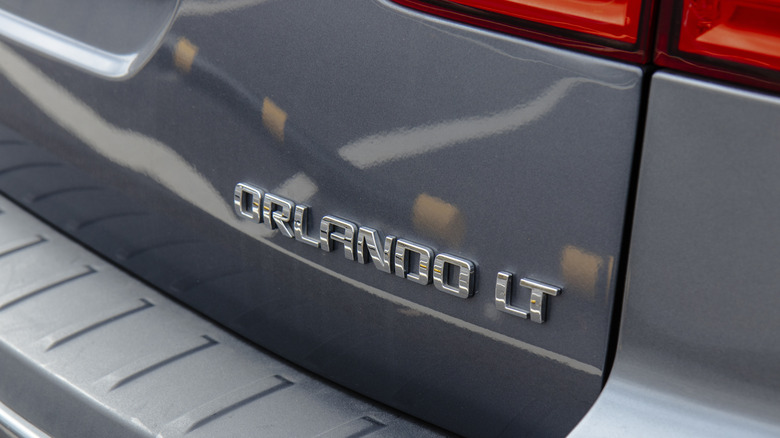
As if picking the right car from the slew of options for your needs isn't difficult enough, you also end up running into two terms after you've made up your mind: trim and package. The trim is simply a full version of a model that's sold at its own price and comes with its own set of features. The goal with it is to help a customer save by letting them pay for something that fits their budget without splurging on unnecessary extras. Accordingly, these versions are listed from least to most expensive, with the most affordable called the base model. Climb up a rung, and you get more, either in the form of fresh features or nicer premium swaps — like leather seats instead of cloth. The top trim is the most expensive and the one that gives a car "fully loaded" status.
Meanwhile, a package is a completely different sell, and is rarely a part of a trim. It is a bundle of extras you bolt onto whatever trim you picked, and are usually grouped around a theme. That includes anything from a towing kit you can tack on to something that makes the car better suited for cold weather — like heated side mirrors. Usually, an individual package is an all-or-nothing deal. So, for instance, if a package includes a sunroof and a fancy stereo together, you can't grab just the stereo and leave the sunroof behind.
How different are they both, really?
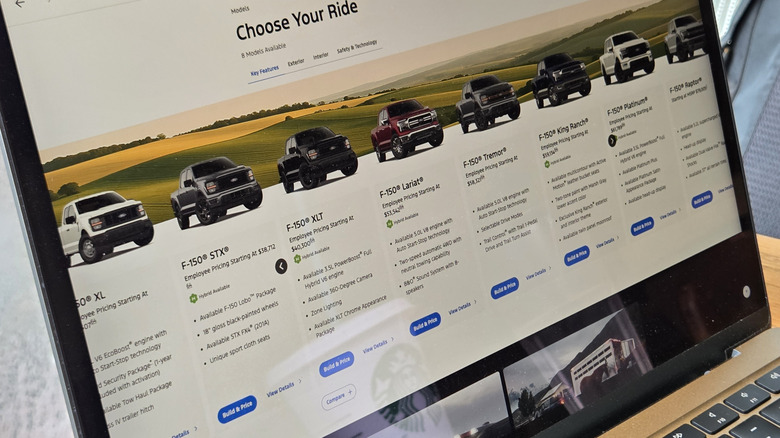
One good way to understand trims is by looking at the Ford F-150, the truck that keeps topping America's sales charts. Its 2026 model comes in eight trims that start with the XL, which opens for $39,330. Then you go through the STX, XLT, Lariat, Tremor, King Ranch, and Platinum, before getting to the top off-road Raptor trim. That one starts at $79,005 and comes with all of the off-road-specific bells and whistles.
Other brands run more or less the same playbook. For instance, Toyota's trim-level letters typically start you at LE and top out around Limited or Platinum. Chevy usually opens with LS and climbs through the LT trim, which stands for Luxury Touring. Honda leans on the LX label for its base models, then EX and Touring.
As for packages, let's take another look at the F-150. Ford offers multiple options you can add to a chosen trim, though some are tied to specific trims. Case in point: the new Lobo package — a street-styled kit with gloss black 22-inch wheels and a lowered rear end – can only be installed on the STX. Adding a package also naturally raises the price: For the Lobo, it's an additional $4,695 on top of your trim. You'll find similar packages for nearly every popular car, no matter the brand. Likewise, Toyota offers a Weather Package for the RAV4, which fights off cold mornings with a heated steering wheel and heated rear seats.
What if you want something more custom?
Let's just say you like the base trim but want one upgrade off the top shelf, like navigation or a heated steering wheel. You'd want to add it as a single option, but that's usually not possible. The thing is, a lot of these features are typically found on higher trim levels, so you end up moving up a trim or two to get them. That also means you wind up paying for a bundle of other stuff you didn't really care about to get the one bit you did.
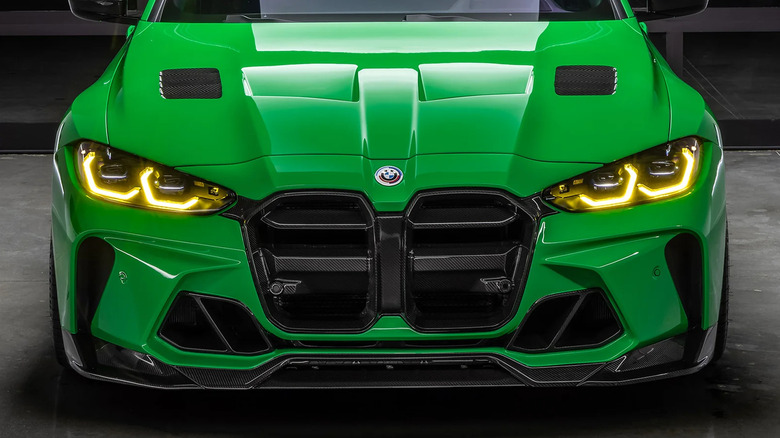
And that's where outside shops come in. They offer their own bundled packages to properly kit out your car. An example is Vorsteiner, a California carbon-fiber shop, which makes full aero kits for cars like the BMW M3. These kits can go as far as reworking the front end, hood, and rear diffuser. Some, like Hennessey, a Texas tuner, even sell engine upgrade packages. One, called the VelociRaptoR 1000, takes the Raptor R and pushes its supercharged V8 from 720 hp to a full 1,000. Whether the Raptor actually needs 1,000 hp is a different question, however. Many of these aftermarket shops also add individual features as extras, like leather seats, a very common upgrade.