

How Much Does A Car Depreciate When You Drive It Off The Lot?

Buying a new car is a major expense, and even though you may be able to negotiate dealer fees, you're still making a big investment. One of the most frustrating parts of the process isn't just doing the paperwork, but what happens to your new car's value the moment it leaves the lot. While it's tough to calculate the exact amount in those first few moments, according to Carfax, a new car will typically lose more than 10% of its value in the first month alone.
Kelley Blue Book estimates that values continue to decrease from there, with total depreciation reaching about 20% in the first year, and more than 50% at the end of the first five years. This happens for a few reasons, beginning with industry classification. When a brand-new vehicle is driven off the lot, it's considered "used," which immediately impacts its resale value. At the same time, everyday factors come into play as well, including mileage, brand reputation, and overall condition. When combined with the age of the vehicle, these factors can affect how much buyers are willing to pay.
The tricky part about trying to calculate depreciation is that vehicles can experience a loss of value at different rates. So, if you're trying to determine how much value your vehicle is losing per 1,000 miles, the answer may not be easy to determine. While some vehicle types depreciate faster than others, there isn't an industry standard dollar or percentage figure you can technically use for each individual vehicle.
Fighting depreciation and the truth about EV resale value
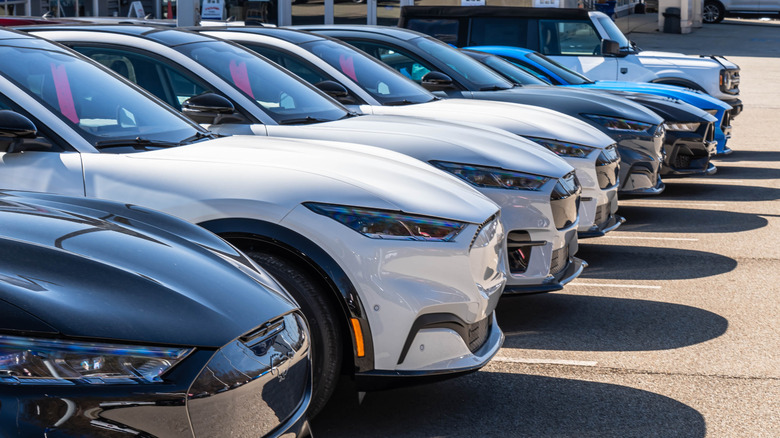
Unfortunately for new car buyers, vehicle depreciation is unavoidable. However, there are some ways you can better understand it and manage its impact during your years of ownership. The most important first step is choosing a vehicle known for its strong second-hand demand, including certain car and truck models that have the best resale value after five years. Careful driving can play a role too, because as the mileage adds up, the value goes down. Regular maintenance and proper care are also important, as they will impact the vehicle's condition.
It's worth noting that electric vehicles, though cheaper to maintain than gas-powered cars, also depreciate over time. In fact, they tend to lose their overall value at a faster rate. One major reason for this is incentives, as EVs have typically been sold with manufacturer discounts and government rebates in the past few years. While the combination of the two can make an EV more affordable initially, they actually weaken its resale value later on, because used value isn't driven by what you paid.
Improving EV technology also has an effect, especially when it comes to battery range. Newer models can quickly make older EVs feel outdated, even if they're in good condition with low mileage. Additionally, the EV market is still a work in progress in terms of development, which makes it more of a niche market, with consumer demand being somewhat limited. This can make resale values drop much faster than traditional gas-powered vehicles.