

These Types Of Vehicles Typically Depreciate Faster Than Others
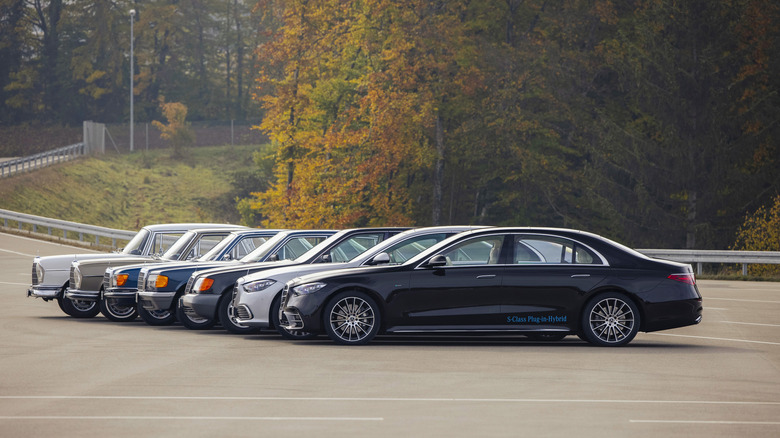
Every gearhead has been in this situation. You're surfing through eBay Motors or Facebook Marketplace looking for cars, either just for fun or because you want a new project, and you see it: a European luxury car like a Mercedes S-Class, a BMW 7 Series, or something wild like a Maserati. The price is really low, and it doesn't look like a scam. The value has just depreciated to the bottom floor.
Vehicle price depreciation is an odd beast that combines statistics, automotive technology, and general customer sentiment towards a brand. Those factors are why brands like Toyota and Honda depreciate very slowly. People see them as reliable, unadorned with quickly outdated technology, and easy to find. For example, a 10-year-old Toyota 4Runner still commands a high price in the used market, with prices around $20,000 (brand-new it's $42,070). They're classically reliable vehicles that people tend to really enjoy and have a healthy aftermarket.
The opposite trend tends to affect European luxury cars like the aforementioned Maserati. Bleeding-edge technology from the time ages about as well as a banana; if you aren't a specialized mechanic, the reliability is suspect, and consumer taste for high-end cars is fickle.
Easy to buy, tough to maintain
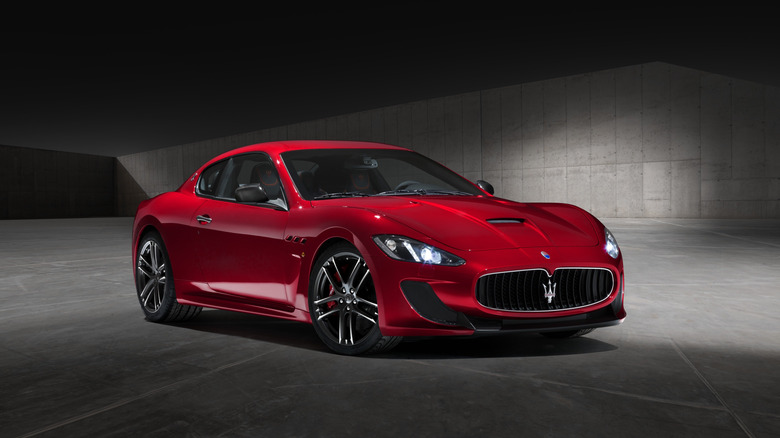
Breaking down the numbers a bit, a new Maserati GranTurismo, a luxury sports coupe with an Italian-crafted interior, and a 3.0-liter V6 that throws down 483 horsepower, costs a staggering $145,000. Looking through a site like CarGurus, you will find 10- to 15-year-old Maserati GranTurismos for under $30,000 all day long. Maseratis are performance cars that tend to be driven to the edges of the performance envelope. That accelerates the entropy and drives the price lower.
On the luxury side, the price trend is much of the same. You can find a 20-year-old Mercedes S-Class for under $10,000 very easily. A new 2026 S-Class starts (without any options) at $119,500. The technology becomes outdated very quickly, and the finely tuned suspension can grow finicky as the components age and parts become harder to find and stay expensive. Plus, finding a specialized European car mechanic willing to work on a decades-old S-Class without charging a small fortune is likely a fool's errand.
If you lived in Germany, where the S-Classes are born, or in Italy, where the Maseratis start their life, then it might be different, as the infrastructure to support those aging vehicles is potentially a lot stronger. But here in the United States, where there's a Toyota shop in every town, European luxury cars are going to stay toward the pricey-to-maintain end of the maintenance spectrum.