

Extreme Heat Can Hurt Your Car In More Ways Than You Think
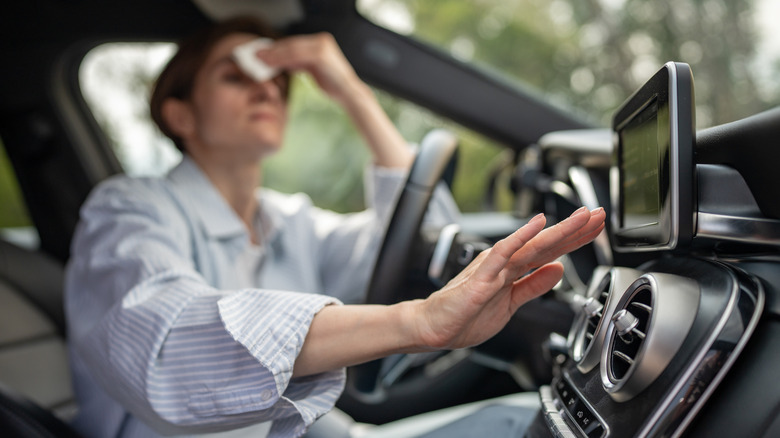
We are diving into the summer, and parts of the United States are experiencing extreme heat waves. You may not often think of hot summer days as dangerous, but extreme heat can actually be one of the deadliest weather conditions. And your vehicle may also be impacted by extreme heat more than you think.
"Heatwaves significantly increase the risks we face on and off the road," said Mark Jenkins, spokesman for AAA – The Auto Club Group. The most obvious risk is the excessive temperatures inside the cabin, which can lead to heatstroke and even death. You should never leave a pet or child inside a car on a hot day, not even for a minute. However, hot weather concerns go beyond a hot interior, and you will need to take some preventive measures to keep your vehicle safe from potential damage during the summer months. "Many drivers underestimate the toll heat takes on vehicles," added Jenkins.
Risks of battery failure and engine overheating
The hotter the weather, the higher the risk that your car battery could be damaged. That's because higher temperatures mess with the battery's chemistry. The heat accelerates chemical reactions, which can shorten battery life or even cause sudden failure. AAA responds to around 2 million battery-related calls each summer. To avoid early failure, it's important to routinely inspect your car battery. You usually want to have it tested every year after it's over two years old. A mechanic should check the battery's charge, the terminal conditions, and whether it's securely mounted in the engine bay. Drive your car regularly to help prevent discharge and park in the shade.
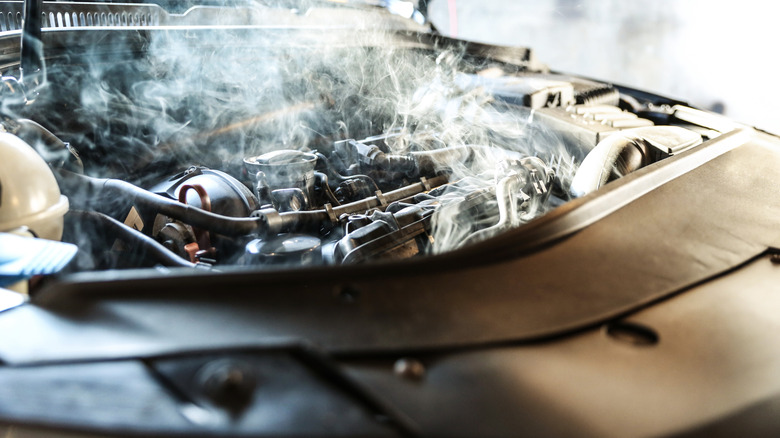
Extreme heat can also cause your engine to overheat, since the cooling system is often working overtime. If your engine overheats, it can lead to damage. If you see the temperature gauge symbol light up on your dashboard, that's a telltale sign that the heat is getting to your vehicle. You may also catch a whiff of a burning smell or even see steam from under the hood.
When the weather gets hot, there are some measures you can take to keep the engine cool. This includes checking fluid levels (they can degrade faster in hot weather) and adding coolant additives. If your engine still ends up overheating, pull over to avoid permanent damage. Turn the heat on, open the windows, then call for roadside assistance. Don't open the hood — the vehicle needs to cool down first since the coolant could be extremely hot and pressurizing within the cooling system.
Tire blowouts
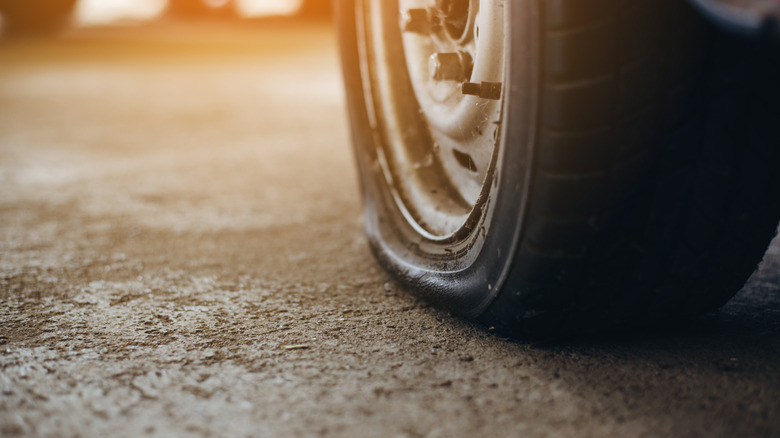
This is one you may not think about, but your tires can become weakened and eventually lead to dangerous blowouts if the pavement temperature is extremely hot. Pavement absorbs heat quickly, so temperatures can reach upward of 150 degrees in the summer. Once the temperature and pavement are hot, the tire pressure within increases. The rubber will also start to warm up, worsening your grip on the road and damaging tires that are not in good summer condition. Make sure your tires are free of cracks and uneven wear, and regularly check their pressure.
Extreme heat is also causing roads to buckle across the United States. Concrete roads in particular expand under higher temperatures. "If your concrete is not designed to handle a certain temperature or... suddenly you have this extraordinary heat wave and it expands more than what the joint allows it to, then it's got no place to go," said Amit Bhasin, Director of the Center for Transportation Research at The University of Texas at Austin, to NPR. This has led to large bumps in the road that further damage vehicles.