

Replacing America's Gas Stations With EV Chargers Is More Complicated Than It Sounds
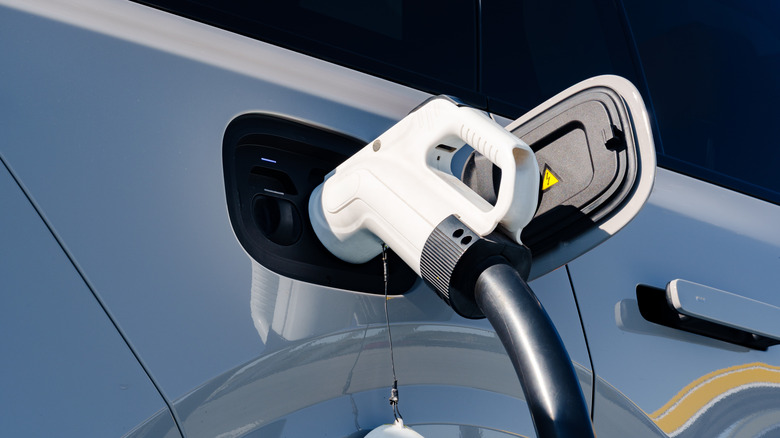
Once a novelty, EVs are now here to stay, and it's safe to say that the EV Era is reaching its adolescence. From small economy and city compacts to full-size trucks and SUVs, there's an electric option out there for almost everyone — but they could never fully eclipse gas-powered vehicles. Right?
The only way EVs could overtake gas cars is with a wider charging network — ideally, one that totally replaces the existing gas ecosystem. Range anxiety is a perennial EV concern, but one that doesn't exist for gas-powered cars, thanks to the robust network of stations across the country. How do we replace that, then?
Let's do the math, or at least as closely as we can approximate. The Department of Energy estimates a need for approximately 182,000 fast chargers and a whopping 28 million charging ports by 2030 to support growing EV demand, the majority of which are standard at-home chargers. Public stations will require around 1,070,000 regular ports plus those fast chargers. That would make a total of roughly 30 million EV charging ports of all types.
To fully move on from gas, however, we'd need to replace or supplement every gas pump in the nation with a DC fast charger to ensure a comparable level of practical range. After all, gas or diesel vehicles are quick to refill and can be topped up anywhere; most EV charging is done at home and is often less convenient in rural areas — one reason EV tech hasn't become the norm for long-distance trucking, for example. And all that is before accounting for market growth. In short, it's a complicated issue. Let's break it down further.
Let's account for all the variables
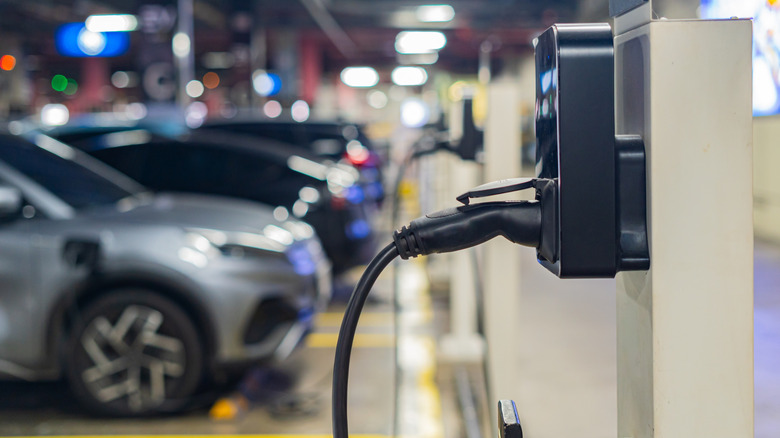
The EV market is growing exponentially; the U.S. Department of Energy estimates the number of electric cars will increase nearly tenfold by 2030, from about 3.5 million in 2026 to around 33 million in five years. That anticipated market surge will likely create massive demand for quick chargers and more advanced station designs.
One question, however, is whether the supply can keep up, especially in more remote locales, and whether it can account for the differing needs Americans have. Remember that the main benefits of gasoline cars over EVs are range and convenience: it's way easier to drive cross-country in a gas-powered car than an EV. Tow too heavy a load with your EV, and your range estimates may tumble; suddenly, you're scrambling around looking for a free charging station. In a gas vehicle, you can pull into a gas station.
Then there are industries such as trucking. How many EV charging stations would be required to allow EV trucks to cover thousands of miles as easily as diesel trucks do? Would truck drivers even want to deal with the wait times? There's no hard number we can put on such a scenario; yes, EVs may be more efficient in the long term, but not everyone would see them as good for business.
How future tech and urban planning can bring the number down
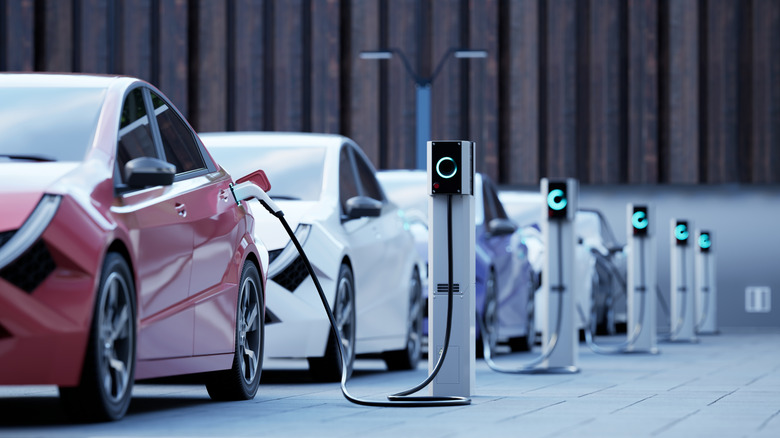
Fossil fuels aren't infinite; at some point or another, gasoline will become prohibitively expensive. Fossil fuel-powered cars still have their place, sure, though it might not be for long — at least, not if alternative prospects are anything to go by.
While the idea of needing tens of millions of new EV charging ports may seem daunting, those numbers don't take into account developments in battery technology. Take China's semi-solid-state batteries, which promise to revolutionize EVs with vastly extended ranges and affordable prices — both key criticisms of EVs over the past decade or so. If the tech is feasible and makes it to American roads, then we may not need as many fast chargers as we think we do now. In essence, we'll be able to have our cake and eat it, too.
Then there's the question of road infrastructure. We're seeing more interstate highways and more mass transit networks than ever before. The latter, especially, will mean more walkable cities and less traffic, along with smoother, clearer, and more efficient roads. All that is to say, while there's no single absolute number of EV stations we'll require to support a transition away from gas, the more work we do now, the less imposing that eventual number will be.