

3 Car Brands That Are Comparable To Mazda
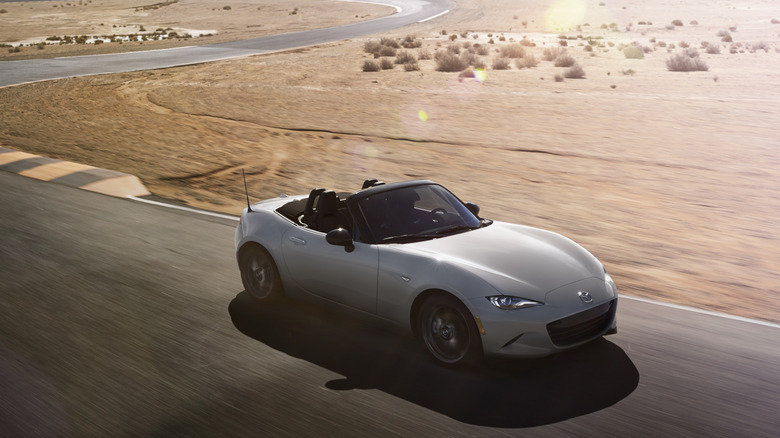
If you automatically associate Mazda with those "zoom-zoom" commercials, you're probably not alone. The brand launched the marketing strategy in the early 2000s, and it was a highly effective catchphrase. Its more recent slogans in the U.S. include "Move and Be Moved" and "Driving Matters," but the zoom-zoom slogan was so effective because it equated Mazda with a fun drive. Today, Mazda is known for affordable, driver-focused vehicles that offer luxury-grade interiors without the luxury price tag.
Founded in Japan more than 100 years ago, Mazda originally developed compressed cork board! Only a few years later, it began to focus on machinery instead, and its tricycle truck called the Mazda-Go rolled off the production line in 1931. It entered the automotive market in the U.S. in 1970 and, after some bumps in the road, became one of the more popular foreign brands in America.
Globally renowned for the MX-5 Miata, Mazda also has a full lineup of more sensible daily drivers that still offer that sense of fun. From the athletic CX-5 to the family-friendly CX-90 and the well-priced Mazda3, the automaker has a ride for every lifestyle. If you like the idea of Mazda but want a slightly different vibe, there are several automakers that have comparable offerings. Perhaps you want something a bit more rugged, or you're looking for a vehicle that feels even more luxurious inside. If Mazda isn't a perfect fit, consider these three alternative brands that might better meet your needs.
1. Volkswagen
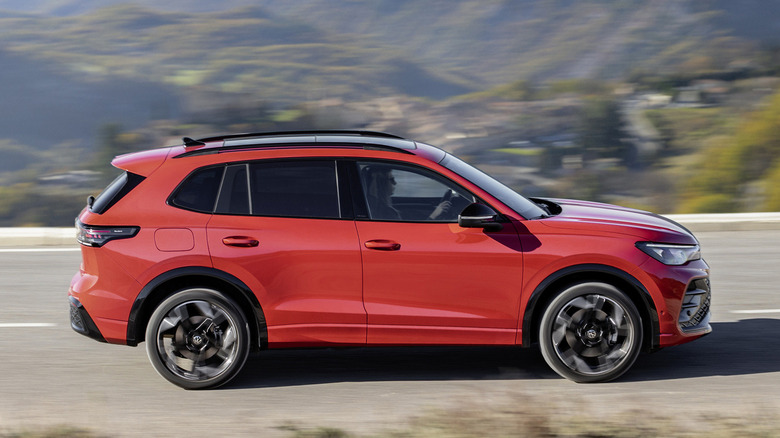
Volkswagen stands out as one of Mazda's most prominent competitors. The German automaker is known for its European engineering and good build quality. While Mazda leans into the sportier side of car design, Volkswagen focuses on firm driving dynamics and reliable performance. Both automakers offer a lineup of compact and mid-size SUVs, as well as sedans and electric models. The vehicles are marketed to those who enjoy driving and aren't simply looking for the most cost-efficient option.
Mazda places more emphasis on offering luxury, while Volkswagen is often more utilitarian. If you compare similarly priced 2026 Mazda CX-5 and 2026 Volkswagen Tiguan, you'll find the biggest differences under the hood. Both come with almost identical standard features, including navigation, parking assistance, and adaptive cruise control. The Mazda has standard all-wheel drive, while the Tiguan is front-wheel drive. If horsepower is at the top of your list, the Volkswagen wins, with 201 horsepower compared to the CX-5's 187 horsepower. The Mazda offers a larger, 2.5-liter engine and a six-speed shiftable transmission, while the Tiguan has a 2.0-liter engine and an eight-speed automatic transmission.
Fuel economy is similar, but the Volkswagen does slightly better. VW also offers a better warranty with basic 4-year/50,000-mile coverage, compared to Mazda's 3-year/36,000-mile warranty. A comparison of the Atlas and the CX-90, the automaker's largest SUVs, yields similar results, though the Volkswagen offers much more cargo and passenger space than the Mazda.
2. Honda
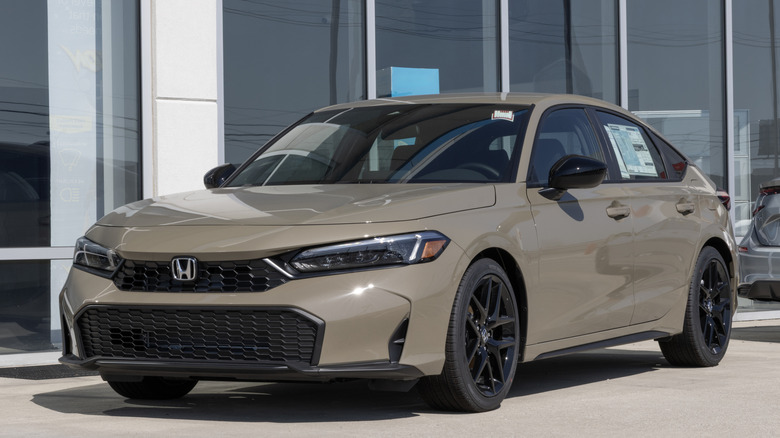
Like Mazda, Honda is a Japanese company born from humble beginnings. In the wake of World War II, Honda was formed by two men to develop small generator motors that could be attached to bicycles. In 1959, American Honda Motor Co. was established as the first overseas subsidiary of Honda Motor Co.
Today, both Mazda and Honda offer similar lineups and price points. While Mazda is known for performance and a sporty drive, Honda is popular for its reliable, family-friendly vehicles. Both brands offer consumers modern, comfortable interiors. When it comes to price, each automaker has a wide variety of options for buyers. Honda's least expensive vehicle is the base-model Civic, which currently starts at $24,695. It has a full lineup of SUVs ranging from $26,600 for the HR-V to $44,950 for the Passport.
Mazda's most budget-friendly option is the Mazda3, which has a starting price of $26,650. Its SUVs start slightly lower than Honda's, with an MSRP of $26,375 for the CX-30. When it comes to safety, Mazda often comes out on top, frequently earning top scores from the Insurance Institute for Highway Safety and the National Highway Traffic Safety Administration. Interestingly, the two are almost evenly matched in the JD Power 2026 U.S. Vehicle Dependability Study, with Mazda just edging out Honda with a reported 210 problems per 100 vehicles (PP100). Honda saw 211 PP100.
3. Chevrolet
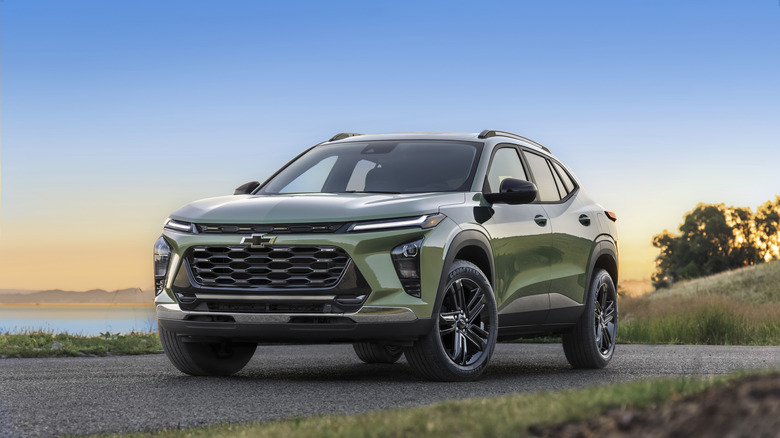
You may be surprised to learn that Chevy is directly competing with Mazda, but both automakers offer the same class of vehicles, with an emphasis on both the crossover and SUV markets. Both manufacturers have a solid lineup of SUVs in various sizes, from compact to midsize. Chevrolet sets itself apart with more truck-like rugged styling and lower starting prices, along with plenty of standard tech options such as wireless Apple CarPlay and Android Auto. While Mazda leans into more luxurious interiors, Chevy focuses on family-friendly designs, though the premium trim levels offer perks such as leather seats and heated steering wheels.
Chevy's most affordable option is the Trax, which is an SUV with an incredibly low starting price of $21,700. By comparison, Mazda's least expensive vehicle is the Mazda3 sedan, which costs almost $5,000 more than the Trax. That being said, the Mazda3 is better equipped. Basics like power mirrors and power door locks are optional on the Trax, and the Mazda3 actually offers better legroom in the front row.
If you're in the market for a large family hauler, Chevrolet has better options, including the Tahoe and the massive Suburban. Mazda doesn't have any direct competitors for these SUVs, though it does offer the three-row CX-90.