

5 Tips To Extend The Lifespan On Your Motorcycle Tires
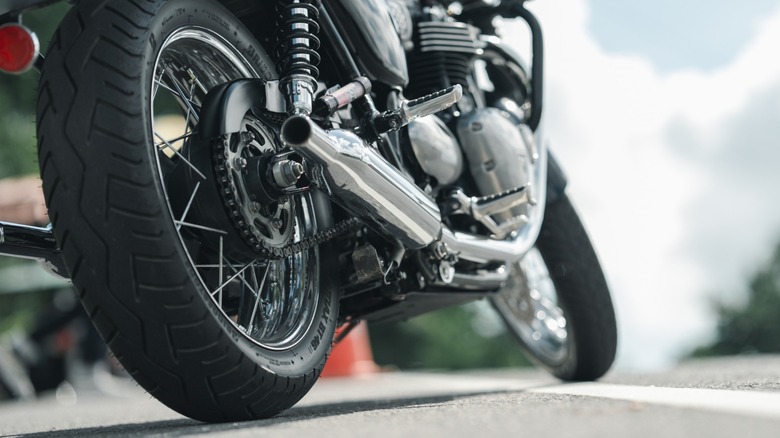
Motorcycle tires do more work than we give them credit for. Every time you lean into a corner, roll on the throttle, or squeeze the brakes, your tires are the only thing standing between you and the road. They manage grip, absorb road imperfections, and keep the bike stable whether you are cruising at highway speeds or navigating a tight bend in traffic. Without a good set of tires in proper condition, nothing else on the bike performs the way it should.
The problem is that tires wear out. That's just physics, and there is no getting around it. But there's a big difference between tires that wear out on schedule and tires that wear out too soon because of habits and oversights that are entirely within your control. Uneven wear, premature degradation, and reduced grip don't always happen because you bought the wrong tires; they often happen because of how the tires are used and maintained day to day.
Replacing a set of motorcycle tires before you have to is an expense that adds up fast. More importantly, worn or poorly maintained tires put you at risk on the road. The good news is that there are several ways to make your tires last longer, and most of them don't require special tools or technical expertise. It comes down to a handful of consistent habits that any rider can build into their routine.
Check your tire pressure regularly
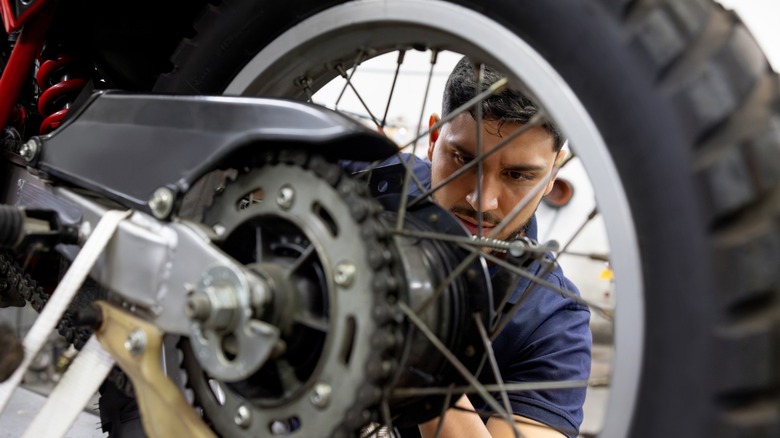
Many riders underestimate how much tire pressure affects their bike's performance. When your tires are properly inflated, they make full, even contact with the road. That contact is what gives you grip through corners and helps you brake confidently. Let the pressure drift too low or too high, and that contact changes, along with everything that depends on it. Running on underinflated tires puts more load on the edges of the tread than they were built to handle, causing them to wear faster and unevenly. On top of that, low pressure forces your engine to work harder just to maintain speed, hurting your fuel economy as a result. Overinflated tires create a different set of problems. Too much pressure puts extra load on the center of the tread, making the bike harder to control. Both extremes shorten the life of your tires and cost you more in the long run.
Beyond the wear, there are safety risks worth taking seriously. An underinflated tire builds up excess heat as it flexes, and over time, that heat weakens the rubber from the inside. At highway speeds, that kind of stress can end in a blowout. Similarly, an overinflated tire gives you less cushioning, making it more vulnerable to damage from potholes. Luckily, both situations are easy to avoid.
Make pressure checks part of your routine and always check your tire pressure when the tires are cold using a reliable pressure gauge. This is because riding heats the air inside the tires, increasing the pressure, which can lead you to make the wrong adjustment. Also, when inflating, go by the pressure listed in your owner's manual, not the number printed on the tire sidewall, to know what your tire pressure should be.
Keep your wheels properly aligned
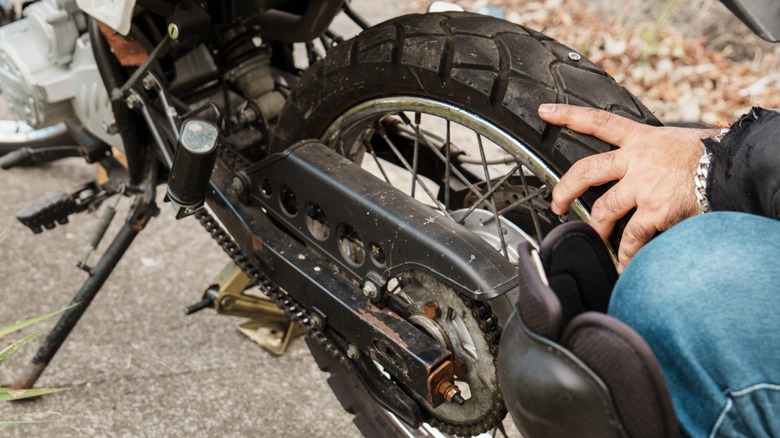
Wheel alignment is a process that involves positioning your wheels in a way that they track correctly with each other and your bike. When your wheels are correctly aligned, the tires roll smoothly and wear evenly across their surface. When they're not, different parts of the tread take on more stress than others. Depending on the type of misalignment, one edge of the tire can wear down significantly faster than the other, or the tire ends up scrubbing against the road instead of rolling cleanly over it. Either way, you're losing tread life with every mile, and the tires wear out long before they should.
Just like there are common signs that your wheels are out of balance, there are also warning signs that your wheels may be out of alignment. If your bike feels like it wants to drift to one side without any input from you, that's a warning sign. So are unusual vibrations at higher speeds, handlebars that feel off-center when you are riding straight, or a wear pattern that looks uneven when you inspect the tread. If you notice any of these, your alignment needs attention. Ignoring them leads to faster tire wear, reduced grip, and handling that becomes increasingly unpredictable.
That unpredictability is worth taking seriously. A properly aligned motorcycle responds the way you expect it to. When alignment is off, that predictability goes with it, and the bike can feel unstable in bends and hesitant under braking, which are not conditions you want to be dealing with on a busy road. To prevent this, have your alignment checked any time you notice the warning signs discussed earlier. Beyond that, you should also have them checked every 6,000 to 8,000 miles. However, if you ride in rough road conditions, you might need to check more often.
Store your motorcycle properly

Most riders think about tire wear in terms of mileage, but tires can degrade just as quickly from sitting still in the wrong conditions. If your bike spends extended periods parked or stored for a season, where and how you store it directly affects how long your tires last. If you don't store it properly, heat, moisture, and direct sunlight can damage the rubber, causing it to become dry, brittle, and cracked over time. The ideal storage spot is somewhere cool, dry, and shaded, with minimal temperature swings throughout the day. A well-ventilated garage is the best option. But if you must park outdoors, a UV-resistant cover will at least shield the tires from the sun and moisture.
Another problem that develops during storage is flat spotting. When a tire bears the full weight of the bike on a hard surface for a long period, the section of rubber touching the ground slowly deforms under that constant pressure. In some cases, that deformation becomes permanent, affecting how the tire performs when you get back on the road. The most effective way to prevent this is to use paddock stands that lift the wheels completely off the ground. If you don't have stands, parking the bike on carpet rather than bare concrete softens the contact and reduces the risk.
Before putting your bike away, check that the tire pressure is at the correct level. Also, tires naturally lose pressure over time, and a tire sitting at low pressure is more prone to developing flat spots. You should check the pressure roughly every month during storage and top up if needed. Then, before your first ride back, check the pressure again, bring it to the recommended level, and give the tires a thorough inspection for damage before you head out.
Maintain good riding habits
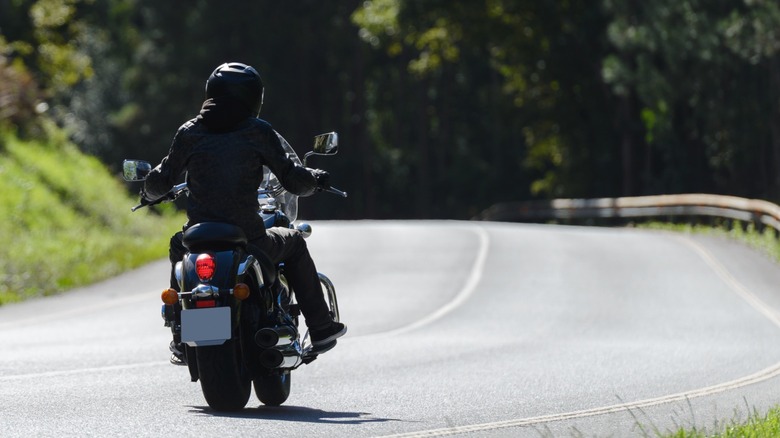
Riding style is one of the biggest factors in tire longevity. The way you handle the throttle, brakes, etc., determines how quickly your tires wear out. For starters, hard braking is one of the fastest ways to burn through rubber. When you brake suddenly, the tire's contact patch is forced to absorb a large amount of friction. Do that repeatedly, and the result is flat spots and uneven wear that shortens the tire's life considerably. The same applies to aggressive acceleration. Snapping the throttle open forces the rear tire to fight for traction instead of rolling cleanly, which generates heat and wears the tread down much faster than normal acceleration would. These are bad driving habits that are wasting your money.
You also won't be doing your tires any favors if you corner aggressively. When you take a bend too fast, the tires slide slightly across the road surface instead of rolling smoothly. That sliding generates heat that adds up quickly, especially if tight corners or roundabouts are a regular part of your route. The more heat your tires generate through aggressive riding, the faster your tires degrade.
This is why maintaining good riding habits is important. They protect your tires and also make you a smoother rider. Always apply the throttle smoothly. This way, the tire has more time to build traction and grip the road easily. In the same vein, rather than braking aggressively, apply pressure to the lever in a controlled manner. This distributes the braking force more evenly and keeps the tire working within its limits. Also, by paying attention to what's ahead, you can slow down or speed up gradually instead of making last-minute moves that put extra strain on your tires.
Clean your tires properly
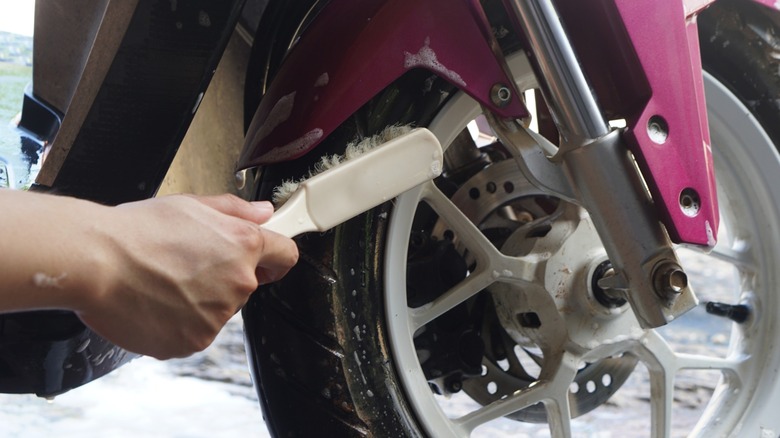
One important tip for motorcycle maintenance is keeping your bike clean, and that includes your tires. That's because grime, salt, brake dust, and other contaminants build up on the rubber over time, and if they are left to sit, they will gradually break it down. Cleaning your tires properly and regularly removes those substances before they get the chance to do lasting damage.
The cleaning process is not complicated. Start by rinsing the tires with water to clear away loose dirt and debris before applying anything else. Once the surface is rinsed, apply a mild detergent or a dedicated motorcycle tire cleaner to the tire, working in sections and paying close attention to the sidewalls and the tread grooves where grime tends to collect. Use a soft brush or sponge to scrub gently. Scrubbing too hard or using abrasive materials can damage the surface of the tire and compromise its integrity. Avoid harsh chemicals for the same reason, as they can strip the natural oils from the rubber and accelerate deterioration. Once you have scrubbed the tire thoroughly, rinse it completely with clean water. Any cleaner left behind will attract dirt and leave streaks, so take the time to rinse every section properly. After rinsing, dry the tire with a microfiber cloth to remove the remaining moisture.
Make it a habit to clean your tires regularly, especially after riding in dusty, muddy, or wet conditions. This will help keep the rubber in good condition between rides. It also gives you the opportunity to inspect the tires up close while you work, which means you are more likely to catch early signs of wear, cracking, or damage before they develop into a bigger problem.