

Why Is Jet Fuel Measured In Pounds Instead Of Gallons?
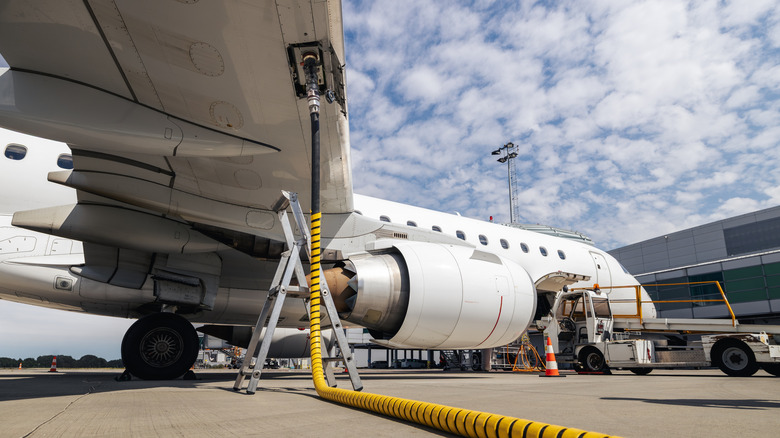
Most of the time in your daily life, you are going to measure liquid fuel (such as gasoline, kerosene, or diesel) in gallons. This makes sense since, you know, it's a liquid. But when you work in aviation, either flying or servicing jets, you measure fuel in pounds. It might sound counterintuitive or just an outright harder way to measure fuel, but it's really a question of physics.
At sea level (or slightly above/below) where most people work and live, liquids tend to stay at mostly the same volume. However, when you start climbing in altitude, that volume starts to change primarily because of the incredibly low temperatures at high altitude.
Additionally, when flying, weight and the subsequent distribution of that weight is incredibly important. In a fighter jet like the F-15 Eagle, it's capable of carrying a maximum of 36,200 pounds of fuel between its external and internal fuel tanks. Knowing how much fuel the engines burn, what fuel tanks are being used, and how much weight is left, are all calculations the pilot and avionics system needs to take into account to ensure a safe and successful flight, as well as making sure the plane is as efficient as possible.
Measuring fuel in pounds is all about plane weight and safety
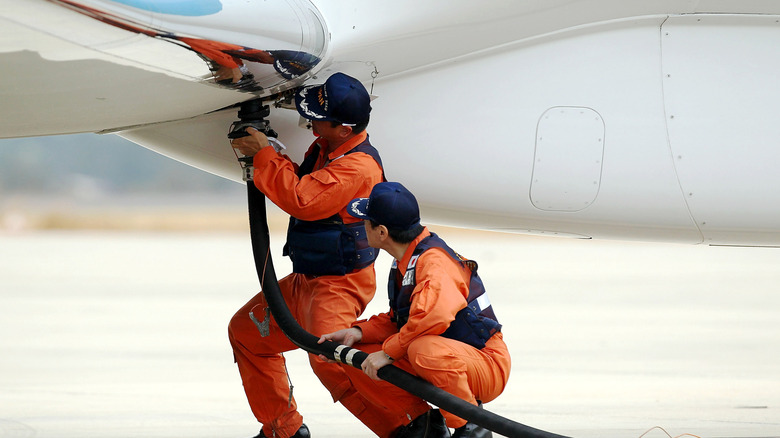
The rate at which an aircraft burns fuel changes over the course of the flight, burning more fuel to gain altitude and then burning it more slowly as air grows less dense at higher altitudes. Again, this is all information that's vital to a pilot to keep the plane in the air efficiently and safely.
Fuel burn, as noted earlier, affects weight. Many aircraft, including passenger airliners like the Airbus A320 neo, have not just a maximum takeoff weight but also a maximum landing weight that's lower than the takeoff weight. During an emergency where the plane has to be landed before its original destination, a pilot may have to dump fuel to attain that safe landing weight, to negate the risk of being too heavy to land.
Measuring the fuel in pounds does away with the need to calculate the fuel's exact volume within the fuel tanks, especially as that volume fluctuates with altitude. It all plays into safety, fuel efficiency, and ensuring that everything is standardized across the industry.