

Why Copper Used To Be Used In Brake Pads (And Why It Was A Bad Idea)
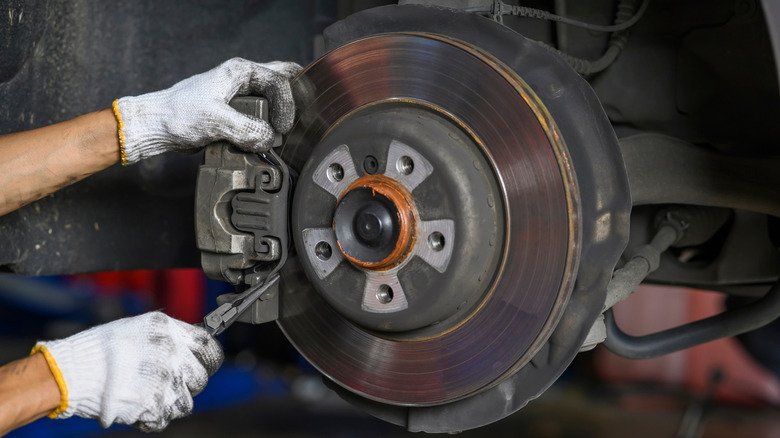
Copper has the chemical symbol "Cu" (from the Latin word "cuprum") and has been used by humans for a very long time. Neolithic people used this naturally occurring metal as far back as 8,000 BCE, after they realized it was better than banging stone tools together. Copper is found in the human body and is indispensable in keeping it running smoothly. In fact, we need about 900 micrograms per day. It's been used for countless incredible inventions over the millennia, including our cars' braking systems.
Asbestos was used in early brake pads but was eventually replaced by asbestos-free alternatives and, later, by copper, due to its superior heat dissipation and friction stability, both of which improved braking and extended lifespan. The friction generated during use produces temperatures between 250°F and 390°F. Copper is a great thermal conductor that helps resist that intense heat. Unfortunately, every time they're used, copper particles fall haphazardly onto road surfaces.
Copper released into the environment spreads far and wide, and doesn't break down. After heavy rain, those particles wash into municipal drainage systems and flow out to creeks, streams, and oceans, where they become detrimental to aquatic life. In 1991, the EPA published the Lead and Copper Rule (LCR) to minimize the levels of these elements in drinking water. In January 2015, an agreement was made between the EPA, individual states, and the auto industry to reduce the use of copper in brake pads.
The Copper-Free Brake Initiative of 2015
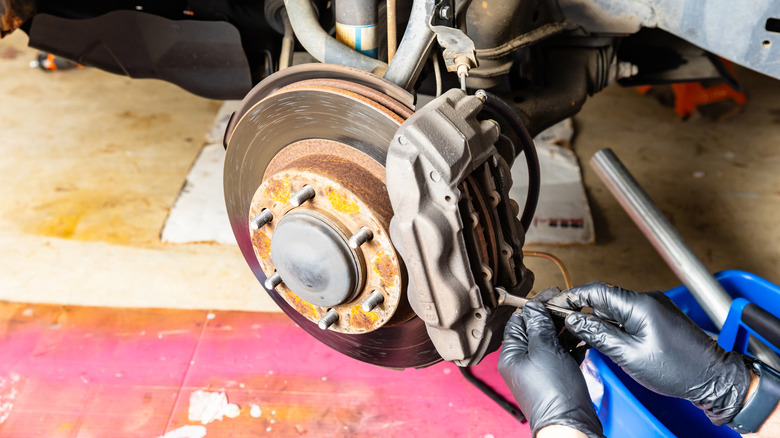
In 2015, there were approximately 263 million registered vehicles in the United States. Today, we're at or near 300 million. That's a lot of brakes. Much in the same way asbestos was eventually found to be hazardous to our health, so too was copper. The January 2015 Copper-Free Brake Initiative called for reducing copper in brake pads to less than 5% by weight by 2021, with a further reduction to 0.5% by 2025. Copper wasn't the only element that was reduced; the accord also agreed to lower the amount of mercury, lead, cadmium, asbestiform fibers, and chromium-6 salts. Manufacturers used a three-leaf symbol on boxes to indicate that brake pads complied with the initiative.
In 2010, before the copper reduction mandates were put in place, it's estimated that as much as 1.3 million pounds of copper dust entered California's environment. Some estimates say that California has had a 61% reduction in copper runoff since the changes were made. Meanwhile, Washington had as much as 250,000 pounds of copper particle pollutants, much of which ended up in its waterways and was especially harmful to salmon. Washington was the first state to ban copper brake pads due to the fish's economic importance as a primary export.
Today, modern brake pads come in four flavors. Organic (also known as Non-Asbestos Organic) pads are made from fiberglass, rubber, and sometimes Kevlar. There is also ceramic, which produces the least amount of dust. Metallic and semi-metallic brake pads contain a mix of iron, copper, steel, and other metals.