

Is The Plymouth Superbird Your Dream Car? Here's What Ones For Sale Might Cost You
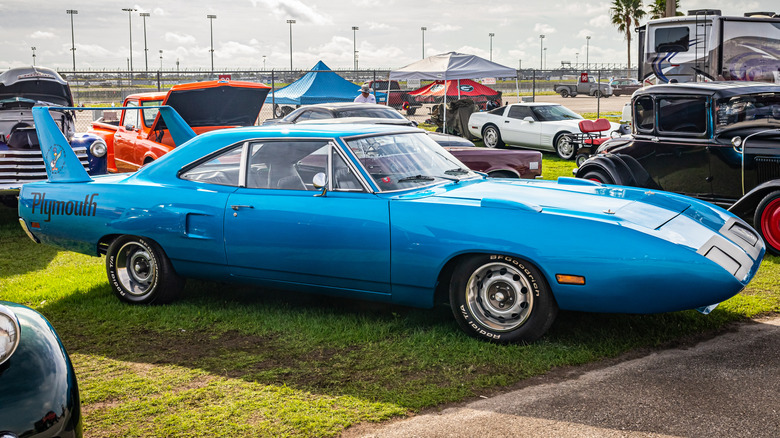
When it comes to dream cars, many people go with vintage muscle cars like the Plymouth Superbird. Named in honor of its Roadrunner twin, the Superbird was once a beast on the racetrack in NASCAR thanks to Richard Petty. It is still around for those collectors wanting to own one but be prepared: You'll be paying anywhere from $200,000 to over $300,000 or more.
The locations of these cars are random, spread out across the U.S., and listed for sale with various engine and transmission combinations. For example, a green Superbird with a 440 6-pack and 4-speed in Texas is priced on the lower end at $214,900. But on the extreme opposite end, a white automatic Superbird with a 440ci V8 in Indiana was taken off the market after reaching a high bid of $550,000 at auction. An earlier asking price of just under $700,000 failed to result in a sale. Some of the listings are featured on more than one site, including a blue automatic with a 440-engine rated at 375 horsepower in Illinois for $281,998.
The reason the Plymouth Superbird breaks the bank for many car buyers is mostly because of how rare it is. Plymouth built a limited number of Superbirds in 1970. Because of this, they can be difficult to find in original or well-preserved condition. It's also considered a collector's item because of its recognizable rear wing, which is part of the vehicle's factory design.
From NASCAR to Hollywood and beyond
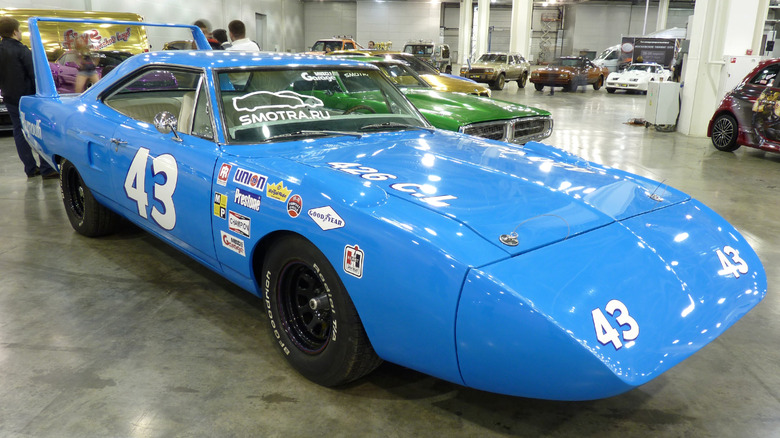
The 1970 Plymouth Superbird was built during a time when manufacturers were experimenting with aerodynamic designs to gain an advantage on the racetrack. Though it originated from the Road Runner platform, the Superbird featured a new and reshaped front end, along with extended bodywork for high-speed stability. Unlike other muscle car designs that often failed to dominate on the track, it was highly effective and pushed the envelope for NASCAR at that time.
But even as it made its mark in racing, the Plymouth Superbird was banned by NASCAR. Citing concerns over driver safety, NASCAR implemented new regulations with the intention of slowing cars down. These regulations also included tough limits on engine displacement, and weight adjustments on larger engines. Because of these changes, the Superbird, along with other aerodynamically designed cars, would no longer be able to hit the 200-mph mark. As a result, the program came to an end.
But even after its departure from NASCAR, the Superbird went on to become a highly sought-after muscle car for collectors. Thanks to its unique design, it also became a standout in Hollywood, appearing in movies like Pixar's "Cars," and "Gone in 60 Seconds," the film that also featured a 1967 Mustang called Eleanor. Today, the Superbird's legacy is that of a fast, memorable, legendary ride that continues to turn heads decades after its introduction.