

Your Local Ford Or GM Factory Could Soon Be Making Missile Parts Instead Of Cars
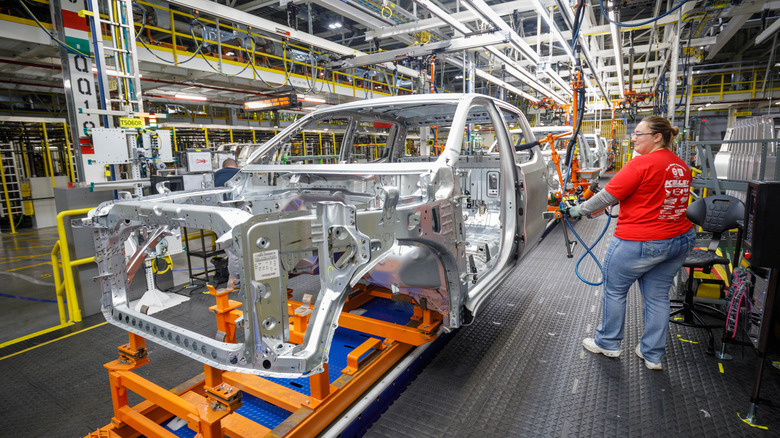
The next thing rolling off an American auto assembly line might not be a pickup truck or SUV. Some Ford and General Motors facilities might soon start producing advanced missile systems. In late June 2026, the White House shared that both Ford Motor Co. and General Motors are in discussions with defense contractors to use their excess manufacturing capacity to help Raytheon produce Tomahawk missiles and assist with the Patriot air defense system.
This comes as the United States looks to rapidly expand its domestic defense manufacturing. The country's missile stockpiles have been strained by its ongoing international conflicts, not to mention increased military support for the US's allies. While neither automaker has officially announced any sort of finalized agreement, both companies are actively participating in these defense-related talks with the government. The idea is that Ford and GM would could convert portions of their existing assembly lines for defense work, meaning the U.S. wouldn't have to devote time and money to constructing entirely new facilities.
Why turn to auto manufacturers?
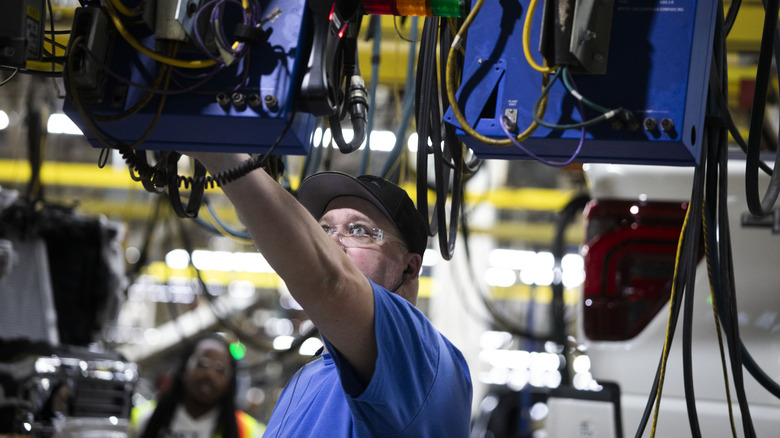
The White House is recruiting automakers because it took issue with contractors like Lockheed Martin, Boeing, and Honeywell directing approximately $51 billion toward stock buybacks rather than building out their manufacturing infrastructure. In fact, the president went as far as to sign an executive order banning future defense contractor stock buybacks.
Although neither Ford nor General Motors have finalized the structure of their collaboration with the government, there are several different ways they could help. Ford and/or GM could manufacture commonly used components, help improve production readiness, strengthen supply chains, even introduce more efficient manufacturing techniques. Whatever the collaboration ultimately ends up looking like, the objective is sure to be the same: to significantly increase output of key weapons systems to the tune of triple or even quadruple the current rate.
Of course, having more parts available might not necessarily change the actual reality of the assembly timeline. Lockheed Martin has previously said that these missiles take time to manufacture. Some, like the Patriot PAC-3 interceptor missiles, take more than two years to build. For the time being, no agreement has been finalized with either Ford or GM. Though both brands have been used by the military in the past, it remains to be seen whether either manufacturer will even end up building missile components.