

5 Lightweight Cruiser Motorcycles That Would Suit Practically Any Rider
Cruisers famously tend to lean on the heavier side compared to most other motorcycle types. They are traditionally built with thick, steel frames, they use large-displacement engines, and sit on a low center of gravity. Some of the biggest cruiser motorcycles ever made have curb weights in excess of 1,100 lbs. For many enthusiasts, that substantial, solid-cast feel is exactly what they love about riding cruisers. These bikes offer a stable ride that feels glued to the asphalt when tearing down a wide-open interstate. All that bulk can also be a little intimidating to some riders, however. The last thing you want is to stop on a poorly graded intersection or a sloped hill and suddenly find that you aren't able to bear the bike's weight.
Just because cruisers as a whole are typically heavier than other bikes doesn't necessarily mean that there aren't a few lighter options out there. Plenty of motorcycle manufacturers offer small to mid-sized cruisers that have all the style and comfort of the heavier bikes at a fraction of the size and weight. These cruiser motorcycles would make a solid option for seasoned riders who prefer something light and easy to control to use as their daily commuter.
Honda Rebel 500
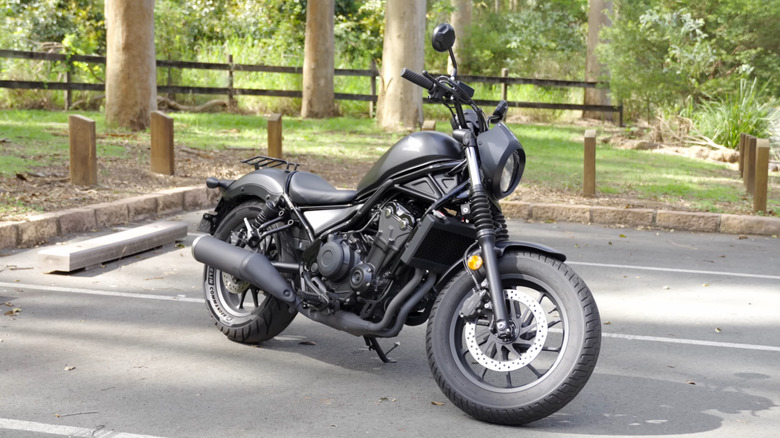
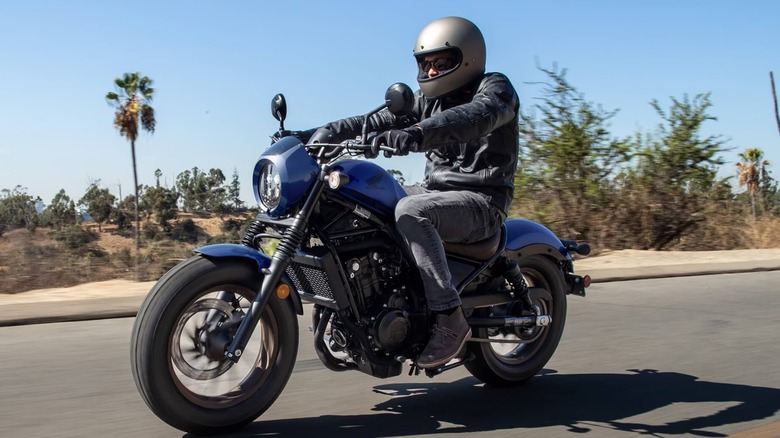
The Honda Shadow has been one of the most beloved Japanese cruiser bike lines on the market for decades, but its new little sibling has been making waves as well. The Honda Rebel is a smaller single-seat bike, but the same long, low shape that cruiser lovers appreciate. So with that in mind, those looking for a lightweight ride that still has the form and style of a cruiser will definitely want to take a look at the Honda Rebel 500.
The Rebel 500 CMX500 is a relatively new addition to the line, with the first model dropping in 2017. Even so, it has quickly established itself as one of the better lightweight cruisers on the market today. The current model retails at a $6,799 base MSRP, making it an affordable entry-level option. It's powered by a 471cc liquid-cooled DOHC parallel-twin engine and has a six-speed transmission with a slipper clutch. The bike has a curb weight of just 414 pounds, even with all of the standard equipment, all the required fluids, and a full 3-gallon tank of gas.
SlashGear's own Michael Teo Van Runkle reviewed the 2024 model and found that it was not only a great bike for beginners, but that it had enough power to let riders navigate high speed traffic with confidence and that most riders would be able to get around on it fairly easily. Meanwhile, Visor Down stated in their review that in spite of the bikes small size and entry-level pricing, the bike offers the same pacey, controlled, and efficient ride quality that Honda fans know and love. Those who like the Honda Rebel design and feature set, but want something smaller, might want to take a look at the even lighter Honda Rebel 300.
Kawasaki Vulcan S
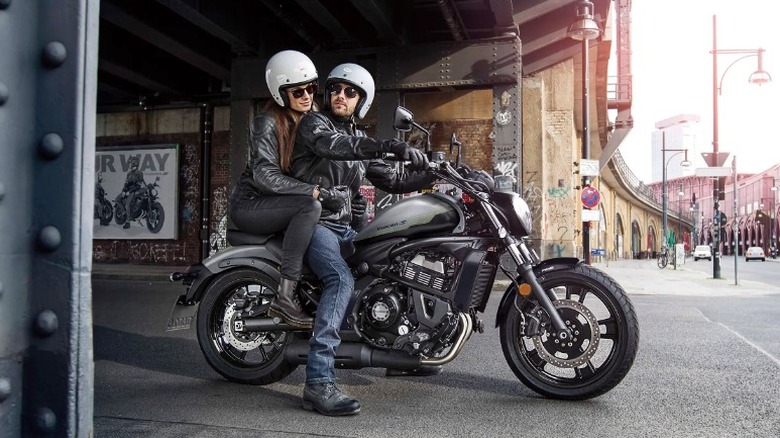
The Kawasaki Vulcan family of motorcycles has been around since 1984, and has long since established itself as a pillar of the cruiser segment. There have been dozens of models in all shapes and sizes, from entry-level bikes all the way up to 1,700cc monsters. A great lightweight addition to the lineup, and one of newer additions that came out in 2015, is the Vulcan S. This has a similar design to the Rebel 500, with a single seat and familiar silhouette, but it has a bit more power tucked in the chassis.
The 2026 Vulcan S has a $7,649 starting MSRP, placing it on the more affordable side of things. It's powered by a 649cc parallel-twin engine that was actually derived from the manufacturer's line of Ninja sport bikes. This means it was designed from beginning to end to minimize weight while maximizing performance. It has a six-speed transmission with a positive neutral finder, while the engine produces up to 60 horsepower at 7,500 rpm and 47 lb-ft of torque at 6,600 rpm. The version that comes with the anti-lock braking system has a 498.3 lb curb weight, while the non-ABS version is just a bit lighter at 491.7 pounds.
Best Beginner Motorcycles gave the Vulcan S a 90 out of 100 in their review, claiming that the bike is powerful, nimble, and reliable. They also argued that its affordability and good fuel economy made it a solid choice in terms of affordability and a great bike for beginner-to-intermediate riders. Gearhead also found it to be a fun ride that manages to be both low and easy to maneuver.
Kawasaki Eliminator
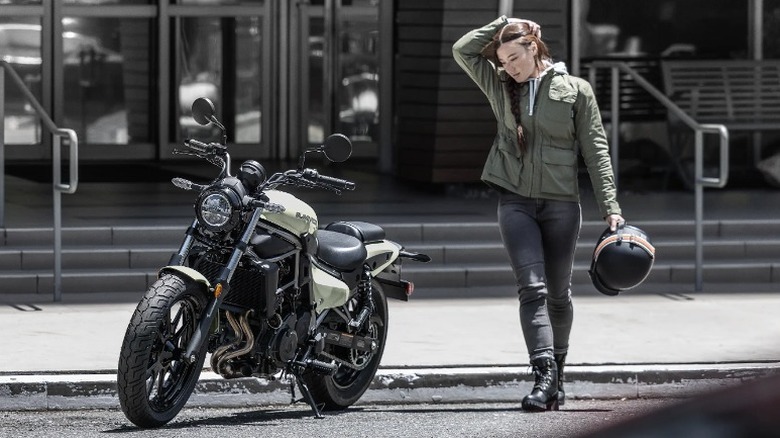
As light and affordable as the Vulcan S is, there is actually another bike from Kawasaki that is even lighter and more budget-friendly, though there is a horsepower trade-off. The Kawasaki Eliminator shares a lot of the same visual DNA if you look at it in profile, but take a look head-on, and you'll find a significantly leaner frame.
The 2026 Eliminator currently runs $6,499 for the non-ABS version and $6,799 for the ABS version. It runs on a much smaller 451cc four-stroke, two-cylinder, DOHC, liquid-cooled engine with up to 51 hp at 10,000 rpm and up to 31.7 lb-ft of torque at 7,500 rpm. The ABS version of this bike has a 388.1-pound curb weight, while the non-ABS model is just 385.9 pounds, so, while you do lose a chunk of power from the Vulcan S, you also shed over 20% of the weight.
Rider Magazine called the Eliminator "as welcoming as it is fun," claiming that the bike has the look and feel of a larger cruiser, and that the smaller engine packs a surprising amount of punch. Evan Allen of Cycle World reviewed the 2024 model, noting that "Swinging a leg over the Kawasaki Eliminator for the first time, what's instantly apparent is just how manageable this motorcycle is," they said. Allen also stated that the bike's engine, chassis, and price point all make it an attractive option for those seeking an entry-level lightweight cruiser.
Royal Enfield 350
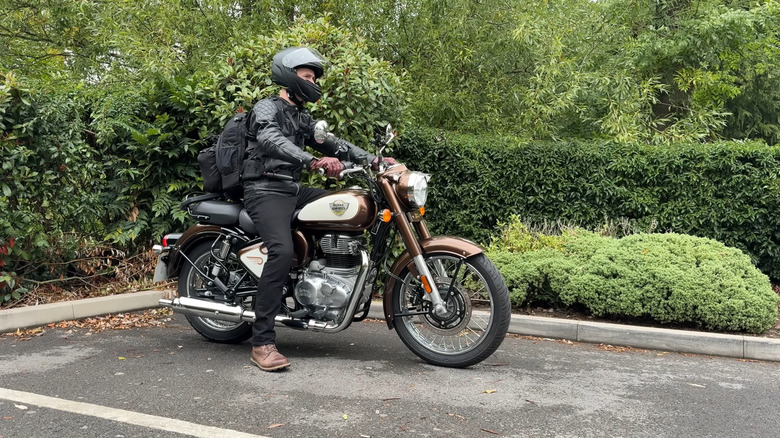
There are a few western options to choose from as well. One of the smaller ones that you might consider is the Royal Enfield 350. There are actually two different variations of this: The Royal Enfield Classic 350 and the Royal Enfield Meteor 350. As you might have guessed from the names, the classic has a more retro design aesthetic while the Meteor is more modern in appearance. The guts of these two bikes are pretty much the same though.
Both the Classic 350, with a base MSRP of $4,999, and the Meteor 350 that comes in at $100 more, are smaller cruises that are powered by 349cc, four-stroke, air-oil cooled engines. These both produce 20.2 horsepower at 6,100 rpm and 19 to 20 lb-ft of torque at 4,000 rpm. They both have a twin downtube spine frame, along with dual channel ABS, but there are some minor differences.
The Meteor has a 3.96-gallon gas tank, with the Classic's tank is just 3.43, for instance. This, along with their differences in design, means that their weights are a bit different as well — the Meteor has a 421 lbs curb weight with 90% fill fuel and oil, while the Classic comes in at 430 lbs under the same conditions.
Cycle World reviewed both the 2021 Royal Enfield Meteor 350 and the 2022 Royal Enfield Classic 350. In both instances, the reviewers found that the bikes were a straightforward proposition: A budget-friendly, small engine, lightweight cruiser that's easy to ride, has reliable power, and responsive handling. These sentiments were echoed by other publications as well. MC News said that the 2025 Classic 350 is a laid back and easy riding machine.
Yamaha V Star 250
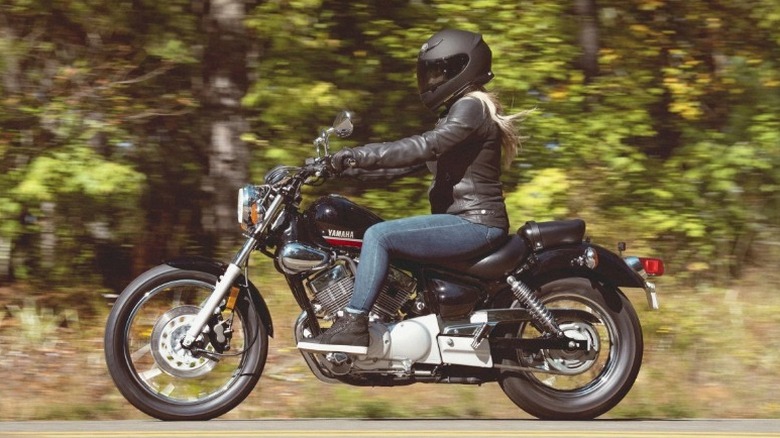
The smallest street legal motorcycles you can get mostly hover around the 125cc mark, but none of them have the size or styling associated with cruisers. People who are seeking the absolute smallest cruiser that they can find might want to take a look at the Yamaha V Star 250. This bike is trimmed down to the absolute bare bones to give you the lightest ride possible.
The 2026 Yamaha V Star 250 retails at $4,799.00, making it the most affordable bike on this list. It's powered by a 249cc air-cooled, SOHC 60-degree V-twin, two-valve engine with a 49mm bore, a 66mm stroke, and a 10.0:1 compression ratio, and it's coupled to a five-speed transmission. It's worth mentioning that it does have a 26mm carburetor fuel delivery system, and a smaller 2.5-gallon fuel tank, but that's counterbalanced by it's 78 mpg fuel economy. One of the most notable pros of this bike is its wet weight of just 324 pounds.
Ultimate Motorcycling reviewed the 2018 model and claimed that, though there are noticeable levels of vibration in the bike, it's proportioned well, has the classic visual appeal to please old school cruiser fans, and has good ergonomics and handling. They argued that all this adds up to a great bike for smaller riders, as well as those looking for a budget beginner bike. Cycle World took a look at the 2020 model and stated that it's a great way for new riders that might be intimidated by larger V-twin bikes to get into the field. They also claimed that it's lower 27-inch seat height made it a good choice for those who want to make flat-footed stops.
Our methodology
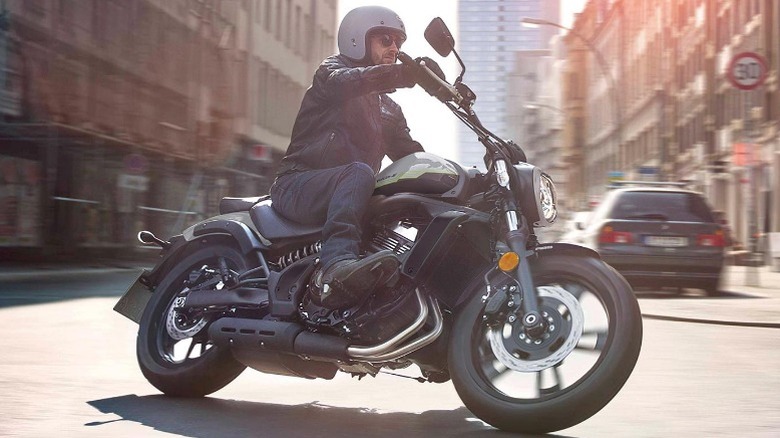
Different riders will have different opinions about what constitutes a lightweight cruiser motorcycle. For the purposes of this list, we set a cuttoff weight of 500 pounds, and decided to select a range of different bikes of various engine sizes that were under that threshold.
We started by taking a look at the current listings on offer from some of the more prominent cruiser manufacturers and seeing which of them manufactured models under that 500-pound limit. Once we had a list of them, we looked into professional reviews to see which of them came the most highly recommended, taking special care to look for reviews that specifically mentioned the bikes being quality options that were reliable, easy to ride, and good options for beginner riders.
Of these, we chose the ones that seemed the best for each of their respective engine sizes and weight classes. Some, like the Honda Rebel, offered multiple models that met this criteria, but we only selected one in order to avoid redundant information.