

How Does Google Make Its 'A' Series Pixel Phones So Cheap?
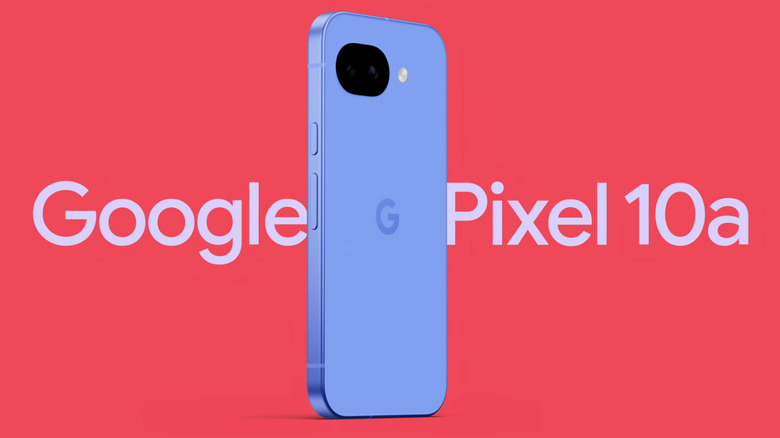
The launch of the Pixel 10 in 2025 marked a decade since the series first debuted, and all these years gave Google an opportunity to find its footing in the extremely crowded industry of smartphones. Pixels are pretty infamous when it comes to performance or battery life, but they're easy recommendations to those looking for a phone with clean software and an excellent camera setup. Google's lineup is also pretty streamlined — you have the base Pixel model each year, alongside Pro and Pro XL variants. The most expensive model is a foldable. Then there's the budget-friendly option that often gets announced half a year later, bearing the "a" suffix.
The Pixel 10a starts at $500 for the 128GB version. By comparison, the regular Pixel 10 is priced at $800 and the 10 Pro at $1,000 — and both come with the same capacity. In order to achieve a price difference as large as this, Google makes some compromises. You start noticing differences as soon as you pick the Pixel 10a up. Though it uses the same aluminum frame as the Pixel 10, it swaps its glass back for a composite plastic panel. You also lose the telephoto camera on the rear, which can come in handy for capturing subjects that are far away.
The Pixel "a" series also cuts the usual corners by packing in a less powerful chip, slower wireless charging, and a slightly inferior display. Yet, these regularly rank as some of the best budget-friendly phones around.
Google's winning forumula for its budget-oriented phones
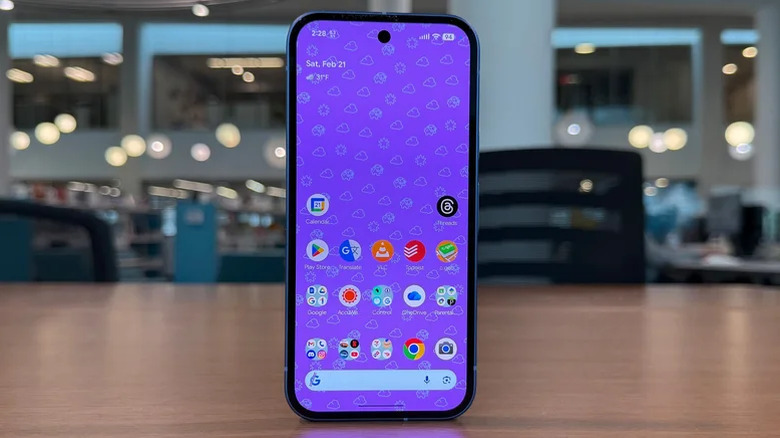
The Pixel 3a was the first budget-friendly smartphone to have been introduced to the Pixel family. With a lower-end chip and a display with a standard refresh rate, it was a stripped-down version of the Pixel 3. Google has followed the recipe ever since, offering a substantially cheaper model by dialing back on build materials, performance, and camera hardware. As time has passed, the Pixel a-series has caught up in several key areas, but Google has managed to keep costs down by reusing older processors and reserving a couple of features for its flagship models.
Take the Pixel 10a that we previously reviewed, for instance. It's powered by 2024's Tensor G4 chip, 8GB of RAM, 128GB of storage, and offers a 120Hz pOLED display, a dual-camera setup, and a 5,100 mAh battery. The Pixel 9a, released in 2025, packs in the exact same hardware. Iterative upgrades are quite common in the smartphone space, but Google has arguably taken the component recycling strategy further than most OEMs. While day-to-day performance with the Tensor G4 and 8GB of RAM is solid, the Pixel 10a loses out on a few features like Magic Cue that require on-device AI models.
Pixelsnap, Google's version of the iPhone's MagSafe, is also missing here. The plastic back means you get wireless charging, albeit at slower speeds of up to 10W. The Pixel 10a also replaces the faster ultrasonic fingerprint scanner found in the premium models with an optical sensor.
The Pixel 10a plays it very safe
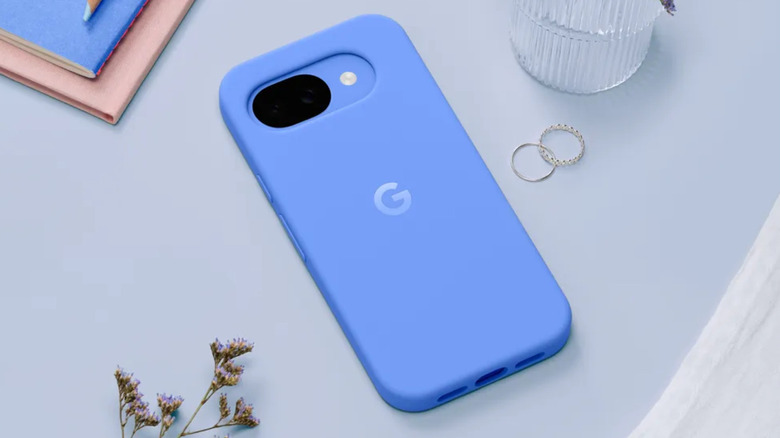
It probably helps that the Pixel a-series devices usually launch six months after the regular models do, which gives Google a good opportunity to repurpose existing components for a more affordable device. Despite being less powerful than the Pixel 10, the Pixel 10a uses the same camera hardware for its primary and ultrawide lenses. It drops the 5x telephoto lens, though.
Then there's the homegrown Tensor G4 that powers the experience. Although it's the same SoC that Google used for its flagship Pixel 9 and 9 Pro devices, Tensor chips have never been known for delivering class-leading performance. While the Tensor G4 is better suited for a budget-oriented smartphone, it still falls behind Qualcomm's and Apple's latest mid-range chips. For example, the OnePlus Nord 6 that's exclusive to Asian markets is powered by the Snapdragon 8s Gen 4, which delivers up to 50% better AnTuTu scores than the Tensor G4 — and it's priced at roughly $450.
Google is also one of the only mainstream brands that is still offering smartphones with a base capacity of 128GB. For being such a camera-centric device, you might end up requiring cloud storage services much sooner than you would on an iPhone 17e. Despite all its limitations, the consensus among Pixel 10a users is that the phone has more positives than negatives. It even enjoys the same seven-year software update commitment as other Pixels do.