

Americans Are Missing Out On Yet Another Great Budget-Friendly Drone
We may receive a commission on purchases made from links.
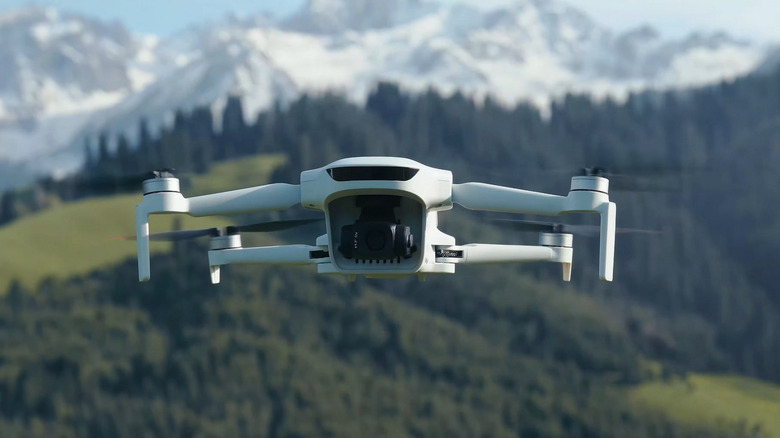
Potensic might not have the same cachet as DJI, but the budget Chinese company's products are great alternatives to DJI's drones. For example, its newest offering, the Atom 3, almost equals the DJI Mini 4 Pro's range while offering similar AI tracking and photography features. However, the Potensic Atom 3 has fallen foul of the Federal Communications Commission's (FCC) Covered List, which bans all foreign-made Uncrewed Aircraft Systems (UAS, or drones) from being sold in the U.S.
Foreign drone makers added to the Covered List cannot obtain the mandatory FCC certification required for electronic devices relying on radio communication to operate in the U.S. This makes it impossible to sell consumer drones, which use the radio spectrum for control and video. The FCC ban applies to all foreign-manufactured drones released after December 2025. This means that existing Atom and Atom 2 variants will continue to be sold in the country.
Despite this, Potensic told PCMag that it is pursuing certification for the Atom 3 and is optimistic about its chances. This may be motivated by the FCC's June 16 order, where it approved exceptions for "toy drones" weighing less than 150 grams and limited to a 100-meter line-of-sight flight radius. While the Atom 3 fits neither of these criteria, it does offer the hope that the FCC may loosen regulations further in the future.
The Atom 3 promises range and image quality upgrades
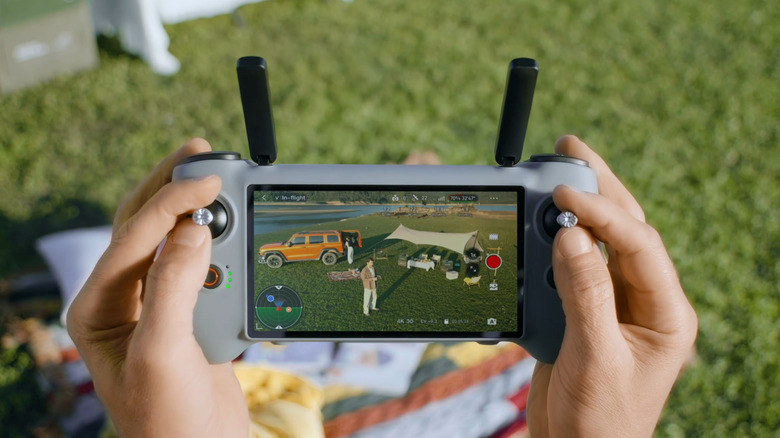
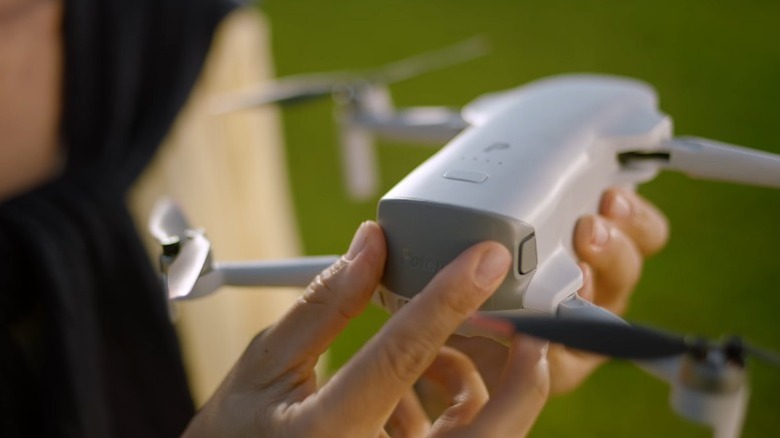
Potensic's Atom series of sub-$250 drones has long been a viable alternative to DJI's pricier Mini drones. The 249-gram Atom 3 sneaks under the weight limit set by the Federal Aviation Administration (FAA) and most other regulatory bodies for recreational drones that don't require registration. The base variant claims 40 minutes of flying time, with an optional larger battery pack that increases that to 50 minutes — at the cost of exceeding the 250-gram regulatory limit.
The Atom 3 sports an upgraded camera with a larger 1/1.3-inch image sensor capable of shooting 4K60 video and 50 MP still images. AI features, such as night mode and subject tracking, have also received incremental improvements, with the latter now having a low-altitude 4-meter mode. Other significant enhancements include the ability to shoot 7X slow-motion videos and an improved video transmission range of 16 kilometers, a 60% gain over the outgoing model.
Potensic sells the Atom 3 at a base price of $430, which includes the drone, battery, and a controller that snaps onto your smartphone. The most expensive variant includes the PTD2 controller, which has a 900-nit display and built-in app; three long-range batteries; a triple charger; and a bespoke carrying case for $740.
A sketchy Amazon listing points to a consumer drone vacuum left by the FCC ban
Despite the FCC ban, an Amazon listing for the Atom 3 seems to have slipped through the cracks. Although the product listing has a fair number of verified U.S.-based reviews, flying the drone is potentially risky — even if you manage to get one delivered successfully.
Noted drone expert Joshua Bardwell sums up the practical risk of flying a non-compliant drone as: You should be fine until you give the FAA a reason to investigate. In other words, the authorities won't know you're flying a banned drone until you violate the airspace, cause a major accident, or otherwise give the FAA a reason to put you under the scanner. We nevertheless recommend staying on the right side of the law to avoid civil and criminal fines of up to $100,000 per violation.
Although the blanket ban on foreign-made drones may have been implemented to promote U.S.-made drones, practically all American manufacturing looks to be focused on lucrative defense contracts and commercial drones. The Ghost-X and Skydio X10D are two examples of new U.S.-built drones inducted into the U.S. military, underscoring the lack of new consumer photography drones at the $1,000 mark. This points to the failure of U.S. drone manufacturers to match the Chinese drone makers' ability to leverage economies of scale and operate on razor-thin margins — all of which are necessary to compete with drones from the likes of DJI and Potensic.