

Why Are Standard iPads Cheaper Than The iPad Mini?
Unlike the smartphone space, there isn't much competition in the tablet space. If you're looking for a powerful, sleek, and feature-packed tablet, you're likely already eyeing an iPad. Apple has effectively built a monopoly in the tablet industry, offering an option at all major price points. The iPad Pro, for instance, comes with the same chip that powers a MacBook, a Tandem OLED panel, and expensive accessories that turn it into an almost-laptop. The newest model also starts at a whopping $1,200, following Apple's price hike. However, if you're looking for an entry-level option, the $449 base iPad – the most affordable iPad — offers most of the essentials.
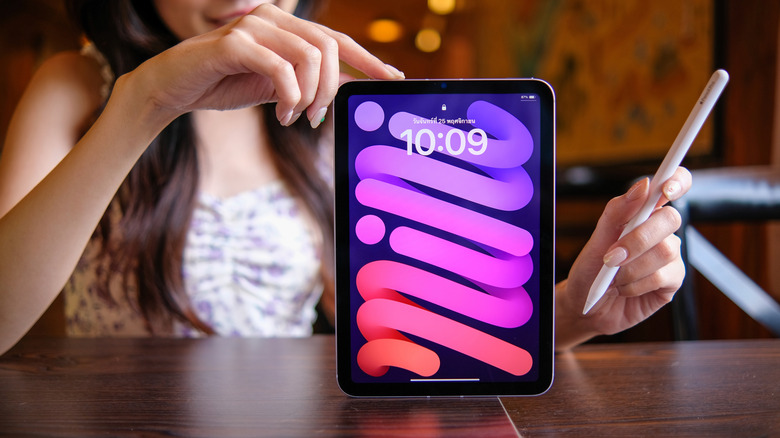
Then you turn to the iPad mini and start wondering why it costs $150 more despite being smaller. Simply put, it's a more powerful machine with a better display. At 8.3 inches diagonally, it also happens to be sort of a niche device that is meant to appeal to a very specific kind of user. The regular iPad, on the other hand, is designed to accommodate a much wider audience with its larger 11-inch display.
In our review of the iPad mini, we went over a few of its limitations, like the lack of Face ID — which is also true for the standard model. Regardless, both iPad variants are great purchases if you're looking for a reliable tablet for everyday use.
iPad versus iPad mini: Which one is right for you?
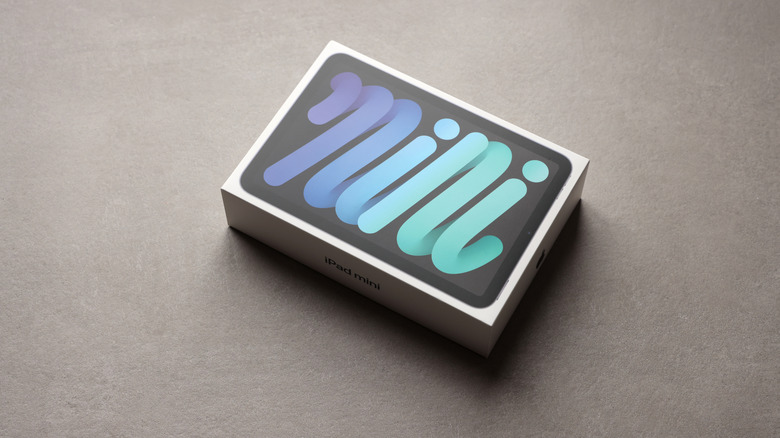
Funnily enough, the comparison between the iPad and the iPad mini is not as apples-to-apples as comparing, say, the iPhone 13 to the iPhone 13 mini would be. The base iPad is still positioned at the very bottom of Apple's tablet lineup, and the iPad mini isn't a smaller version of that. For instance, the 2024 iPad mini uses the A17 Pro chip — the same SoC that powers the iPhone 15 Pro series. The standard iPad, despite being released nearly five months later in 2025, is powered by the slower A16 chip, originally found in the iPhone 14 Pro.
In synthetic benchmarks, the A17 Pro doesn't seem like a huge upgrade over the A16, but it's worth noting that the latter doesn't meet the requirements to support Apple Intelligence. With so much of Apple's current marketing being centered around AI features and the new Siri with iOS 27, you might want to steer clear of the standard iPad model — especially if you're looking for a tablet that you intend to use for a very long time.
While both iPads feature a 60Hz panel, the one on the iPad mini comes with an anti-reflective coating and a wider color space. You also gain support for the Apple Pencil Pro with the iPad mini. The standard iPad, thanks to its more popular form factor, does support the Magic Keyboard Folio, which the iPad mini doesn't.