

Yes, Manual Cars Can Use Cruise Control – Here's How It Works
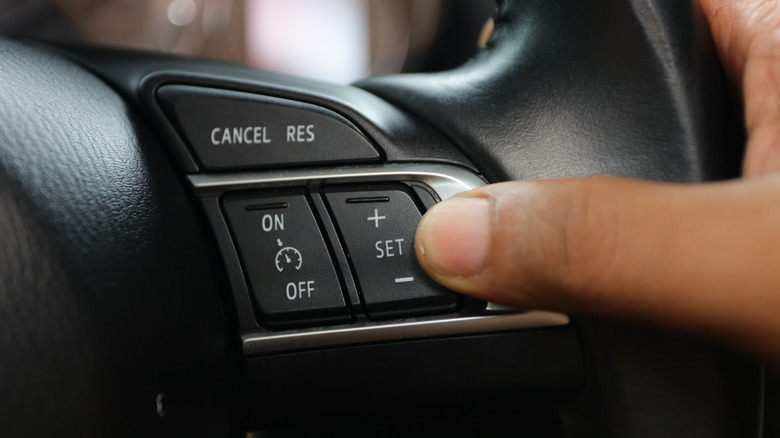
Manual cars are no longer as popular as they used to be, with automakers offering increasingly fewer manual options to buyers. The tech isn't dead yet, of course, as shown by how Subaru is promising three stick-shift models for 2027, but it's definitely less convenient than automatic transmissions.
That said, some manual cars still offer helpful features like cruise control. It functions much the same as it does in an automatic, too, just with one significant difference: you will need to shift gears when necessary, such as to avoid stalling at low speed. While still a useful feature that can help reduce driver fatigue, it does require more focus, particularly when navigating hilly terrain.
In an automatic car, if you start going up a steep incline, the system will downshift in order to maintain the set speed while keeping engine revs in an ideal range. A manual cruise control system can maintain a set speed within a gear, but requires that you keep an eye on the revs and shift if they get too low. Any contact with the clutch may also require you to reset your speed after shifting.
What about adaptive cruise control?
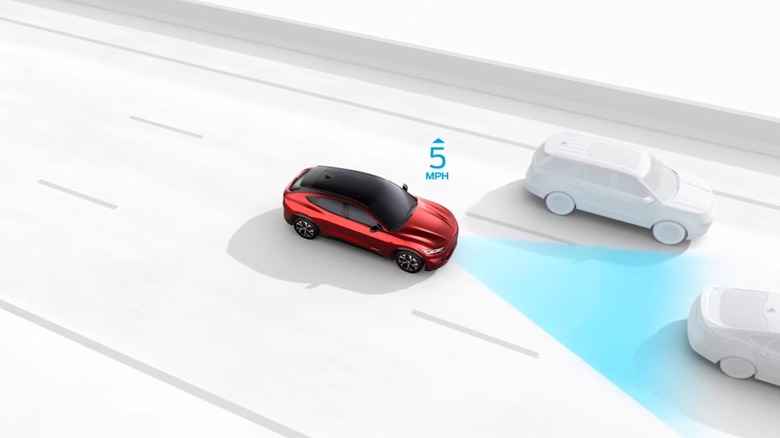
Adaptive cruise control does even more, in that it will maintain a set speed, but also incorporates additional cameras and radar technology to adjust your speed as necessary. You'll still want to avoid using adaptive cruise control at bad times, such as during inclement weather, but it offers a big advantage over traditional cruise control.
With standard cruise control, a vehicle slowing down in front of you would require you to press "Cancel," turn off the system, or manually lower your set speed. Once traffic speeds up, you will need to set your cruise control again. Adaptive cruise control, on the other hand, automatically slows down based on the traffic ahead and will resume the previously set speed once it's safe to do so.
Manual cars can also come with adaptive cruise control, and the system will maintain distance between your vehicle and traffic by varying speed. But again, you'll need to shift to prevent lurching or stalling once speeds drop. So, while you can use adaptive cruise control in a manual car, it doesn't provide the same level of convenience as the system in an automatic.
Cruise control: what's going on under the hood?
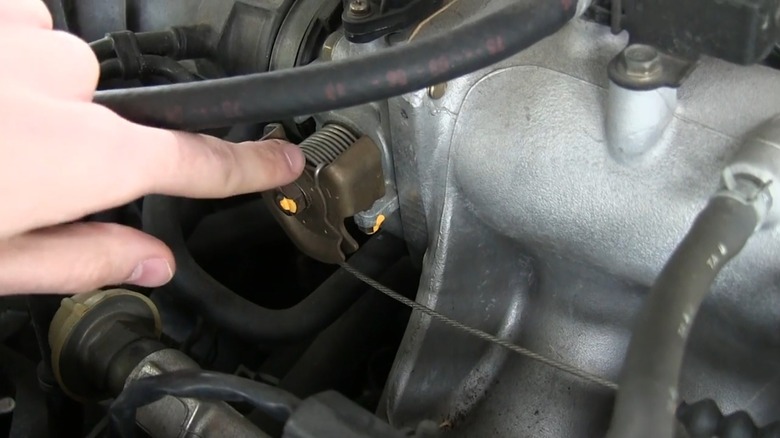
Before understanding how a traditional cruise control system works, we have to understand what the throttle body does. The throttle body determines how much air enters the engine via a valve. Pressing down on the gas pedal opens the valve (connected by a cable in a mechanical setup), which allows more air in. This extra air draws more fuel, resulting in acceleration. Modern systems don't use physical connections anymore, but instead utilize sensors and electronic controls, but the basic principle is the same.
Traditionally, cruise control systems featured a cable connected to the throttle linkage that ran to an actuator, usually a vacuum unit. Vacuum actuators consisted of multiple chambers separated by a diaphragm, and the engine control unit would vary the pressure on one side of the diaphragm to pull on the cable going to the throttle or create slack. This allowed the car to adjust its speed without user input.
Many of today's vehicles use electronic throttles that use electric signals instead of physical connections like cables. While the new computerized version provides some benefits, it's also more complicated than a simple cable connection, and more can go wrong. If you notice the ETC light in your car displayed on the dashboard, for instance, you'll need to get to a mechanic immediately, as that indicates an issue with your electronic throttle control.