

Flex Fuel With Regular Gas: Can You Mix These Fuel Types?
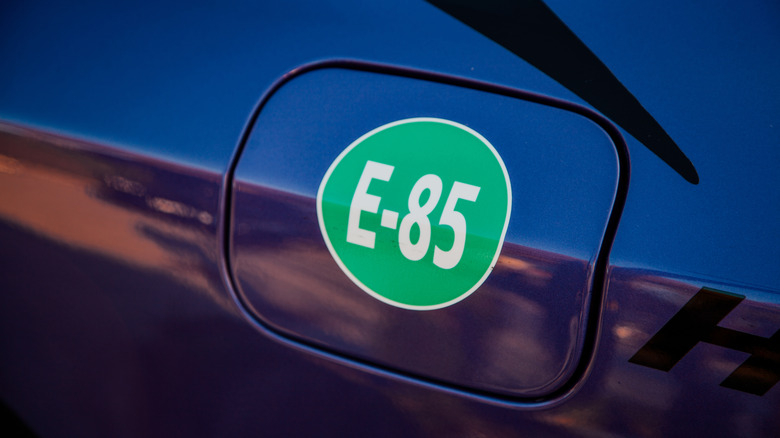
If you are driving a car specifically designed for flex fuel — an FFV — you can mix flex fuel and regular gasoline with no problem. But, the reverse isn't true at all. You can't mix a higher ethanol blend with regular gas for an everyday car, because they were just never designed for it. It can even damage your carin several ways.
So as an example, something like the Chevy Silverado, which Chevrolet still sells with a flex fuel V8 for the 2026 model year, will happily burn whatever blend you feed it without a fuss. You can tell whether your car is an FFV if it has a yellow gas cap, a classic giveaway, or perhaps a yellow ring around the spot where the nozzle goes. Or you can easily refer to the owner's manual.
Plenty of owners actually run regular gas in their flex fuel vehicle most of the time, simply because E85 is different from regular and is not sold on every corner. Despite growth in recent, fewer than 5,000 fuel stations dispense E85 across the country, as of writing.
It also helps that E85 fuel itself can be quite variable, running anywhere from 51% to 85% ethanol depending on the season and where you live. Moreover, even if you are blending the two together, the tank does not need to be empty first. Your flex fuel car quietly works out the ratio on its own and adjusts itself to keep things running smoothly. You can even pour in ethanol-free (E0) fuel, and it will run just fine.
So what happens if you get it wrong?
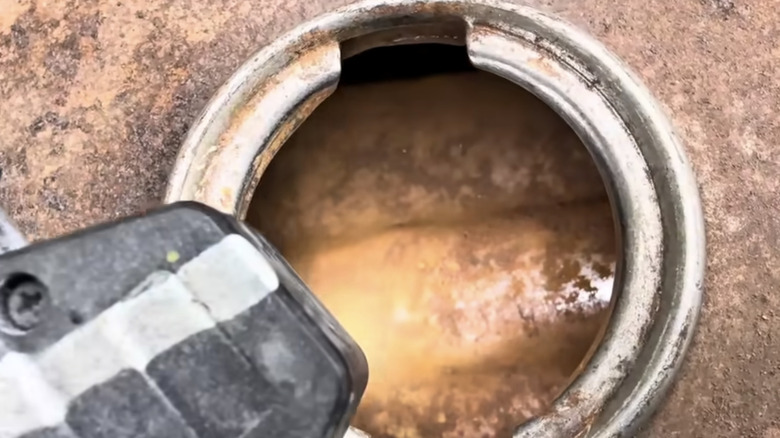
It can certainly be tempting to top up your non-FFV with E85 since it's cheaper. You might even think it's safe if there's already some regular gas sitting in there. The problem, though, is that a standard engine was never built to handle higher levels of ethanol.
Ethanol blends right in with gas because one end of the molecule is a short carbon chain that acts a lot like the hydrocarbons already in gas. But ethanol has different properties. For one, it loves water and pulls it straight out of the air, which leads to rust and corrosion inside a fuel system never meant for it. Keep up the ethanol abuse, and the seals and filters wear down with time, which, on top of the damage, can also void your warranty.
That said, the good news is that an accidental splash is usually not a disaster. So, if you somehow mixed the gas pumps up at the station and added a couple gallons, you should be fine. All you have to do is fill the rest with regular and pretend like it never happened. A check engine light might flick on, though it tends to clear itself after a few drive cycles. However, if you end up pouring half a tank or more, you will want to dilute it with as much regular gas as the tank will hold.