

Can You Patch Or Plug A Flat Riding Mower Tire?
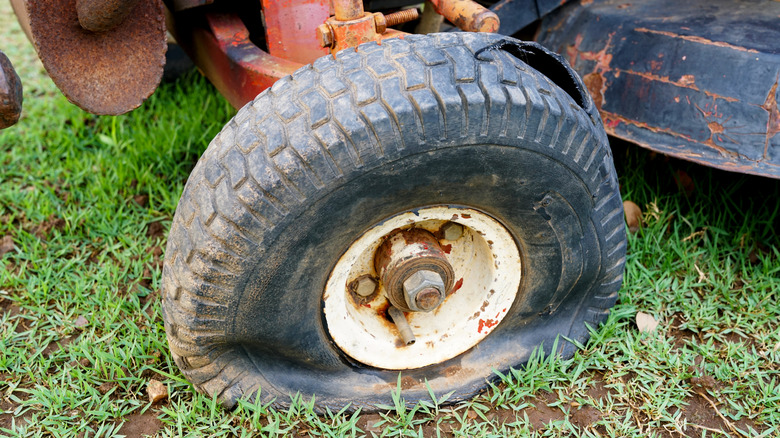
Maintaining structurally sound tires on your vehicle is important, which means addressing any damage immediately. But while a plug or patch can successfully repair a tire on your car, the same isn't always true for your riding lawn mower. That's because the size and severity of the puncture, as well as the tire's construction can impact how you fix the tire and when you can get back to mowing.
For example, larger holes could be fixed with a plug kit and once the work is done, you may not need to address the problem again. More complete repairs can also involve patching the tire from the inside, though this typically goes beyond basic DIY fixes. However, minor damage can sometimes be repaired using a tire sealant to help keep your lawn mower tires from going flat. But if the tire fails again, it will need to either be inspected by a professional or even replaced.
Some mower tires may not be easily plugged or patched, depending on their condition and design. Repair methods can vary based on tire type, as well as tread pattern, such as turf or ribbed designs. Because tire construction, tread design and regular wear all affect performance and safety, it's important to select the right repair approach. The best move is to consult the owner's manual first for guidance on how to proceed.
When tire damage goes beyond a quick fix
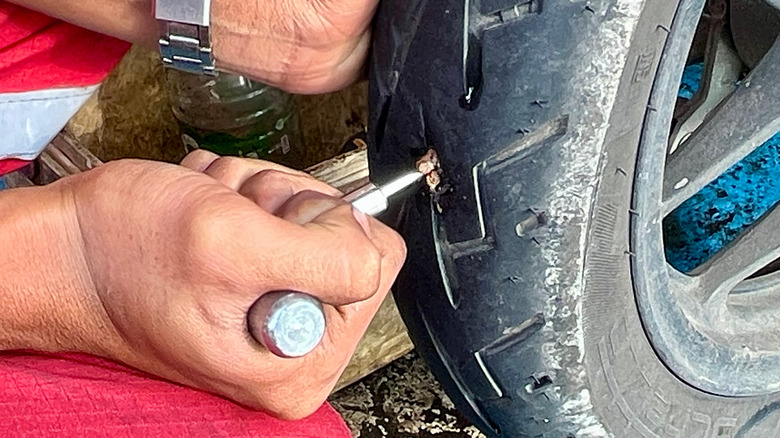
The Tire Industry Association (TIA) has resources that address repairs, and these guidelines are helpful for all types of tires — lawn mowers included. According to these standards, a loss of air pressure can happen immediately after damage occurs, and internal problems might develop that you can't see from the outside. The TIA also warns that temporary fixes are not reliable long-term solutions, and that some damage cannot be safely repaired at all depending on its location or severity.
A proper repair typically requires removing the tire from the rim so it can be inspected before any repair work is done. This means lifting the mower off the ground with a proper jack, removing the wheel, and working the tire off its rim. The rim should then be cleaned to ensure it seals properly before installation and after installation is complete, you should inflate the tire to the manufacturer's recommended pressure. The tire should be checked to confirm it is holding the air properly, before you start using it again.
However, if you have no experience with tire removal and repair, or if you're just uncomfortable doing it yourself, don't try it. You could end up accidentally damaging the tire further, or even the wheel itself, which will cause you more problems down the road. You're also risking personal injury as well and at the very least, any work you do could potentially impact your lawn mower's warranty. So, overall, when in doubt, take it to a professional.